Egypt’s economic case for deeper ties with China is shifting from a simple push to attract capital toward a more strategic test: whether Beijing can help build local industrial capacity without leaving Cairo stuck with imported technology and low-value assembly. That is the key message from former Assistant Foreign Minister Rauf Saad, who said the payoff from the partnership will depend on choosing investments that support technology localization and production, not just expanding trade volumes.
Egypt China ties hinge on technology localization

For investors, that matters because Egypt is trying to turn Chinese engagement into a source of productivity gains, export capacity and industrial upgrading at a time when growth remains constrained by foreign-currency pressure and a need for more durable investment. The distinction Saad drew between technology transfer and technology localization is central. Manufacturing inside Egypt does not automatically mean the country owns the know-how behind the process, and that limits the long-term economic multiplier. The broader value lies in whether Chinese companies bring supply chains, training and embedded expertise that can raise domestic content and competitiveness.
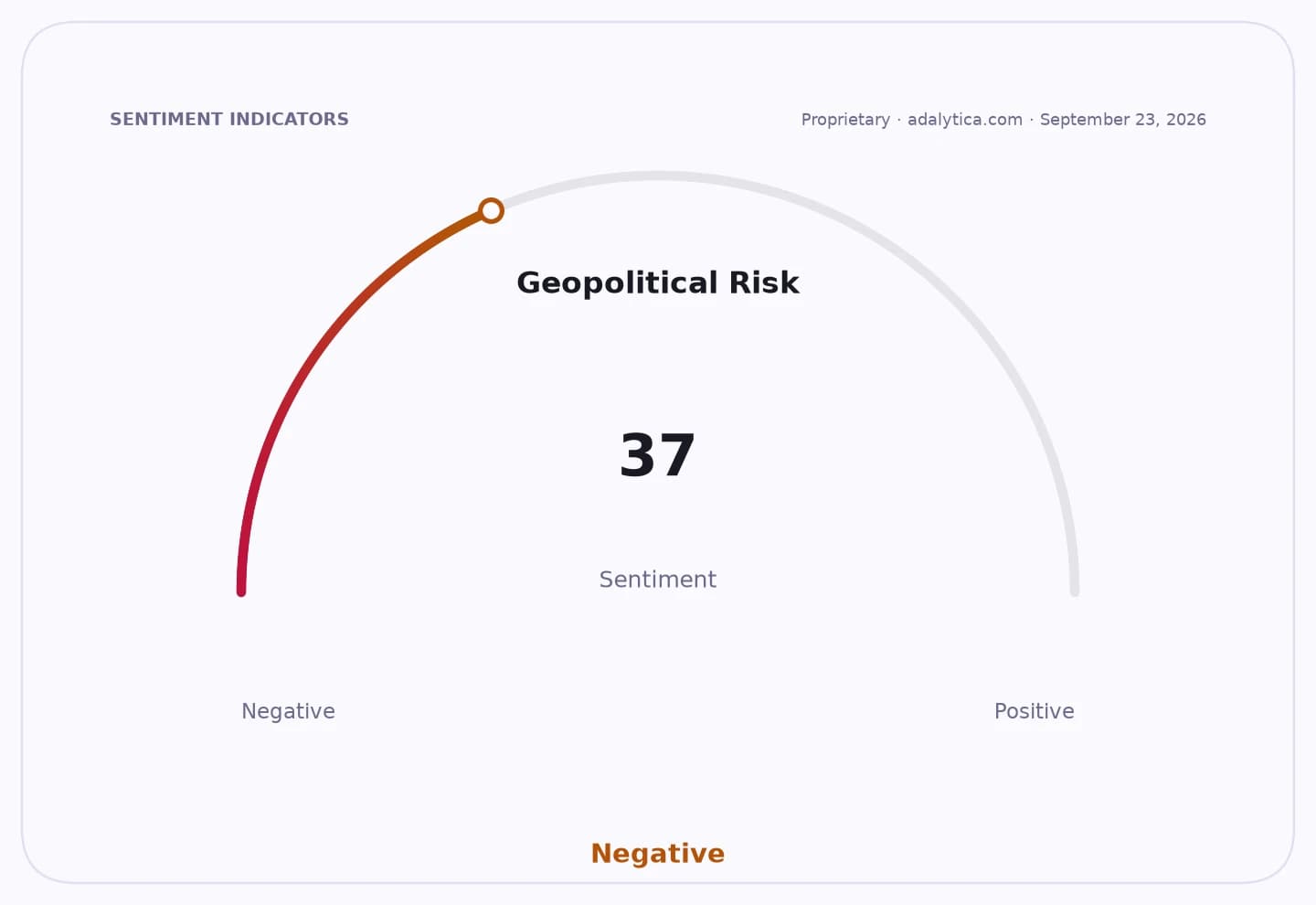
Sentiment IndicatorsⓘProprietary · adalytica.com · September 4, 2026
This is a snapshot — live sentiment, awareness and momentum for 130+ markets update continuously in the dashboard.Open AlphaPulse
The comments also underline a political reality markets often underprice: China is not just a commercial counterparty but a global power whose bilateral relationships can reverberate well beyond Egypt’s borders. That makes the relationship useful, but also delicate. Cairo has to balance the economic benefits of Chinese capital and technology against the geopolitical implications of closer alignment with Beijing, especially as major-power competition intensifies and countries face more pressure to define where they stand on strategic issues.
That balancing act helps explain why the story is bigger than a routine investment pitch. If Egypt manages to secure targeted Chinese projects in areas such as advanced manufacturing, infrastructure and technology-driven industries, it could strengthen its industrial base and improve job creation. If not, the result may be more trade dependence and limited local value added. For investors in Egypt and Chinese-linked emerging-market assets, the key question is whether this partnership produces productivity gains or simply deepens financial and political exposure.
The market backdrop suggests caution but not outright stress. China-focused ETFs such as FXI and MCHI have recovered from earlier weakness but remain below their January levels, while Hong Kong equities, tracked by EWH, have also been volatile rather than decisively bullish. That mirrors a broader environment in which investors remain sensitive to policy direction, external geopolitics and the quality of China’s overseas engagement. Adalytica’s China CCP Policy Direction Sentiment gauge is at 7, or “Extreme Fear,” reinforcing how fragile confidence remains around Beijing-linked policy risk.
For Egypt, the investment case will hinge on whether future deals with China are structured around localization, not just headline inflows. For investors, that is the difference between a geopolitical relationship that may generate durable economic returns and one that leaves the host economy with more imports, more dependence and fewer lasting gains.
| Entity | Gains | Losses |
|---|---|---|
| Egypt | ▲Tech localization | ▼Low-value imports |
| China | ▲Market access | ▼Reputational risk |
| Investors in Egyptian industry | ▲Productivity upside | ▼Policy/geopolitical risk |
| Local manufacturers | ▲New capabilities | ▼Competition from imports |