China’s first joint air combat drills with Egypt matter because they show Beijing is no longer content to build influence only in Asia — it is now testing military ties in the Middle East, a region that sits at the center of U.S. and Israeli security planning. For investors, that matters because rising great-power competition tends to support defense spending, sustain demand for advanced aircraft and missile systems, and keep geopolitical risk embedded in energy and emerging-markets assets.
China Egypt Joint Air Drills Raise Defense Focus
The exercise is more than a symbolic flyover. Joint combat training requires logistics, coordination and trust that go beyond diplomacy, suggesting a deeper defense relationship between Cairo and Beijing. That gives China a chance to showcase its military hardware and training doctrine to a major Arab military, while giving Egypt an additional strategic partner as it balances ties with Washington, Moscow and Gulf allies.
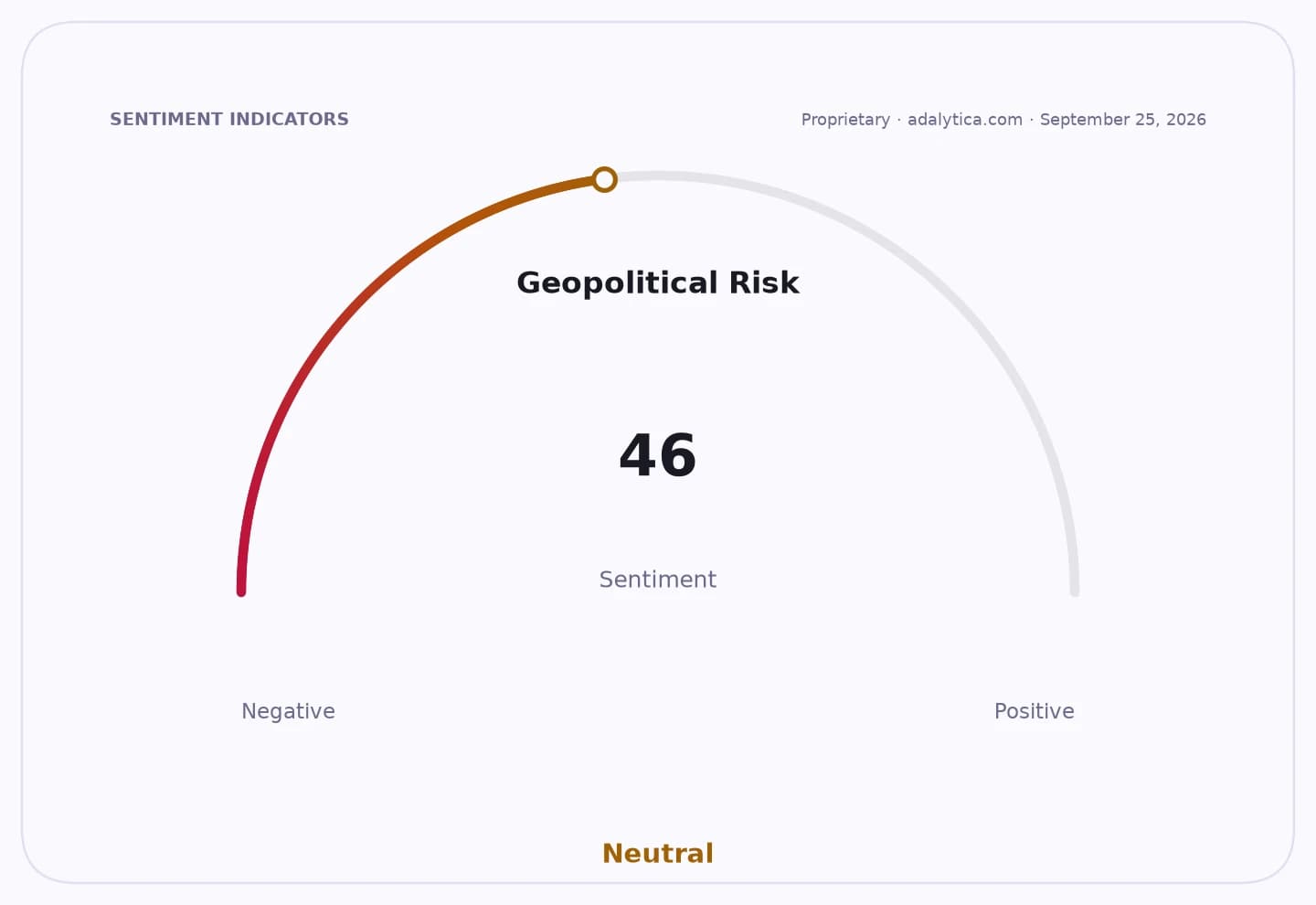
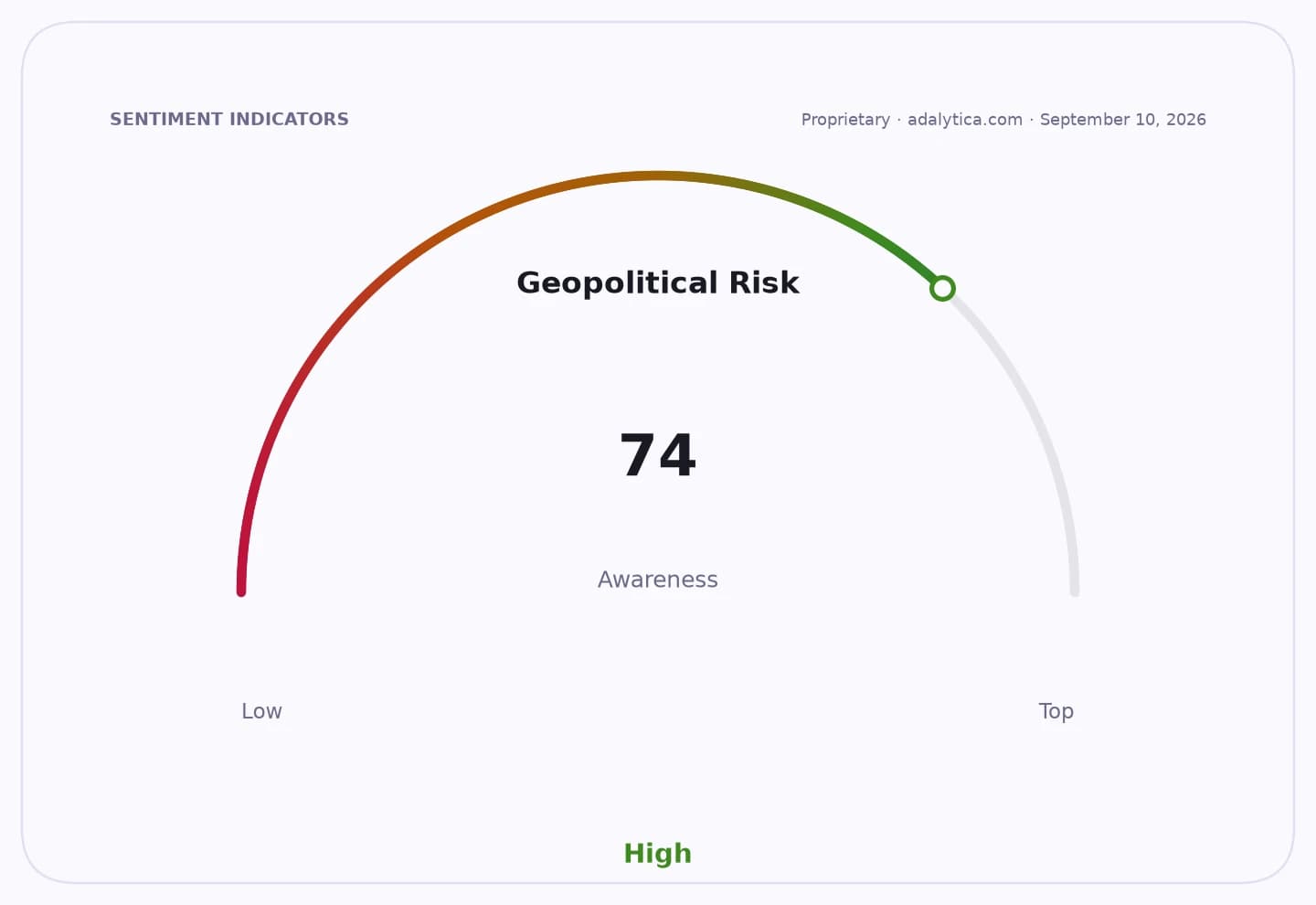
Sentiment IndicatorsⓘProprietary · adalytica.com · August 25, 2026
This is a snapshot — live sentiment, awareness and momentum for 130+ markets update continuously in the dashboard.Open AlphaPulse
It also lands at a time when the global security backdrop is already tense. Adalytica’s Global Stability Sentiment sits at 89, labeled “Extreme Greed,” while awareness remains low at 29, a combination that can translate into complacency even as geopolitical fault lines widen. The U.S.–China relations gauge is also at 89, again in “Extreme Greed,” reflecting a sharp rise in attention around the rivalry. In practical terms, that means markets may be underpricing how quickly military competition can spill into trade, sanctions and procurement decisions.
For defense contractors, the long game remains constructive. Bigger cross-regional military competition usually means more spending on fighters, air defense, surveillance, electronic warfare and munitions. Companies such as Lockheed Martin, Northrop Grumman and RTX benefit when allies look to refresh fleets and harden air defenses, and the SEC filings from these groups underscore how central global tensions are to their demand outlook. That said, if China deepens arms sales or training partnerships in the Middle East, it could gradually increase competition for Western suppliers in certain markets.
Israel and the U.S. are likely to watch closely because any Chinese military footprint near the eastern Mediterranean or Red Sea adds another layer to an already crowded strategic map. Egypt remains a key regional power and a critical security partner for Washington, but the drill shows Cairo is widening its options. For investors, the takeaway is straightforward: geopolitics is not a short-term trading story here, but a multi-year driver of defense demand, energy volatility and alliance realignment. Worth watching, and for long-term portfolios, it reinforces the case for owning quality defense names as part of a diversified basket.
| Entity | Gains | Losses |
|---|---|---|
| China | ▲Greater Middle East reach | ▼U.S. strategic comfort |
| Egypt | ▲More defense partners | ▼Reliance on one patron |
| U.S. and Israel | ▲Closer threat awareness | ▼Regional monopoly on influence |
| Defense contractors | ▲Higher demand for systems | ▼Chinese rivals in export markets |