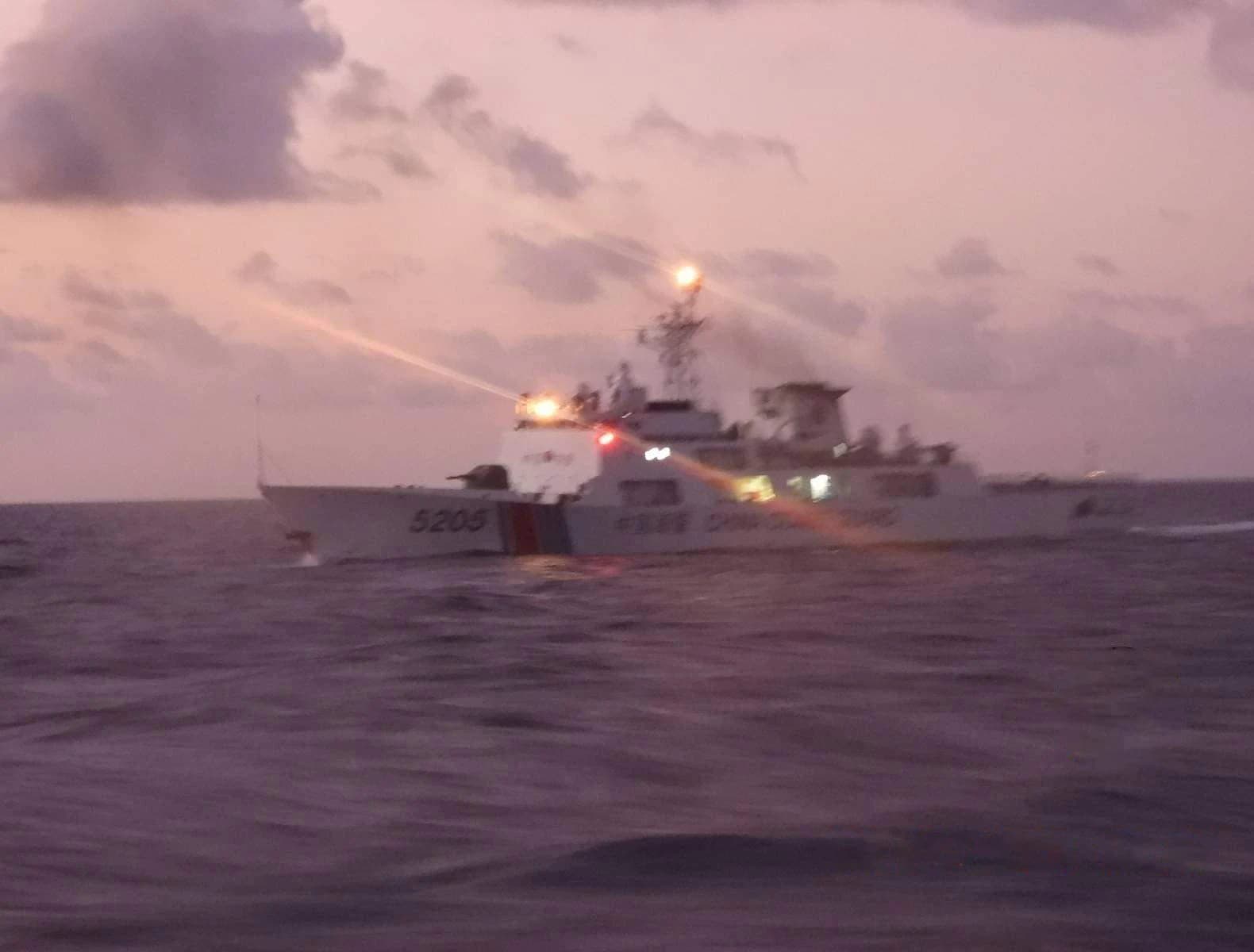
China’s growing maritime presence near Alaska is sharpening U.S. concern that the Arctic is turning into a new front in the strategic rivalry between Washington and Beijing.
China Arctic vessels raise U.S. security concerns
A senior U.S. Arctic military official said the United States is watching China’s activity “very closely” after four Chinese vessels were reported in the Arctic, a deployment that underscores how quickly the region is moving from a frozen backwater to a contested corridor for military signaling, resource access and future shipping lanes.
Sentiment IndicatorsⓘProprietary · adalytica.com · September 25, 2026
This is a snapshot — live sentiment, awareness and momentum for 130+ markets update continuously in the dashboard.Open AlphaPulse
That matters economically because the Arctic is no longer just about sovereignty. It is about control of sea routes, energy reserves, minerals and the infrastructure needed to monitor and defend them. As ice retreats and storms reshape navigation patterns, the region is drawing more attention from governments trying to secure supply chains and from companies positioned to profit from ice-class shipping, satellite surveillance, undersea sensing, ports and defense systems.
Investors should read this as another sign that Arctic security spending is likely to rise, not fall. When geopolitical risk migrates north, the beneficiaries are rarely the broad market; they are the contractors, maritime technology firms, aerospace and defense names, and infrastructure plays tied to monitoring, communications and resilience. The losers are the companies and countries that depend on stable trade routes and cheap transport, because security premiums tend to raise costs and slow development.
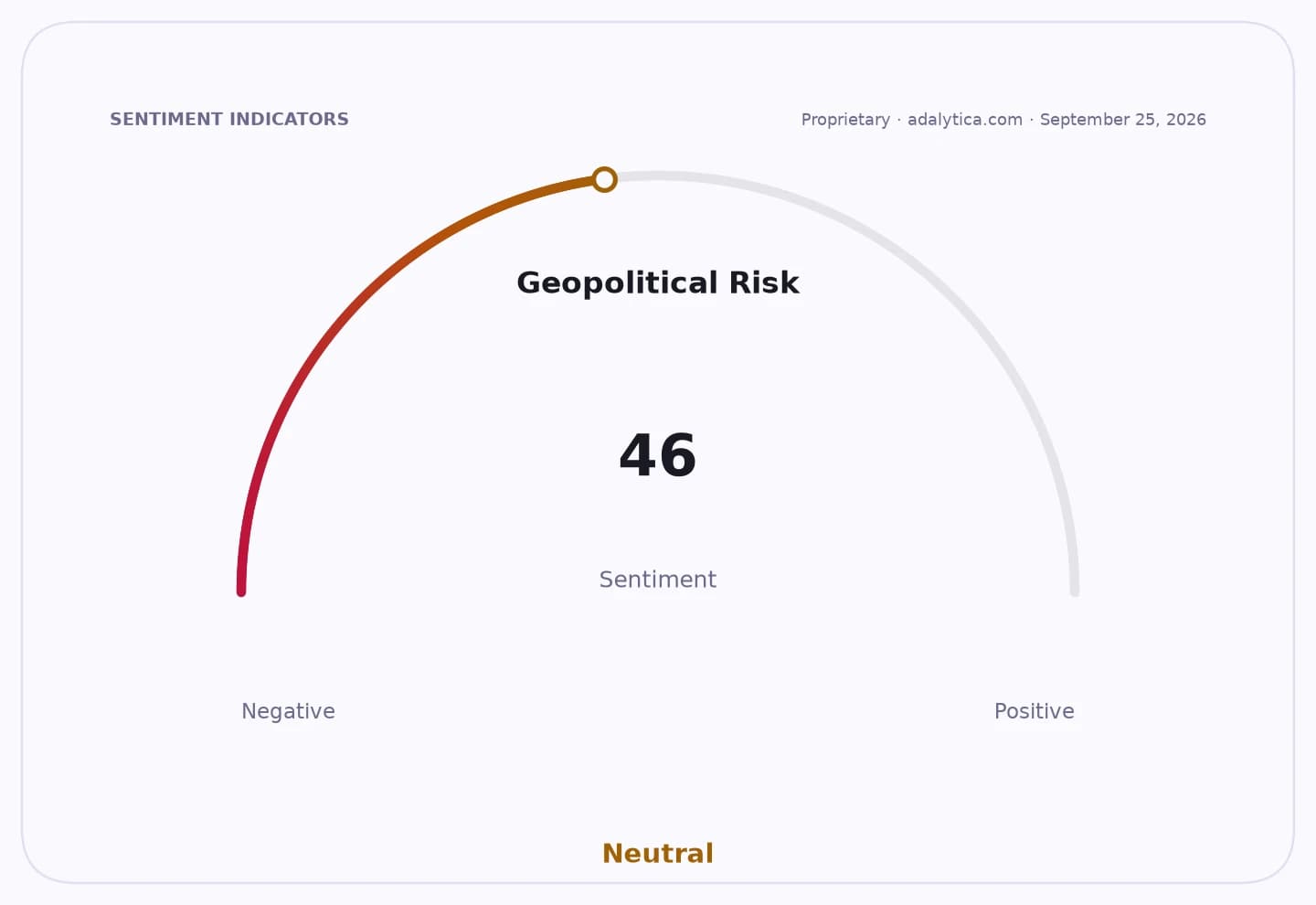
Geopolitical Risk — 30-day sentimentadalytica.com
Explore this data interactively — full history, time series and cross-market comparisons.Open AlphaPulse
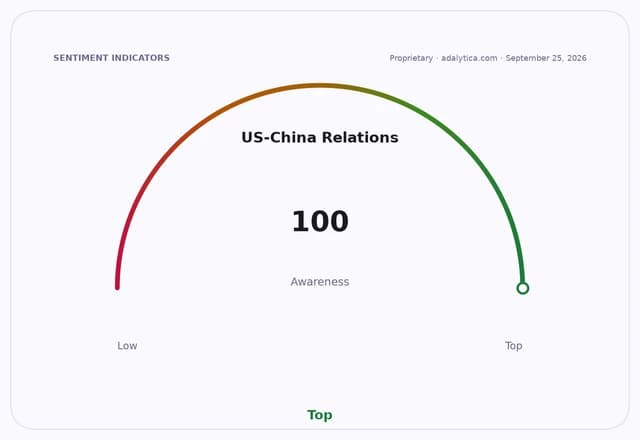
The timing is notable. Broader U.S.-China relations are already flashing extreme strain, with Adalytica’s U.S.-China Relations Sentiment gauge at 100, a reading that points to maximum tension. At the same time, global stability sentiment has slipped into neutral territory, with fear rising in the latest update. That combination is exactly what you would expect when great-power competition starts spilling into strategic geography.
For the market, the message is straightforward: the Arctic is becoming investable as a defense-and-infrastructure theme, not a distant environmental story. The first wave of capital will likely flow to surveillance, communications, shipbuilding, and security contractors before the larger buildout reaches ports, logistics and energy. If the U.S. and its allies respond with more patrols, sensors and forward deployment, the Arctic may generate one of the next durable capex cycles in national security.
The trade here is not to chase headlines, but to position early for a multi-year escalation in Arctic spending. When the world’s two biggest powers start contesting the far north, the companies that sell visibility, deterrence and logistics almost always win first.
| Entity | Gains | Losses |
|---|---|---|
| U.S. defense contractors | ▲More Arctic spending | ▼None immediate |
| Maritime surveillance firms | ▲Higher monitoring demand | ▼Budget pressure if delayed |
| China | ▲Strategic reach | ▼More scrutiny |
| Arctic shipping and energy operators | ▲Infrastructure investment | ▼Higher security costs |