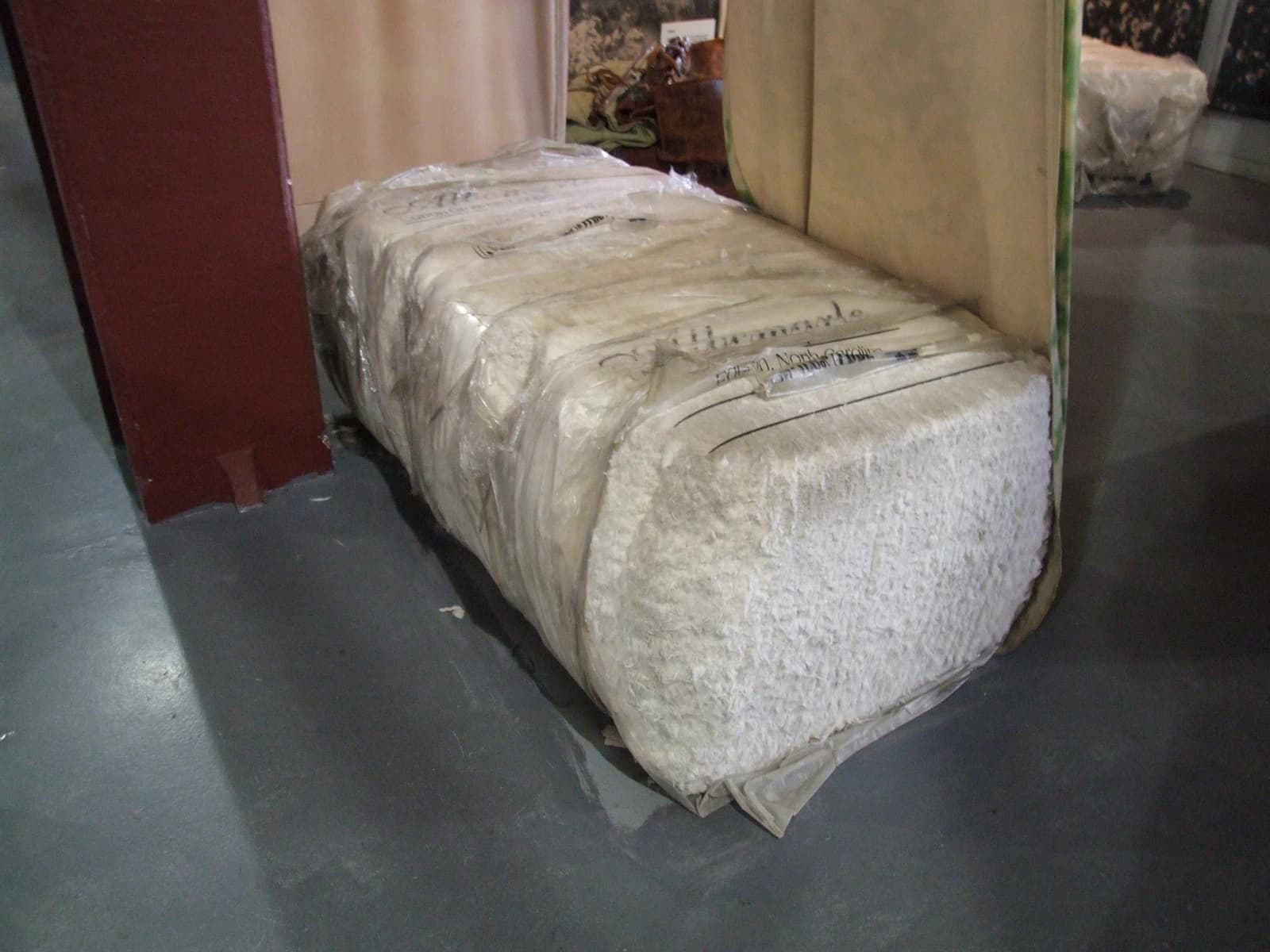
Egypt’s cotton exporters have started the 2026-27 season with a highly concentrated sales pattern, as India absorbed 80% of shipments in the first 20 days of September, underscoring how dependent the trade remains on a narrow group of foreign buyers and on steady pricing in a still-sensitive global market.
Egypt cotton exports to India reach 80% in September

The concentration matters because cotton exports remain a key source of hard currency for Egypt’s farm sector, and because early-season demand is often where price discovery and logistics conditions show up first. In the current cycle, 6,647 tons were shipped to just six countries, with India taking 5,331 tons, followed by Germany at 760 tons, Pakistan at 375 tons, China at 105 tons, Turkey at 50 tons and Bahrain at 26 tons, according to the Egyptian Cotton Exporters Association.
That dependence on India is economically significant for two reasons. First, it leaves Egyptian exporters exposed to any shift in Indian import policy, mill demand or freight economics. Second, it suggests Egyptian cotton is still competing on a relatively small number of price-sensitive routes rather than broad-based global demand. When one market accounts for four-fifths of shipments, the export story is less about diversification and more about maintaining access to a single anchor buyer.
The numbers also point to a sector that is trying to stabilize after a volatile year. Egyptian officials said the last export season, which ended on Aug. 31, 2026, saw stronger shipments despite swings in global cotton prices, higher insurance costs and shipping disruptions linked to regional security risks. Some carriers were forced to reroute around Africa, adding to freight costs. Even so, total exports in the 2025-26 season reached 64,060 tons, up from 39,216 tons a year earlier, with export value exceeding $205 million.
That recovery helps explain why growers and exporters are pushing to expand planted area. Current cotton acreage is about 205,000 feddans, up from 195,000 last year, according to sources familiar with the matter. More area should support output, but it does not eliminate the core risk: export performance still depends heavily on international pricing, shipping conditions and the willingness of a handful of markets to keep buying.
For investors and trading counterparties, the message is that Egypt’s cotton revival is real but fragile. The sector benefits from firmer global and domestic prices and from a stronger harvest outlook, yet it remains vulnerable to transport costs, geopolitical disruption and buyer concentration. If India stays active, early-season momentum can hold. If demand there cools, the export arithmetic quickly becomes more difficult for producers, ginners and shippers alike.
| Entity | Gains | Losses |
|---|---|---|
| India | ▲Secures most Egyptian supply | ▼Greater dependence on one source |
| Egyptian exporters | ▲Strong early-season demand | ▼Buyer concentration risk |
| Farmers/ginners | ▲Better export outlet | ▼Exposure to price and freight swings |
| Rival buyers | ▲Access to limited volumes | ▼Reduced bargaining power |