Egypt’s 21-karat gold price was unchanged in jewelers’ markets on Wednesday at 6,180 pounds a gram for selling, even as the broader gold market remained elevated and local buyers continued to face steep making charges.
Egypt Gold Price Flat at 6,180 Pounds a Gram
The flat domestic quote matters because gold has become one of the clearest barometers of purchasing power in Egypt, where jewelry demand is highly sensitive to both imported bullion pricing and the local currency. With 24-karat gold at 7,062.75 pounds a gram, 18-karat at 5,297.25 pounds and a gold pound coin at 49,440 pounds, the market is still operating near levels that squeeze retail demand and push households to compare shops carefully before buying.
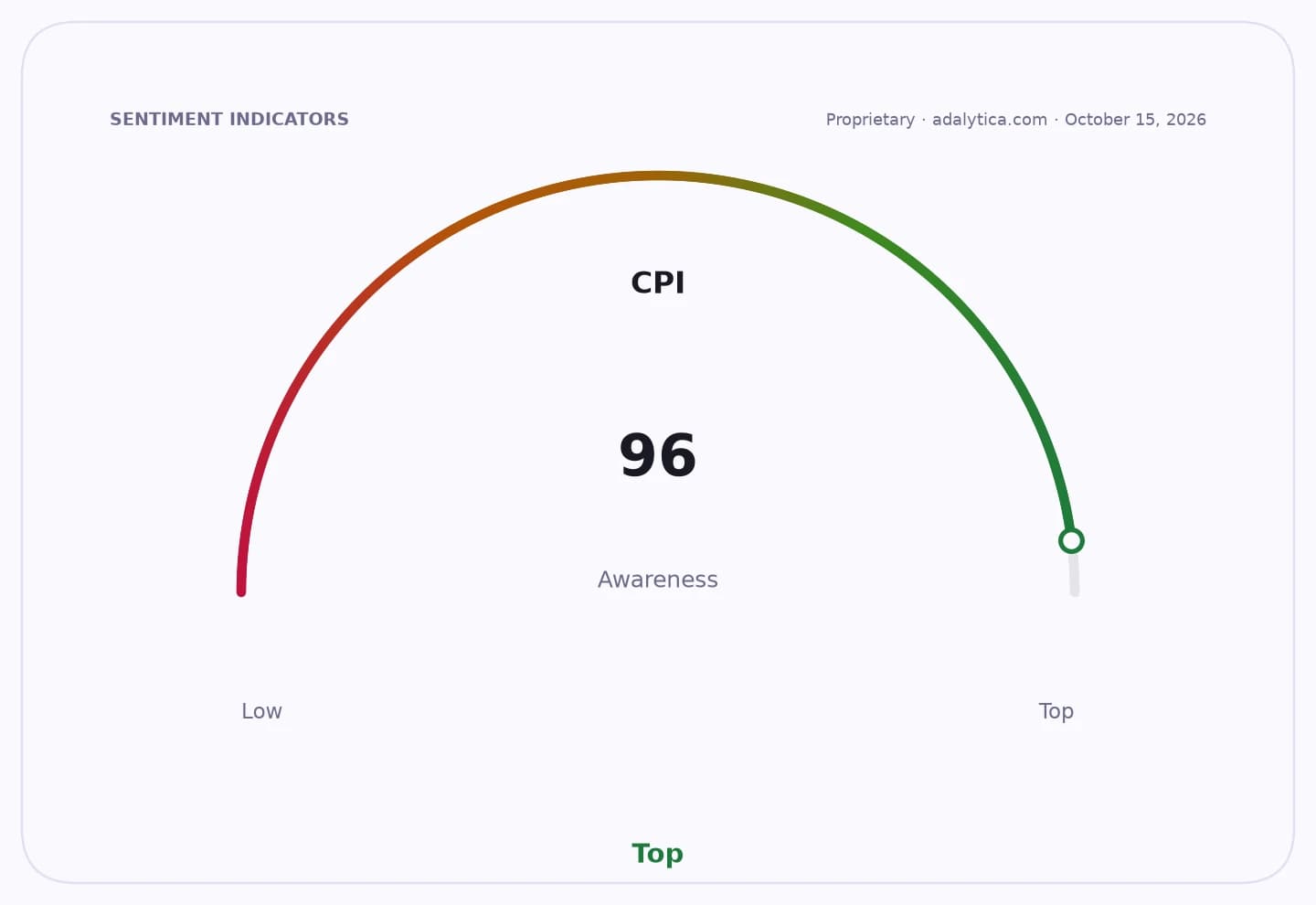
Sentiment IndicatorsⓘProprietary · adalytica.com · October 15, 2026
This is a snapshot — live sentiment, awareness and momentum for 130+ markets update continuously in the dashboard.Open AlphaPulse
The benchmark international price was quoted at $4,148.76 an ounce, underscoring how elevated global bullion remains even after recent volatility. That level keeps a firm floor under Egyptian prices, since jewelers pass through movements in global gold and the exchange rate to consumers with only a limited lag. It also helps explain why the local market can look stable day to day while remaining expensive in absolute terms.
Investor attention remains focused on the forces behind gold’s resilience. Gold typically benefits when real yields ease or when demand for safe havens rises, and the current environment still appears supportive. Adalytica’s Gold Fear & Greed Index stood at 87, in “Extreme Greed,” suggesting momentum remains stretched even as the 50-day and 200-day moving averages on GLD point to a softer short-term technical picture. GLD closed at $375.99 on Oct. 14, below both its 50-day average of $397.48 and 200-day average of $415.14, a sign that ETF holders have been reducing exposure even as physical prices stay high.
That split matters for traders because it highlights a market that is not moving in one direction for the same reason. The price in Egyptian shops is being supported by the global ounce price and local cost pass-throughs, while the ETF market is showing some fatigue after a powerful run. The result is a tug of war between retail affordability and bullion scarcity psychology.
Oil and rates also remain part of the backdrop. U.S. 10-year Treasury yields were around 5.21%-5.24%, keeping nominal returns attractive and limiting some of gold’s upside, while Brent-linked oil volatility has added to the inflation story globally. For households in Egypt, the bigger issue is simpler: elevated bullion prices and 7%-10% making charges make jewelry a more expensive purchase, even before purity and workmanship differences are considered.
For investors, the key question is whether gold is consolidating before another leg higher or digesting gains after a crowded trade. A sustained move higher would likely require weaker yields, renewed geopolitical stress or more pronounced currency pressure. If those fail to emerge, local buyers may continue to see stable but costly pricing, while global funds face a tougher case for paying up at current levels.
| Entity | Gains | Losses |
|---|---|---|
| Egyptian jewelers | ▲Higher nominal ticket values | ▼Softer retail volume |
| Local buyers | ▲Price transparency | ▼Affordability |
| Gold bulls | ▲Safe-haven support | ▼Overbought positioning risk |
| GLD holders | ▲Long-term inflation hedge | ▼Near-term technical weakness |