The Dominican Republic’s central bank said the financial system faces no significant stability risks, a reassurance that matters because the country’s banks are still expanding balance sheets even as global financial conditions remain unsettled.
Dominican Republic Central Bank Sees No Stability Risks

That is the key takeaway for investors: the system is not merely surviving; it is growing with capital to spare. The Banco Central de la República Dominicana said assets at financial intermediaries rose 10.7% year on year to more than RD$4.59 trillion by September 2026, equal to 53.9% of GDP, while deposits climbed 12.6% to over RD$3.60 trillion. Credit grew 8.3%, driven by consumer, commerce and housing lending, and non-performing loans eased to about 1.5% from a 1.9% peak at the end of 2025.
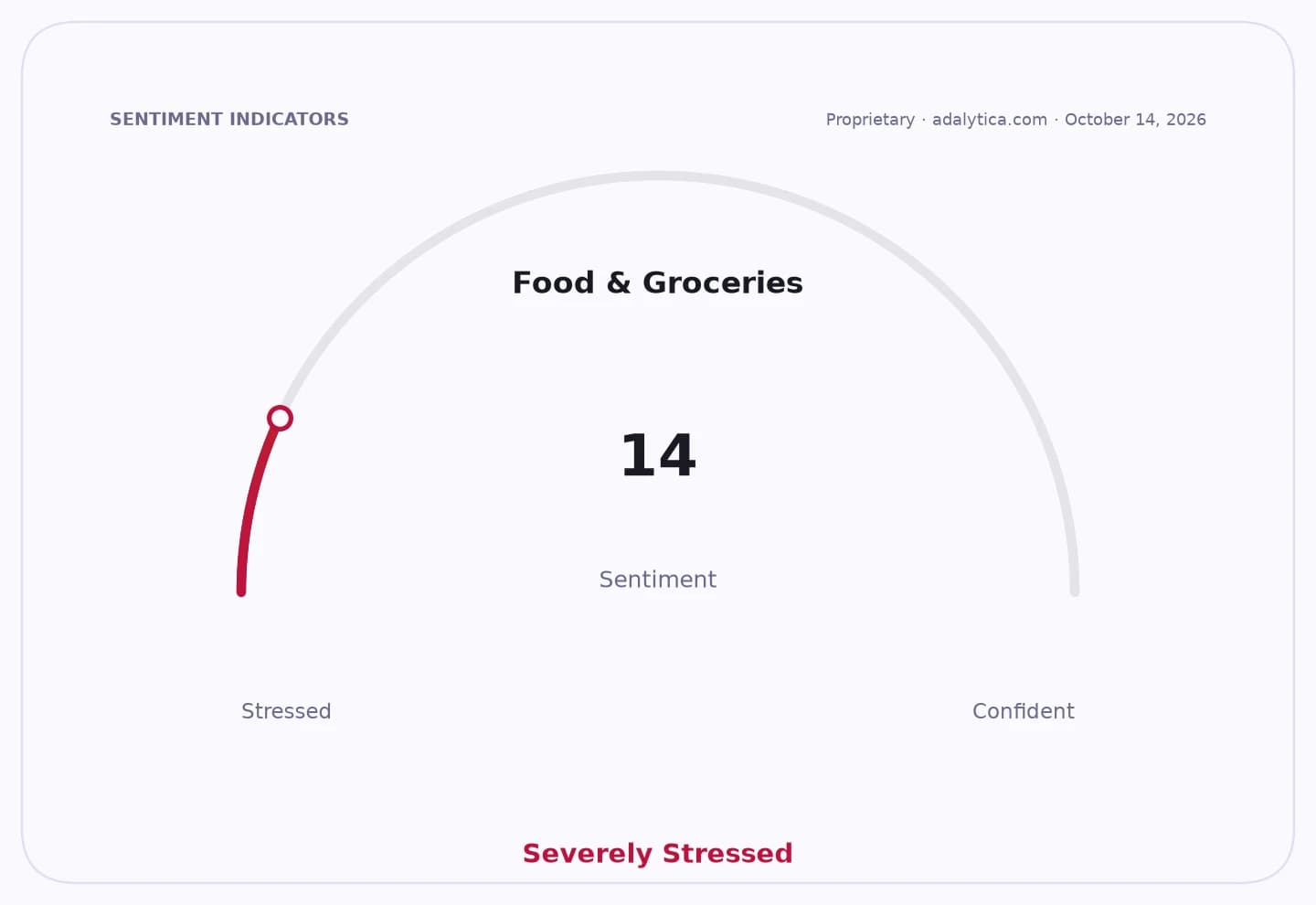
Sentiment IndicatorsⓘProprietary · adalytica.com · October 15, 2026
This is a snapshot — live sentiment, awareness and momentum for 130+ markets update continuously in the dashboard.Open AlphaPulse
For a small open economy, that combination is important. It suggests household and business cash flows are holding up, funding is still flowing through the banking system and the sector is not seeing the kind of stress that typically forces a policy response or raises systemic-risk premiums. The central bank said stress tests show institutions have enough capital to absorb losses across adverse macroeconomic scenarios, while the solvency ratio stood at 18.9% and return on assets and equity reached 3.0% and 23.1%, respectively.
The message extends beyond commercial banks. The central bank said insurers, securities intermediaries, investment and pension fund managers and fiduciaries are also operating without identified vulnerabilities that would threaten their intermediation role. That lowers the risk of a broader credit squeeze and supports the case for continued private-sector lending, an essential ingredient for investment and domestic demand.
The report also points to a tightening of the rulebook rather than a loosening of discipline. Authorities have brought local standards closer to Basel recommendations, introduced mark-to-market accounting for financial instruments, set new limits on foreign-currency lending to non-dollar earners and raised minimum capital requirements for exchange intermediaries. The contingency fund now covers up to RD$2,355,000 per depositor, a move that should help anchor confidence if global volatility intensifies.
Markets are likely to read this as a constructive stability signal for Dominican sovereign and financial assets. The economy appears to have enough internal liquidity to absorb external shocks, even as the central bank says it will keep watching international conditions closely. For investors, that is the setup that matters most: stable banks, rising deposits, moderate credit growth and regulation that reduces tail risk. The opportunity remains in the institutions and sectors that can compound from that stability rather than merely react to it.
| Entity | Gains | Losses |
|---|---|---|
| Dominican banks | ▲Stronger confidence, steady lending | ▼Higher compliance costs |
| Depositors | ▲Greater protection, stable access | ▼Lower risk appetite |
| Borrowers | ▲Continued credit availability | ▼Tighter FX lending limits |
| Regulators | ▲Reduced systemic-risk concerns | ▼Need for constant vigilance |