Egypt’s non-oil private sector came close to stabilizing in August, with the Purchasing Managers’ Index rising to 49.6 from 46.8 in July, the strongest reading in seven months and a sign that months of contraction are easing.
Egypt private sector PMI rises to 49.6 in August
The improvement matters because the PMI is a timely gauge of underlying domestic demand, hiring and pricing pressure in an economy that has been wrestling with tight liquidity, supply constraints and uneven business conditions. A reading below 50 still points to contraction, but August’s move nearer the neutral mark suggests the pace of decline slowed sharply and the sector may be entering a softer recovery phase in the third quarter.
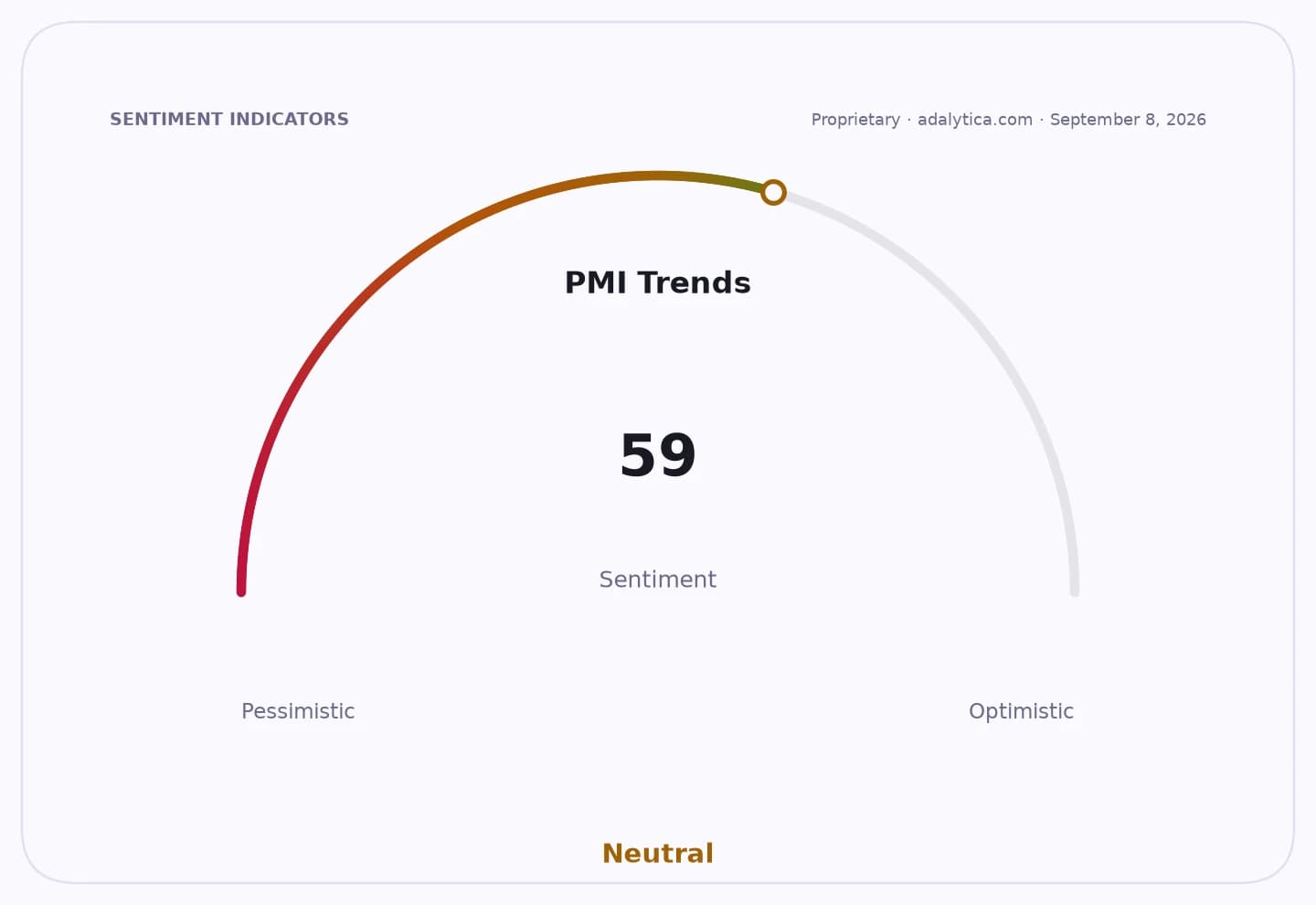
Sentiment IndicatorsⓘProprietary · adalytica.com · September 3, 2026
This is a snapshot — live sentiment, awareness and momentum for 130+ markets update continuously in the dashboard.Open AlphaPulse
The report showed broad-based improvement in output and new orders, even if both were still declining overall. Employment was a standout, with hiring registering one of the fastest increases in the survey’s 15-year history as firms added staff to cope with capacity pressures and stabilize backlogs.
That resilience came despite persistent headwinds. Purchasing activity fell for a fifth straight month and at the fastest pace in nearly three years, reflecting weak cash flow, delayed supplier payments, material shortages and trade disruption tied partly to the Strait of Hormuz. The report also said input and output price inflation accelerated for the first time in three months, with higher raw material, oil and transport costs feeding through while wage growth remained elevated.
For investors, the key takeaway is that Egypt’s private sector is showing more signs of bottoming out after a prolonged slump, which could support expectations for better third-quarter growth and a firmer outlook for consumer-facing, services and labor-linked businesses. Global P&S Intelligence said the PMI reading is consistent with annual GDP growth approaching 5%, though the index is still signaling that activity has not fully turned a corner.
Business confidence also improved to its highest level since June 2022, with firms citing projects, tourism and new branches as reasons for optimism. The next test is whether stronger hiring and improving orders can offset cost pressure and supply-chain strain without triggering a setback in demand.
| Entity | Gains | Losses |
|---|---|---|
| Egyptian private firms | ▲Better orders, hiring, confidence | ▼Still below growth, higher costs |
| Workers | ▲More job creation | ▼Wage pressures and inflation |
| Suppliers | ▲Potentially steadier demand later | ▼Delayed payments, weaker purchasing now |
| Consumers | ▲More stable business activity | ▼Risk of higher prices |