Iron ore prices have edged higher globally, but Egypt’s local steel market remains largely stable, with the average price of a ton of rebar rising just 54.71 pounds, or 0.14%, to 38,415.45 pounds.
Egypt steel prices edge higher on stable demand
That narrow move matters because it shows the global rally in raw materials has yet to fully feed through to Egyptian construction steel, where mills are still pricing close to recent levels despite firmer seaborne iron ore and mixed trends in finished steel products abroad. For buyers, that keeps near-term project costs contained; for producers, it limits their ability to pass on higher input costs.
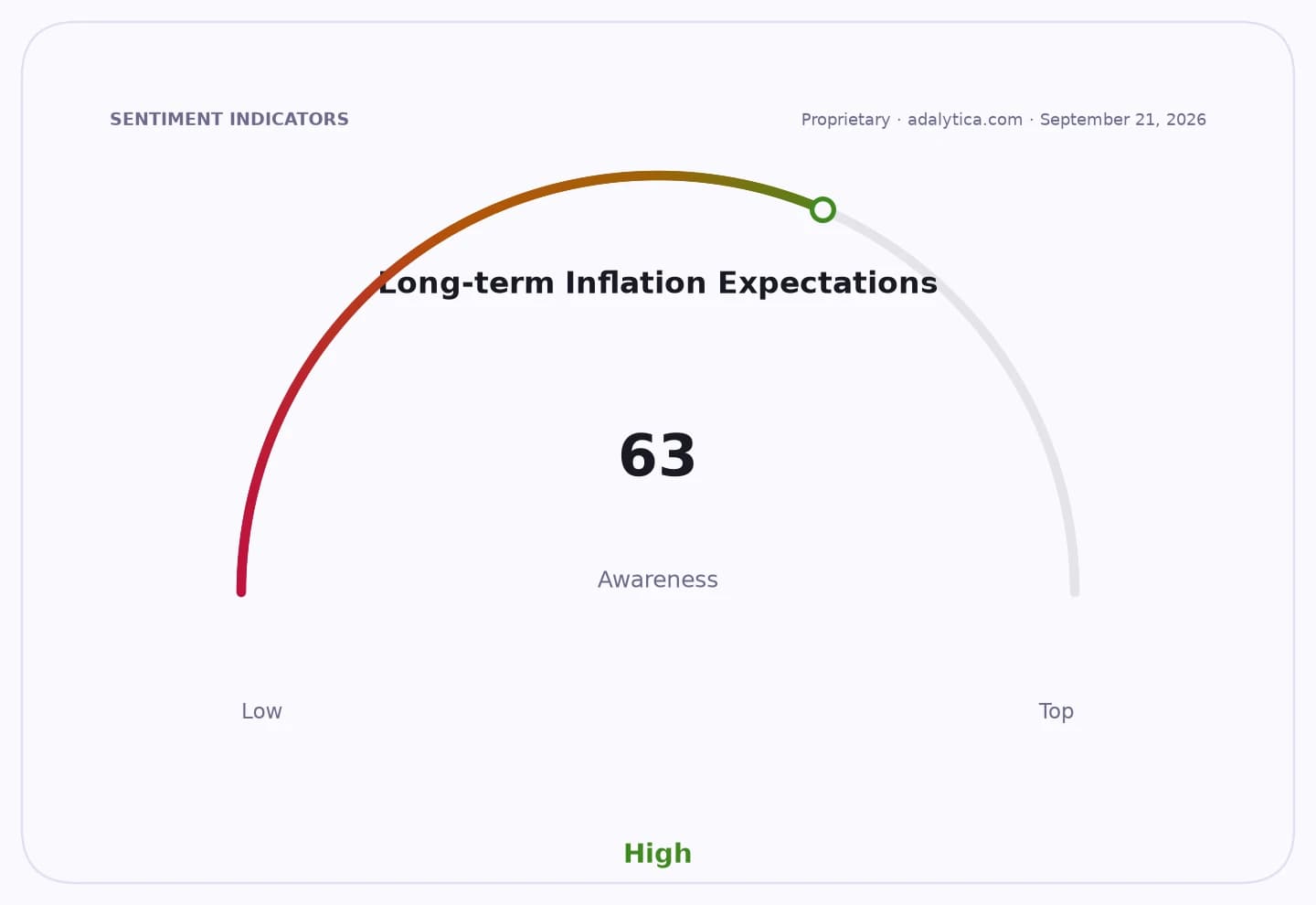
Sentiment IndicatorsⓘProprietary · adalytica.com · September 3, 2026
This is a snapshot — live sentiment, awareness and momentum for 130+ markets update continuously in the dashboard.Open AlphaPulse
In Egypt, factory-gate prices ranged from 37,500 pounds to 40,400 pounds a ton, according to the latest lists from producers. Ezz Steel was quoted at about 40,000 pounds a ton, while Bishai was at 39,800 pounds, Eltalat at 39,500 pounds, El-Marakby and Egyptian Steel at 39,400 pounds, Al-Koumi at 38,500 pounds, El-Maadi at 38,400 pounds and Misr Steel at 37,500 pounds.
Global steel markets were more mixed. Iron ore 62% Fe rose to about $99 a ton CFR Australia, up $1 from the previous week, while Turkish rebar FOB climbed to $590-$605 a ton and wire rod to $600-$615 a ton. Scrap stayed flat at $375 a ton CFR Turkey, underscoring the tug of war between slightly firmer ore prices and cautious buying in finished steel.
For investors, the key question is whether the higher ore benchmark can sustain margins for miners such as Vale, BHP and Rio Tinto, or whether weak demand and rising production will cap the move. Vale shares have climbed to $15.31, while BHP and Rio Tinto were last at $92.71 and $102.84, respectively, as traders watch whether steel demand in Asia improves enough to justify higher raw-material prices.
The broader backdrop is still one of uneven demand and abundant supply. With global iron ore output expected to accelerate over the next several years, the recent uptick looks more like a tactical rebound than the start of a durable upcycle, leaving Egyptian steel buyers and global miners both exposed to any shift in China’s growth outlook.
| Entity | Gains | Losses |
|---|---|---|
| Egyptian steel buyers | ▲Stable near-term costs | ▼Limited relief from higher ore prices |
| Egyptian steel mills | ▲Higher pricing power if demand holds | ▼Margin pressure from rising inputs |
| Iron ore miners | ▲Better benchmark prices | ▼Upside capped by weak demand |
| Construction sector | ▲Predictable steel budgets | ▼No meaningful price drop |