Ukraine has effectively lost its steel industry after Russian strikes shut down the country’s three biggest metallurgical plants, wiping out about 90% of national steel output and dealing a fresh blow to an economy already crippled by war.
Ukraine steel output falls after plant shutdowns
That matters far beyond one sector. Steel was one of Ukraine’s most important industrial export engines, a source of hard currency, employment and freight traffic, and its collapse removes a major pillar from the country’s wartime economy. It also tightens a regional supply chain that European buyers had already been leaning on, even as the broader war drives shipping, energy and insurance costs higher.
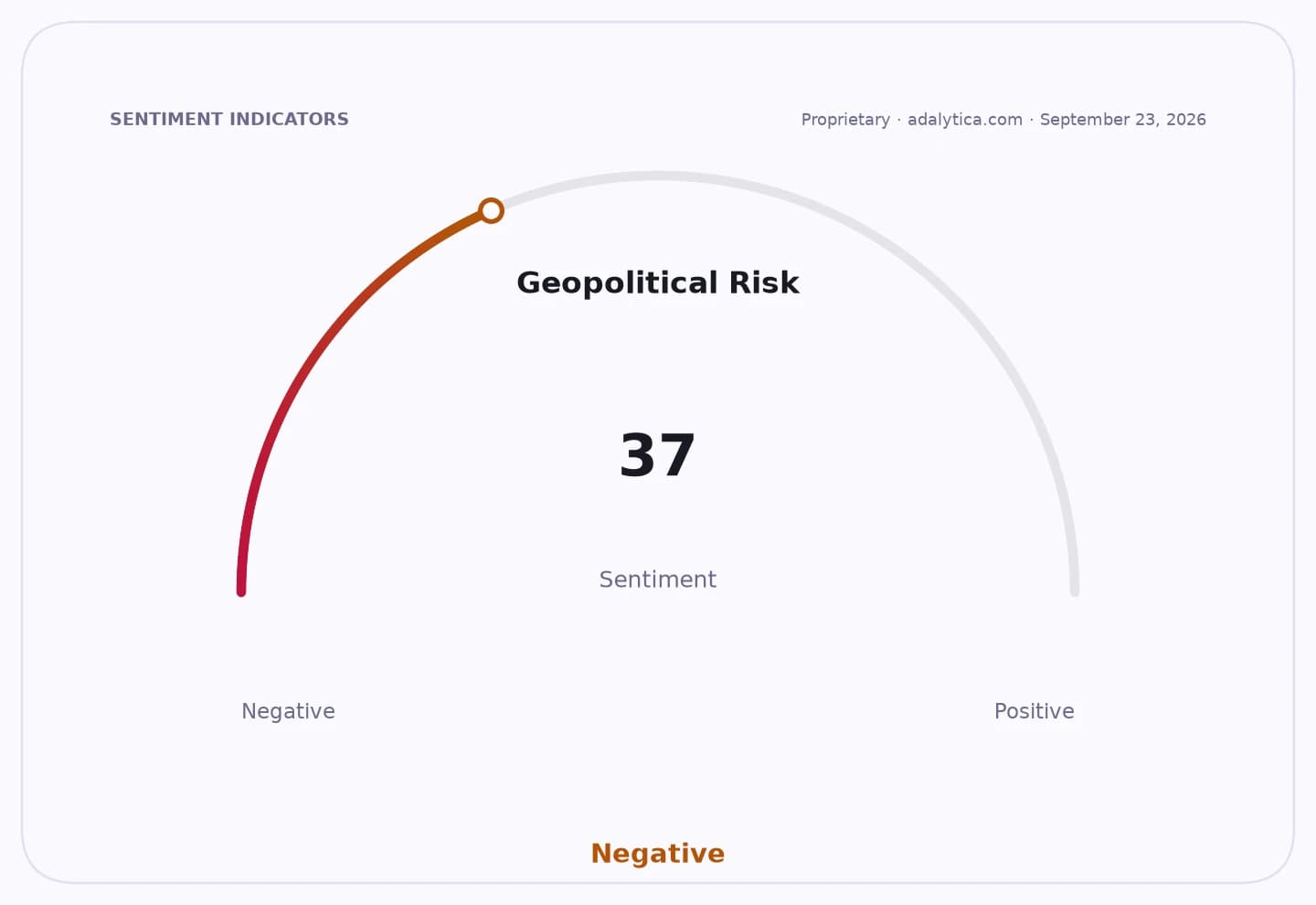
Sentiment IndicatorsⓘProprietary · adalytica.com · September 25, 2026
This is a snapshot — live sentiment, awareness and momentum for 130+ markets update continuously in the dashboard.Open AlphaPulse
The immediate message for investors is that this is not just another battlefield headline. It is a deepening structural shock to global metals supply, and it reinforces a theme the market still underprices: war destroys productive capacity faster than it can be rebuilt. In Ukraine, that means lower industrial output, weaker tax receipts and a longer road to recovery. For the steel market, it means less supply from a country that once mattered in the European trade flow, and more leverage for producers elsewhere.
Metinvest, Ukraine’s biggest steel group, has said the country has “lost its steel industry,” a stark admission that underscores how little remains of an industrial base that once helped anchor the economy. The shutdowns have also hit the broader metallurgical ecosystem, including plants that fed demand for power, transport and logistics. ArcelorMittal has said it cannot restart its Ukrainian steel plant while the conflict continues, a reminder that even surviving assets remain effectively stranded when missiles are the real bottleneck.
The market implications are clearest for the winners and losers in the global steel chain. Domestic U.S. mills such as Nucor and Steel Dynamics benefit from tighter import competition and a more supportable pricing backdrop, while Ukraine’s industrial workers, exporters and state finances absorb the loss. In Europe, buyers face a smaller and more fragile supply pool, which can eventually flow through to higher costs for construction, infrastructure and manufacturing if the war persists.
Adalytica’s Global Stability Sentiment shows how quickly geopolitical risk can reprice across markets: the gauge has swung sharply in recent sessions, reflecting renewed fear around conflict and supply disruption even as the headline sentiment reading sits at neutral. That is exactly the kind of environment where equity markets reward companies with domestic capacity, pricing power and low exposure to cross-border logistics shocks.
The investment takeaway is straightforward: Ukraine’s steel collapse is not only a tragedy for the country’s industrial base, it is a bullish long-term argument for diversified, non-Russian, non-Ukrainian steel producers and the infrastructure supply chain that feeds them. If the war drags on, capital will continue to favor the toll roads of the metals economy — the mills, processors and raw-material suppliers that can actually keep producing.
| Entity | Gains | Losses |
|---|---|---|
| Nucor | ▲Tighter import competition | ▼Lost Ukrainian supply |
| Steel Dynamics | ▲Stronger pricing power | ▼Regional supply disruption |
| Ukraine steel producers | ▲— | ▼90% output collapse |
| European steel buyers | ▲— | ▼Higher sourcing risk |