Ukraine’s stronger-than-expected gas balance is reviving discussion of limited exports to the European Union, a shift that could bring in scarce revenue for a war-damaged energy sector while preserving enough fuel to get through winter.
Ukraine Gas Surplus Revives EU Export Discussion

The immediate significance is financial. With underground storage filled to a target 14.6 billion cubic meters by the end of August and domestic demand falling from industry and power generation, Ukraine has more flexibility than it did earlier in the year. That gives policymakers room to consider selling part of the surplus abroad at European prices that remain well above domestic levels.
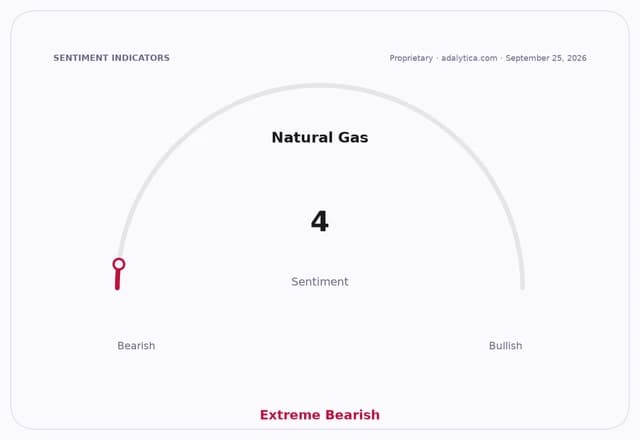
Sentiment IndicatorsⓘProprietary · adalytica.com · September 25, 2026
This is a snapshot — live sentiment, awareness and momentum for 130+ markets update continuously in the dashboard.Open AlphaPulse

For Ukraine’s gas producers and infrastructure operators, that matters because the sector is under relentless strain from Russian strikes. Additional export income would help fund repairs and restoration work on facilities that have been repeatedly hit, easing pressure on companies that must keep production and transport systems running in wartime conditions.
Adriand Prokip, director of energy programs at the Ukrainian Institute for the Future, said accumulated stocks should be enough to carry the country through winter under a baseline scenario and normal temperatures. The key constraint, he said, is not whether some gas could be exported, but how much can be sold without risking shortages at home.
That is why any opening to the EU would likely be tightly controlled. Prokip said the government would need to calculate “safe” export volumes and retain the ability to revise them quickly, including suspending exports entirely if domestic supply tightens. In other words, the policy debate is less about liberalising the market than about monetising a temporary surplus without weakening energy security.
The economics are straightforward. ExPro analysts said as of mid-August the export ban left Ukrainian gas trading at roughly 2.5 times below European prices. That spread creates a powerful incentive to sell abroad, especially if storage remains comfortable and internal consumption stays muted. But it also raises the risk that exporters, if allowed, could be tempted to chase higher margins unless state controls remain firm.
For investors, the story is about cash flow, resilience and policy risk. Producers, pipeline operators and service companies could benefit from a regulated export window that unlocks better pricing and fresh capital. The bull case is that Ukraine turns an unusual supply cushion into a source of hard currency at a time when reconstruction and maintenance needs are rising.
The bear case is that the surplus proves temporary. A colder winter, renewed industrial demand, or further damage to gas infrastructure could quickly erase the margin for exports. That is why the market is likely to watch storage levels, weather, attack intensity and the government’s willingness to keep a hard ceiling on outbound volumes.
The broader narrative is that Ukraine’s energy system, while still under military pressure, has accumulated enough gas to shift from pure survival mode to selective commercialisation. If managed carefully, limited exports to the EU could become a rare wartime earnings opportunity. If misjudged, they could deepen a winter vulnerability the state can ill afford.
| Entity | Gains | Losses |
|---|---|---|
| Ukrainian gas producers | ▲Higher export pricing | ▼Domestic-only pricing |
| Ukrainian state budget | ▲Extra FX revenue | ▼Export restriction control |
| EU gas buyers | ▲More supply options | ▼Higher import competition |
| Domestic consumers | ▲Winter supply security | ▼Potentially less surplus |