Iron ore prices climbed across global and local markets in September, but the more important story for investors is that the move is rippling through the entire steel value chain, lifting scrap, billet and rebar even as the benchmark ore price stays near $99 a ton. That matters because it points to firmer pricing power for producers and higher input costs for builders and fabricators, with the clearest winners likely to be low-cost miners and integrated steelmakers.
Iron Ore and Steel Prices Rise in September
The rally is broad-based. Turkish HMS 1&2 scrap from the U.S. rose $8 a ton week on week to $398, Russian billet gained $5 to $470-$480 a ton FOB, Turkish billet imported from CIS sources climbed $10 to $525-$535, and Turkish rebar jumped $20 to $630-$650. Wire rod posted the sharpest move, up $45 a ton to $660-$670. Even flat products firmed, with Russian hot-rolled coil up to $505-$510 and Chinese cold-rolled coil rising to $660-$670.
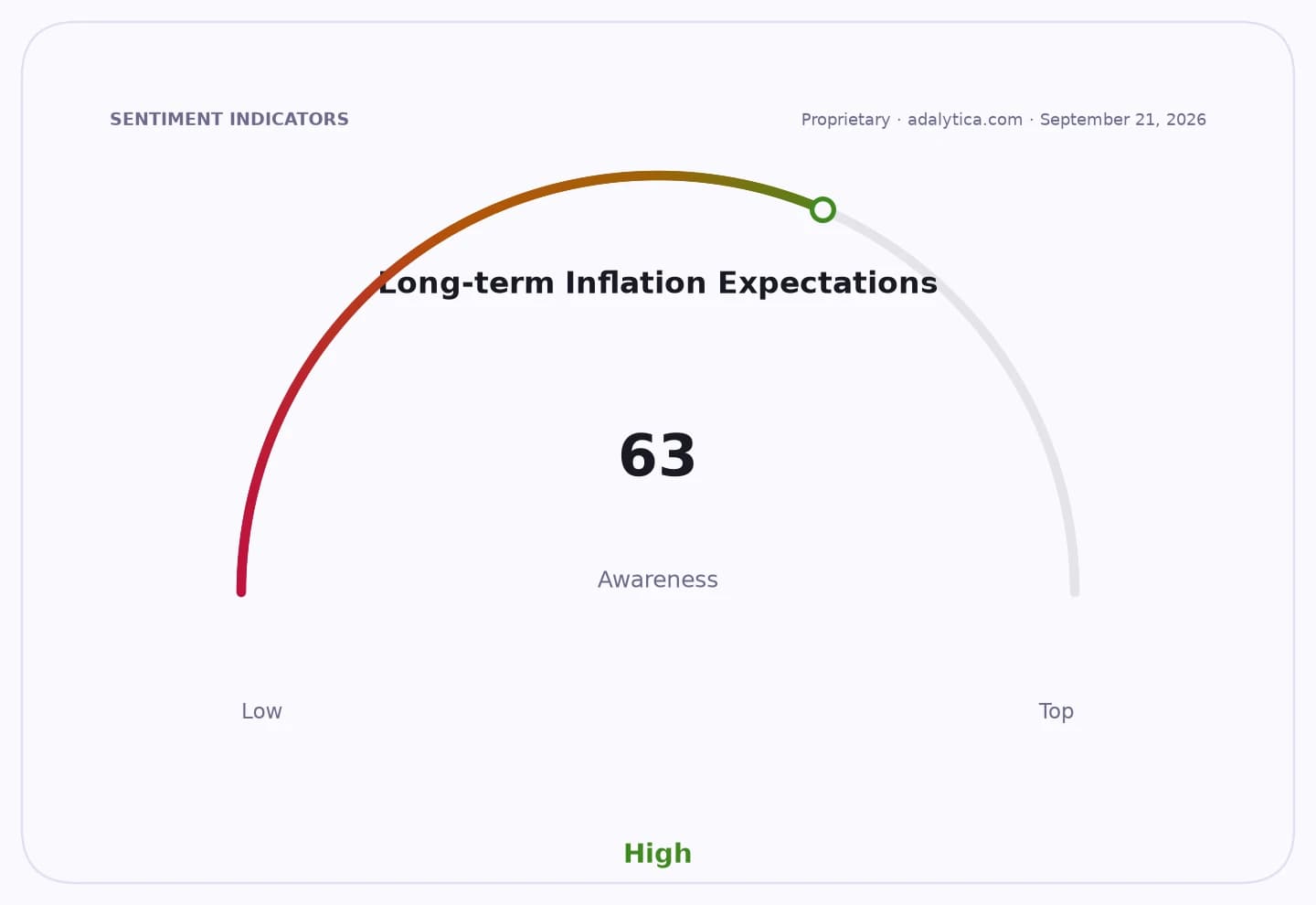
Sentiment IndicatorsⓘProprietary · adalytica.com · September 23, 2026
This is a snapshot — live sentiment, awareness and momentum for 130+ markets update continuously in the dashboard.Open AlphaPulse
By contrast, iron ore itself has been steadier, holding at $99 a ton for 62% Fe CFR Australia. That split is significant: it suggests the market is not being driven by a raw-material shortage so much as by downstream restocking, seasonal demand and tighter availability in semi-finished and finished steel. In other words, the price action is healthier for margins than a pure ore spike would be, because producers are passing through higher costs while also charging more for the finished product.
Egypt is already feeling it. The local investment-grade iron price rose 2.39% to about 38,590 pounds a ton, while Ezz Steel was quoted at 40,157 pounds a ton and other major producers clustered close behind. For construction and infrastructure buyers, that is an immediate cost headwind. For domestic steelmakers, it improves revenue momentum, but the benefit will depend on how quickly they can secure feedstock and how much demand can absorb the higher prices.
The macro backdrop is helping explain the move. Oil around $97 a barrel keeps freight and energy costs elevated, while Adalytica’s Chinese yuan trade signals show extreme awareness even as sentiment remains neutral, a mix that fits a market leaning into restocking rather than a clean demand boom. At the same time, the U.S. dollar has strengthened sharply, which can support commodity pricing in nominal terms and tighten imported supply for some buyers.
For investors, the setup argues for staying constructive on the best-positioned miners and integrated steel names, while being more cautious on construction-exposed end users and steel-intensive manufacturers. Rio Tinto, Vale and BHP remain the obvious global bellwethers, but the near-term price action is not yet confirming a runaway cycle in iron ore itself. The better opportunity may be in steel names with leverage to rebar, wire rod and billet pricing, where the September breakout is more pronounced and the pass-through is faster.
The key question now is whether this is a temporary seasonal lift or the start of a broader inventory rebuild heading into year-end. If Chinese buying stays firm and freight costs remain sticky, the market could be underestimating how long this pricing strength lasts. For now, the message is clear: iron prices are rising, but the bigger investment signal is that steel pricing power is returning faster than many in the market expected.
| Entity | Gains | Losses |
|---|---|---|
| Steelmakers | ▲Higher selling prices | ▼Raw-material and energy costs |
| Miners | ▲Better revenue momentum | ▼Demand risk if restocking fades |
| Construction buyers | ▲— | ▼Higher input costs |
| Rebar/billet producers | ▲Stronger margins | ▼Price-sensitive end users |