Egypt’s stock exchange has added 36.86 billion pounds of new government treasury bonds to trading, a move that expands domestic funding channels at a time when the state is still leaning heavily on local debt markets to meet financing needs.
Egypt adds 36.86 billion pounds in treasury bonds
The listing matters because it signals that Egypt continues to tap the bond market in size rather than rely solely on shorter-dated bills or external borrowing, a pattern that can help extend the maturity profile of public debt while locking in funding for the treasury. For investors, the new issues create fresh supply in a market where yields remain elevated and duration risk is tightly linked to the path of inflation and monetary policy.
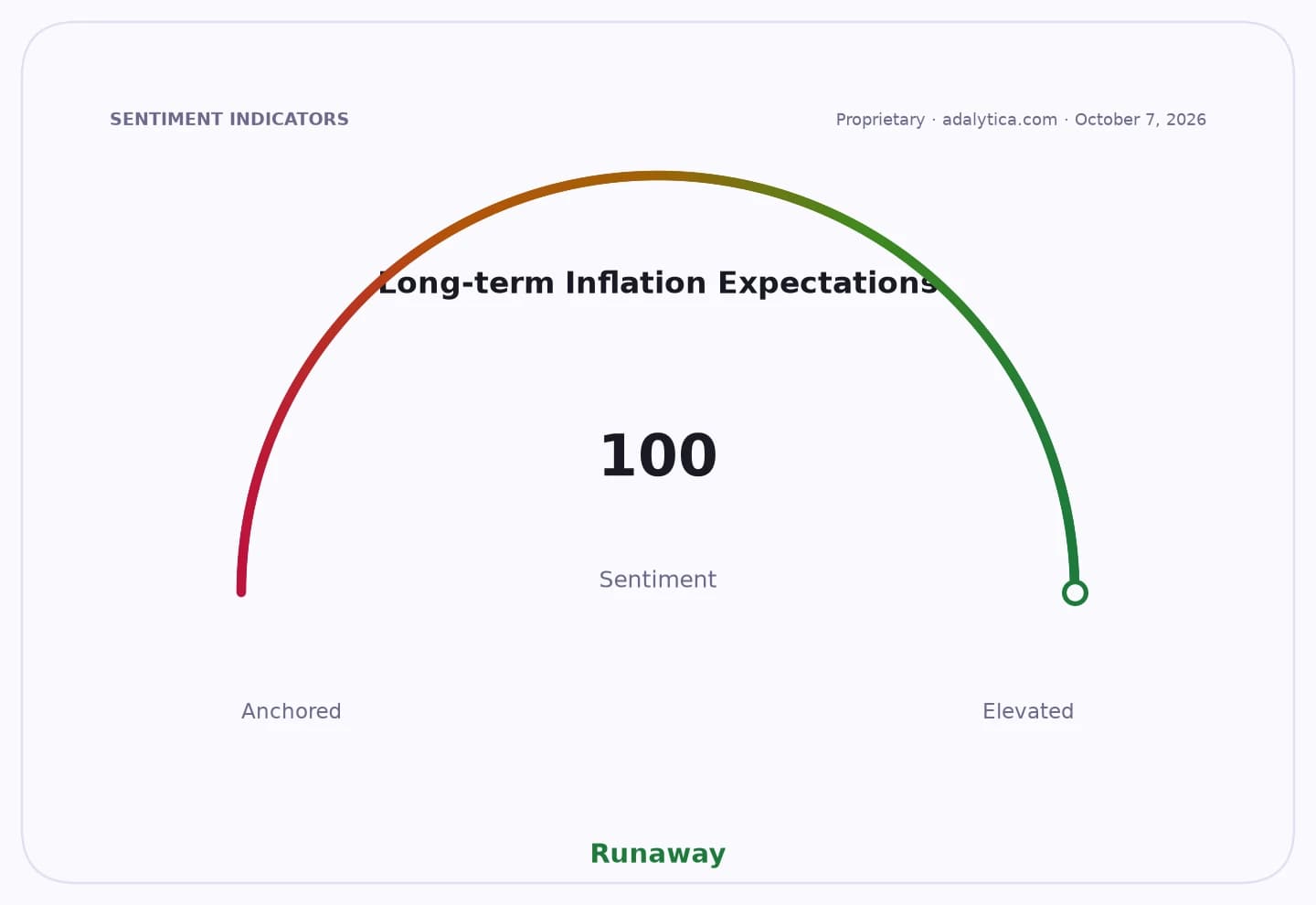
Sentiment IndicatorsⓘProprietary · adalytica.com · October 7, 2026
This is a snapshot — live sentiment, awareness and momentum for 130+ markets update continuously in the dashboard.Open AlphaPulse
The exchange said the new listings were based on letters from the central bank and the central securities depository dated Oct. 5 and were made available for trading from the start of the Oct. 6 session. One tranche is a variable-rate bond due April 6, 2028, worth 2.5 billion pounds and carrying a current annual yield of 25.498%, paid semiannually. The larger issue is a fixed-rate bond due Oct. 6, 2029, worth 34.365 billion pounds with a coupon of 23.981%, also paid every six months.
The scale of the fixed-rate tranche is notable. By pushing most of the financing into a five-year tenor, Egypt is effectively trying to reduce rollover pressure in a market that has been characterized by high domestic borrowing costs. That can be helpful for the sovereign’s cash management, but it also means the treasury is accepting costly funding in exchange for certainty, a trade-off that investors will watch closely as real rates and inflation expectations evolve.
The bonds arrive against a backdrop of still-high local interest rates. Conventional Treasury market indicators suggest US yields were steady around 5.30% on the 10-year and 4.80% on the two-year, with the curve modestly positive. That does not directly price Egypt’s debt, but it underscores that global fixed-income markets remain in a restrictive environment, leaving frontier and emerging-market borrowers sensitive to shifts in dollar liquidity and global rate expectations.
For local investors, the listing adds liquid paper from a sovereign issuer with explicit government backing and regular coupon income. For banks and primary dealers, it provides inventory that can be used for duration management and collateral. The downside is that a heavy pipeline of sovereign issuance can crowd out private borrowers and keep funding costs elevated across the economy.
The broader investment case will depend on whether Egypt can keep inflation and borrowing costs moving lower enough to support a durable decline in government yields. If that happens, the newly listed bonds could become attractive carry assets. If not, the country may keep paying a premium to finance itself, leaving bondholders with income but limited room for capital gains.
| Entity | Gains | Losses |
|---|---|---|
| Egyptian Treasury | ▲Longer-term funding | ▼Higher interest expense |
| Banks/primary dealers | ▲New tradable sovereign paper | ▼Balance-sheet funding pressure |
| Fixed-income investors | ▲High coupon income | ▼Duration risk if rates stay high |
| Corporate borrowers | ▲None directly | ▼Crowding-out from sovereign supply |