Ethereum’s push toward $3,000 got a fresh catalyst from Citi’s decision to lift its 12-month target to $3,028, but the bigger investment story is that the market is now trying to price a much larger, more mature asset with less room for the kind of explosive gains early buyers once enjoyed.
Ethereum Nears $3,000 After Citi Raises Target
That matters because Ethereum is no longer a small-cap crypto story. With a market value around $330 billion, ETH has to absorb real capital to keep moving higher, and the latest advance is being powered more by short covering and a softer U.S. rate backdrop than by clean spot demand. ETH was changing hands around $2,705 on Oct. 1, testing the $2,750 to $2,800 resistance zone, after rebounding more than 80% from a June low near $1,500. A close above $2,800 would open the door to $3,000, but Citi’s new target still implies only modest upside from current levels.
Sentiment IndicatorsⓘProprietary · adalytica.com · October 3, 2026
This is a snapshot — live sentiment, awareness and momentum for 130+ markets update continuously in the dashboard.Open AlphaPulse
For investors, the key question is not whether Ethereum can get back above $3,000. It is whether the move can hold without fresh institutional inflows. That is where the picture gets more complicated. U.S. spot Ether ETFs saw $59.6 million in outflows on Sept. 30 and another $55.4 million leave the next day, even as the token climbed. In other words, price strength is outrunning fund demand. When rallies depend on derivatives positioning and shorts being squeezed, they can extend quickly — but they can also reverse just as fast.
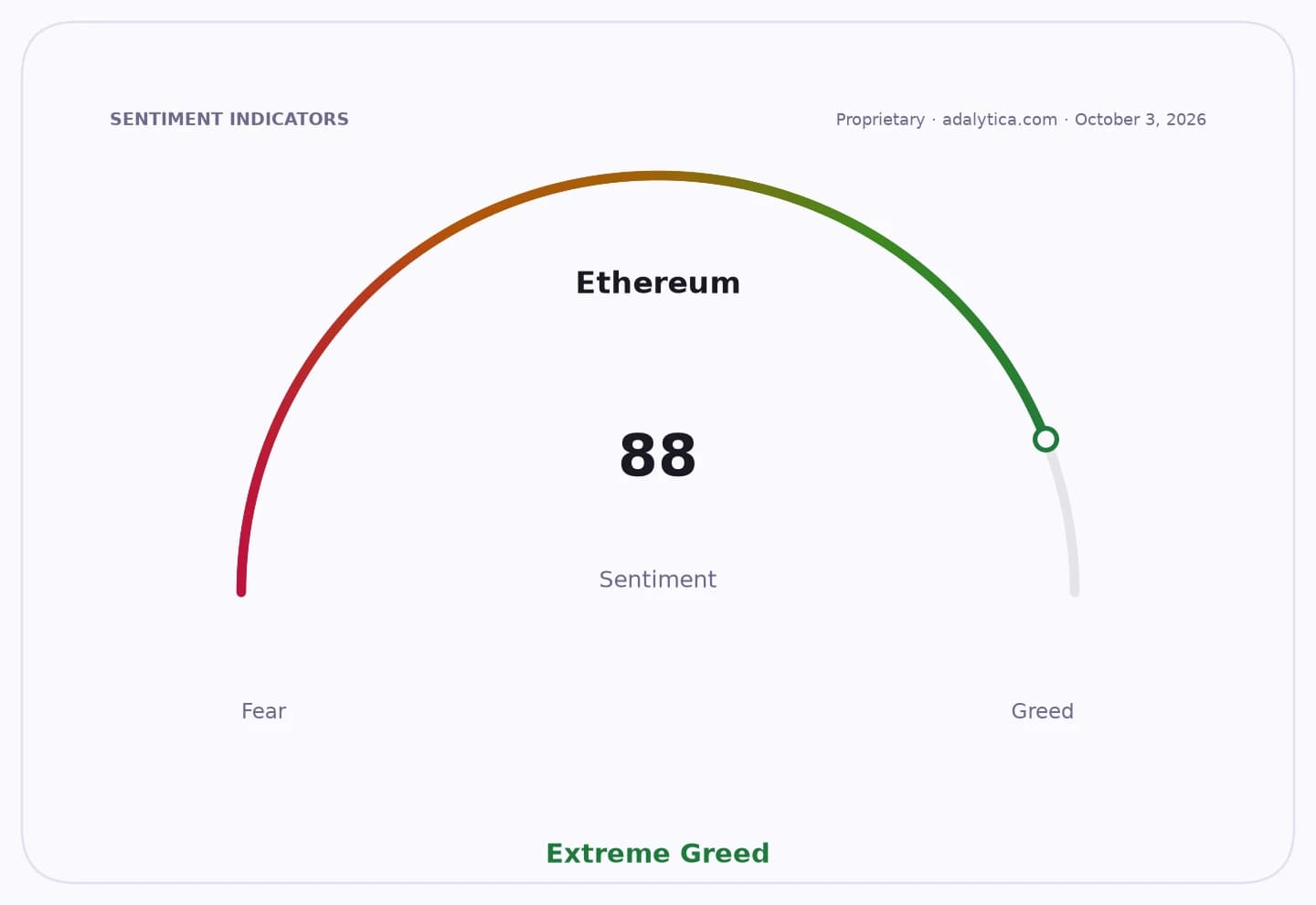
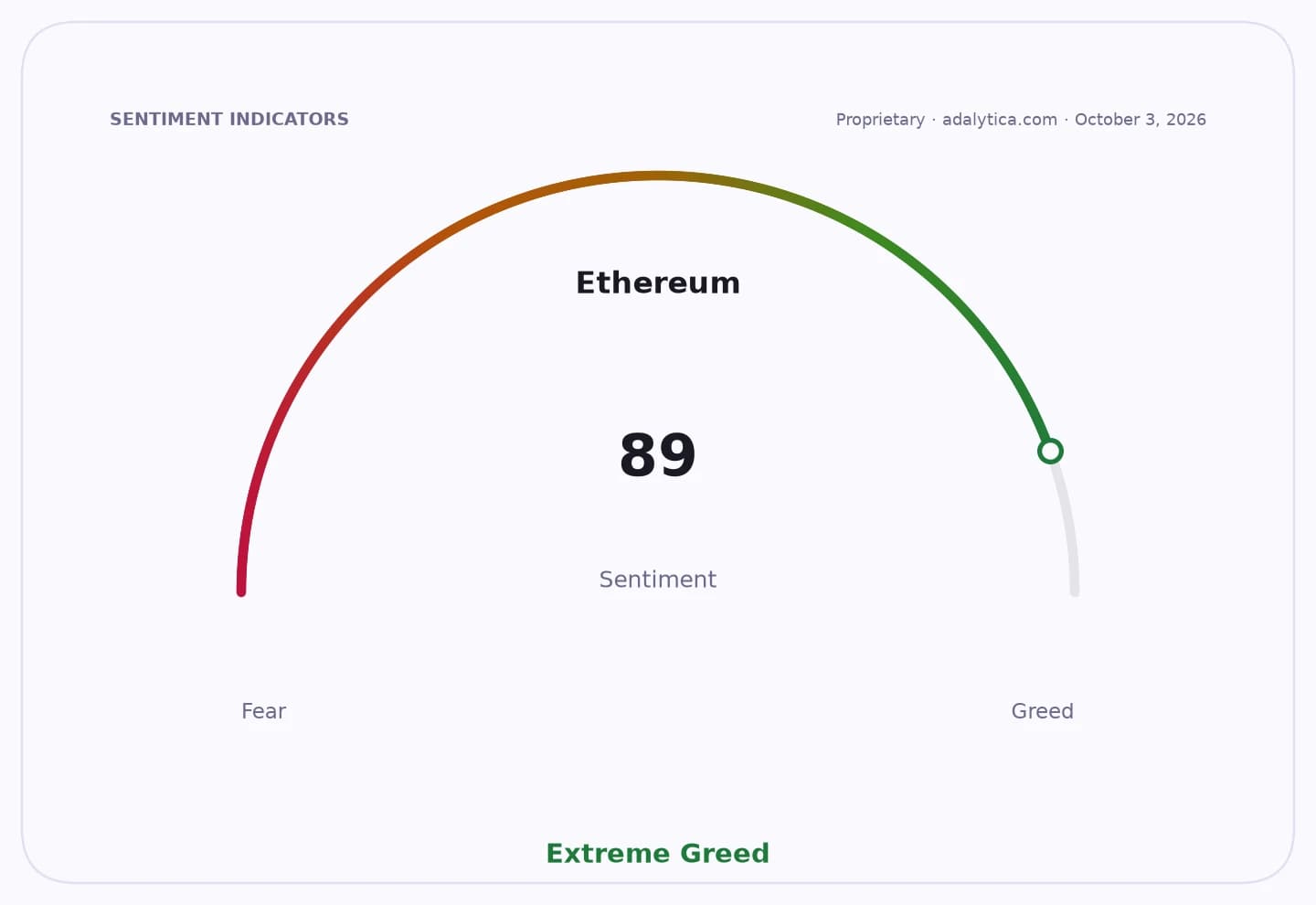
Technically, the setup is constructive but stretched. Ethereum is trading above its 50-day moving average and well above its 200-day moving average, with an RSI in overbought territory at 76.8 in the latest reading. That tells you momentum is strong, but also that traders are paying up for the trade. Adalytica’s Ethereum Fear & Greed Index shows sentiment at 89, or “Extreme Greed,” after jumping 86 points over the past 30 days. That is the sort of positioning that can fuel a breakout, but it also leaves the market vulnerable if the next catalyst disappoints.
The Oct. 6 Glamsterdam testnet upgrade is the next near-term event that could keep traders engaged, especially if it reinforces Ethereum’s role as core infrastructure for DeFi and tokenization. Still, the market is no longer valuing ETH as a speculative experiment. It is valuing it as a large, institutionally watched network with real competition, real resistance levels and real capital expectations. That changes the return profile.
This is why the most interesting opportunity may not be in chasing Ethereum for another multibagger. It is in owning the picks-and-shovels beneficiaries tied to crypto infrastructure, trading activity and exchange volumes while Ethereum itself grinds toward a more modest re-rating. Coinbase Global, which tends to benefit when crypto volumes and volatility rise, and CME Group, which earns from derivatives activity, are better positioned than pure spot buyers if this market stays active but range-bound. ETH can still clear $3,000. The bigger question is whether investors are confusing a tradable breakout with the start of a new cycle.
| Entity | Gains | Losses |
|---|---|---|
| Ethereum (ETH) | ▲Breakout above $2,800 | ▼ETF outflows and heavy shorts |
| Citi | ▲Calls on the rally | ▼Wrong-footed if ETH stalls |
| Coinbase (COIN) | ▲Higher trading volumes | ▼Quiet markets |
| CME Group (CME) | ▲More crypto derivatives activity | ▼Slower volatility |