Ethereum is back under pressure after a burst of forced selling erased $106 million in bullish bets in a single hour, raising the risk that ETH could slide toward the $2,000 level if support around $2,300 fails.
Ethereum falls on liquidations, ETF outflows
That matters because this is not just another volatile crypto tape. The move came after hotter-than-expected U.S. inflation data jolted risk assets, pushing traders to unwind leveraged longs on Binance and draining confidence from a market that was already losing ETF support. ETH fell more than Bitcoin, XRP and Solana in the latest selloff, a sign that the token is still the most vulnerable of the major cryptocurrencies when macro conditions tighten.
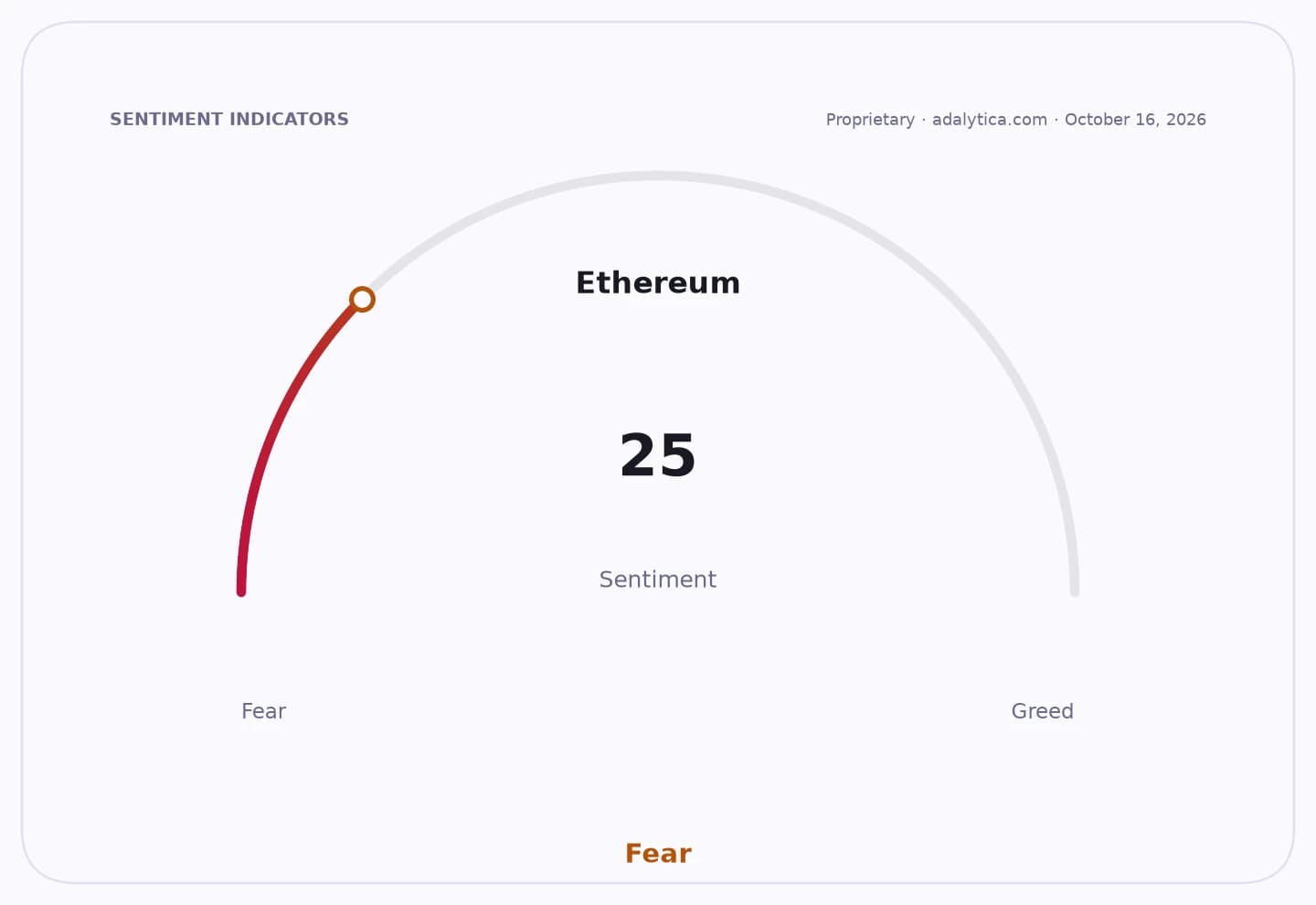
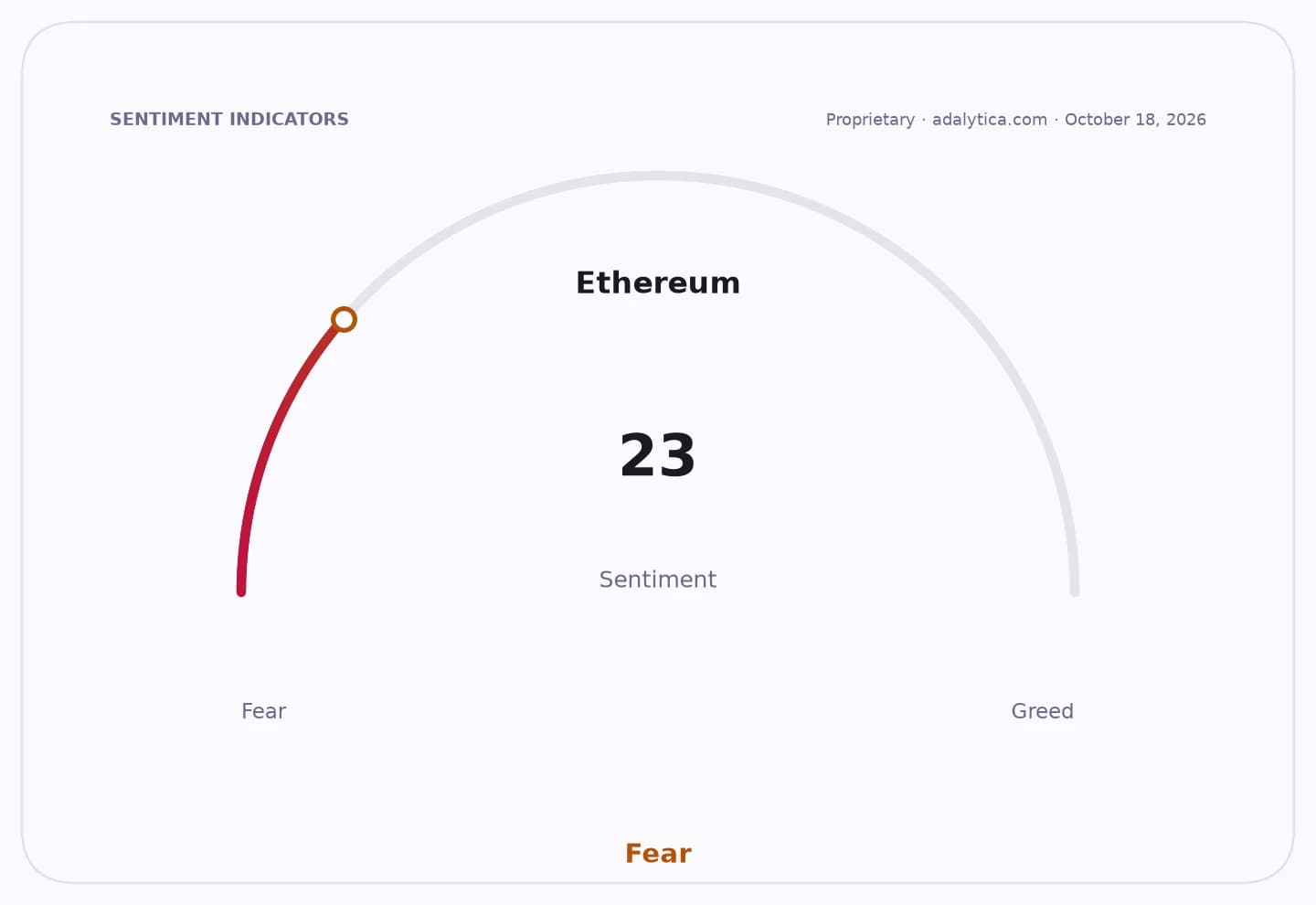
Sentiment IndicatorsⓘProprietary · adalytica.com · October 18, 2026
This is a snapshot — live sentiment, awareness and momentum for 130+ markets update continuously in the dashboard.Open AlphaPulse
The timing is especially important for investors. Spot Ethereum ETFs saw nearly $130 million in outflows in a single day, reversing a brief pause in withdrawals and suggesting institutions are not yet stepping in to absorb the dip. At the same time, BitMine, the largest corporate buyer of Ether, is nearing its self-imposed cap of 5% of the total supply, which could remove one of the more reliable sources of demand just when the market needs it most.
Technical indicators reinforce the caution. ETH’s relative strength index has slipped near 30, a level that points to an oversold market, but oversold does not automatically mean cheap if momentum keeps deteriorating. The 50-day moving average sits above the current price, while the MACD is weakening, leaving the $2,300 area as the line traders are watching most closely. If that floor gives way, the path to $2,000 opens quickly.
For long-term investors, the bigger question is whether Ethereum is entering a deeper consolidation phase or just shaking out weak hands before the next advance. The case for ETH still rests on its role as the backbone of decentralized finance, stablecoin settlement and blockchain infrastructure, but near-term price action is being driven more by rates, flows and leverage than by adoption. Until ETF inflows return and macro fears ease, Ethereum is likely to trade like a high-beta asset rather than a steady store of value.
That does not make it uninvestable; it just means patience matters. For investors with a multi-year horizon, pullbacks like this are best judged against fundamentals, not headlines. But in the short run, the market is telling a clear story: sellers still control Ethereum, and $2,000 is no longer a far-fetched target if support fails. Worth watching.
| Entity | Gains | Losses |
|---|---|---|
| Short sellers | ▲Profit from downside | ▼If ETH rebounds |
| Long holders | ▲Potential bargain entry | ▼Mark-to-market losses |
| ETF outflow buyers | ▲Lower entry prices | ▼Near-term sentiment damage |
| Bitcoin | ▲Relative stability | ▼Noisy spillover from crypto weakness |