Europe’s full rollout of the AI Act on Saturday turns AI regulation from a policy threat into an immediate cost and compliance risk for the technology companies building and selling generative models into the region.
EU AI Act rollout raises compliance costs for Microsoft, Nvidia

The law gives the European Commission’s Artificial Intelligence Office expanded authority to supervise general-purpose AI systems and levy fines on firms that miss transparency, documentation and safety obligations. For investors, that raises the odds of slower product deployment, higher legal and compliance spending, and in some cases limits on how quickly companies can commercialize AI features in Europe.
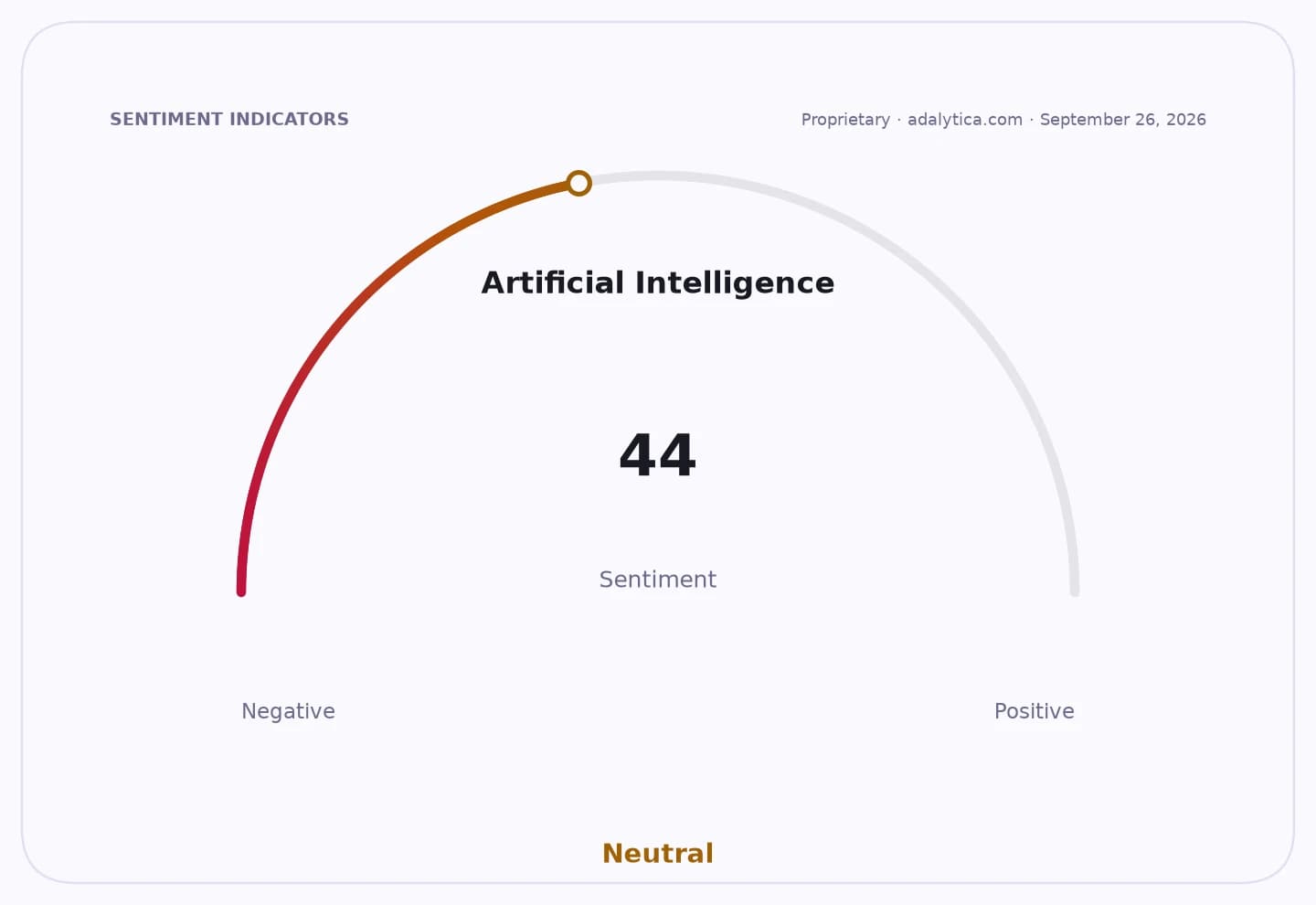
Sentiment IndicatorsⓘProprietary · adalytica.com · August 2, 2026
This is a snapshot — live sentiment, awareness and momentum for 130+ markets update continuously in the dashboard.Open AlphaPulse

The stakes are broad because the EU is not just regulating consumer chatbots. The rules apply to the underlying models and the companies embedding them across cloud, software and hardware ecosystems, including Microsoft and Nvidia as well as AI-focused firms such as C3.ai, whose shares trade under the ticker AI.
C3.ai shares have been under heavy pressure even before the enforcement date, closing at $9.18 on July 31 after a violent year of swings. The stock is still well below its 200-day moving average of $11.45 and has an RSI reading of 47.7, while Adalytica’s AI sentiment gauge shows “Extreme Fear” at 4, reflecting a sharp deterioration in investor mood over the past week.

Nvidia, the key supplier to the AI buildout, also sits in the crosshairs if compliance delays slow enterprise AI rollouts in Europe. Its shares closed at $200.75 on July 31, above the 200-day moving average of $192.93 but below the 50-day average of $206.12, as traders weigh continued AI demand against the prospect of tighter oversight.
Microsoft faces a more direct margin question. The company told investors in its latest annual filing that the EU AI Act may increase costs or affect the provision and operation of its AI models and services in Europe, a warning that now carries more weight as the framework becomes fully applicable.
The broader market implication is that Europe is moving from consultations and staged implementation to enforcement. That shifts AI from a purely growth-driven story to one where policy, documentation and auditability can determine winners, losers and the pace of monetization.
Investors will now watch for the first enforcement actions, company disclosures on compliance spending and any signs that European rollout timelines for AI products are slipping.
| Entity | Gains | Losses |
|---|---|---|
| EU regulators | ▲More enforcement power | ▼Less industry discretion |
| Compliance-ready tech firms | ▲Clearer rules | ▼Higher legal costs |
| AI vendors in Europe | ▲Regulatory certainty | ▼Slower product launches |
| C3.ai and peers | ▲Potential trust boost | ▼Margin pressure and volatility |