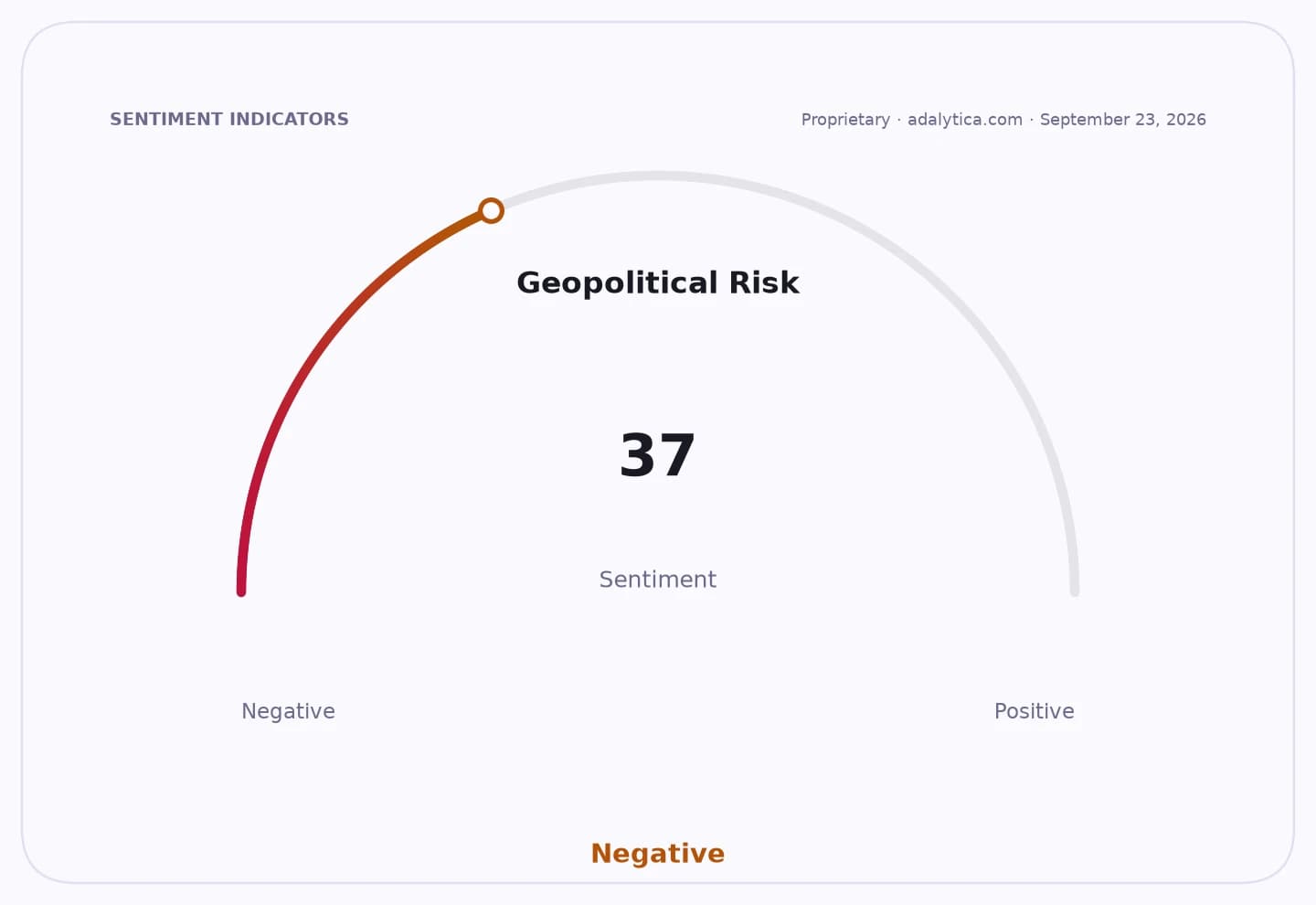
China’s surging goods surplus with the European Union has become the clearest catalyst yet for a broader trade confrontation, and investors should treat it as more than another diplomatic spat. Brussels is demanding action on a record €360.6 billion imbalance, with senior trade officials in Beijing trying to force a deal by October before the bloc moves to tariffs, quotas or other retaliatory measures.
EU-China trade dispute raises tariff risk

That matters because the EU is no longer talking about “rebalancing” in abstract terms. It is signaling a strategic shift toward protectionism, driven by the same playbook that has already triggered market disruption in autos, clean tech and industrial supply chains. Chinese exports, particularly electric vehicles, advanced electronics and other subsidized goods, are pouring into Europe at prices local manufacturers cannot match. For the euro zone, that raises the risk of factory losses, weaker pricing power and a fresh hit to industrial employment just as growth remains fragile.
Sentiment IndicatorsⓘProprietary · adalytica.com · September 5, 2026
This is a snapshot — live sentiment, awareness and momentum for 130+ markets update continuously in the dashboard.Open AlphaPulse
For investors, the immediate implication is a widening divide between winners and losers. European automakers and industrial exporters face margin pressure if Brussels follows through with trade barriers and Beijing retaliates. Chinese equity exposure, including the FXI ETF, already looks vulnerable to any escalation: the fund closed at $35.88 on September 4, still below its 200-day moving average of $36.47, even after a recent bounce, while its RSI reading of 63.5 suggests the rebound is not yet a clean breakout. By contrast, Europe’s broad market proxy, the VGK ETF, has held firmer at $91.74 and remains above its 200-day average of $85.84, but that resilience could be tested if the dispute expands into autos, machinery or critical inputs.
The deeper narrative is that the EU is being forced to choose between cheap imports and industrial sovereignty. Beijing says its advantage comes from scale, supply-chain efficiency and innovation, but European officials increasingly see state support and overcapacity driving a dumping problem that cannot be ignored. The G20’s near-unanimous backing for action against non-market distortions shows this is no longer a bilateral complaint; it is becoming a global policy alignment against China’s export-heavy growth model.
That also raises the stakes for commodities, critical minerals and defense-style supply-chain winners. Europe still depends on China for materials and components, which gives Beijing leverage if the EU toughens its stance. The market is underestimating how quickly this can move from rhetoric to tariff schedules, import restrictions and a longer cycle of retaliation that reshapes capital flows across autos, semiconductors, renewables and heavy industry.
My view is that this is exactly the kind of geopolitical inflection point investors should position for early. If Brussels blinks, Chinese exporters keep taking share. If Brussels acts, Europe’s protected sectors gain pricing power while global supply chains become more expensive and more regionalized. The asymmetry is clear: the next move in EU-China trade policy could be a multi-year catalyst, not a one-off headline.
| Entity | Gains | Losses |
|---|---|---|
| EU industrial firms | ▲Protection from cheap imports | ▼Higher input costs |
| Chinese exporters | ▲Access to EU market | ▼Tariffs and quotas |
| European automakers | ▲Trade defense support | ▼Retaliation risk |
| FXI / China equities | ▲Short-covering on diplomacy | ▼Escalation and margin pressure |