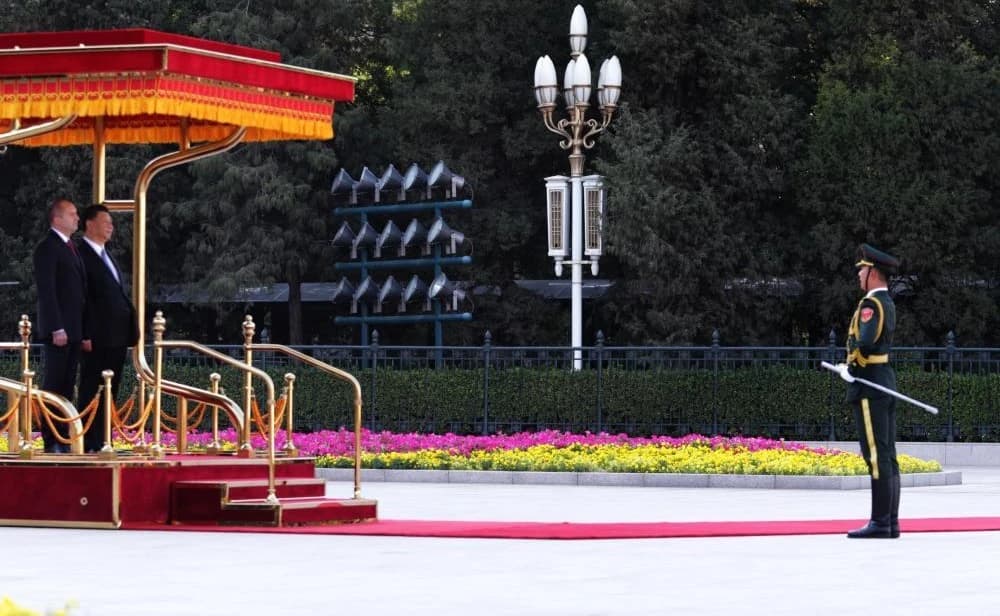
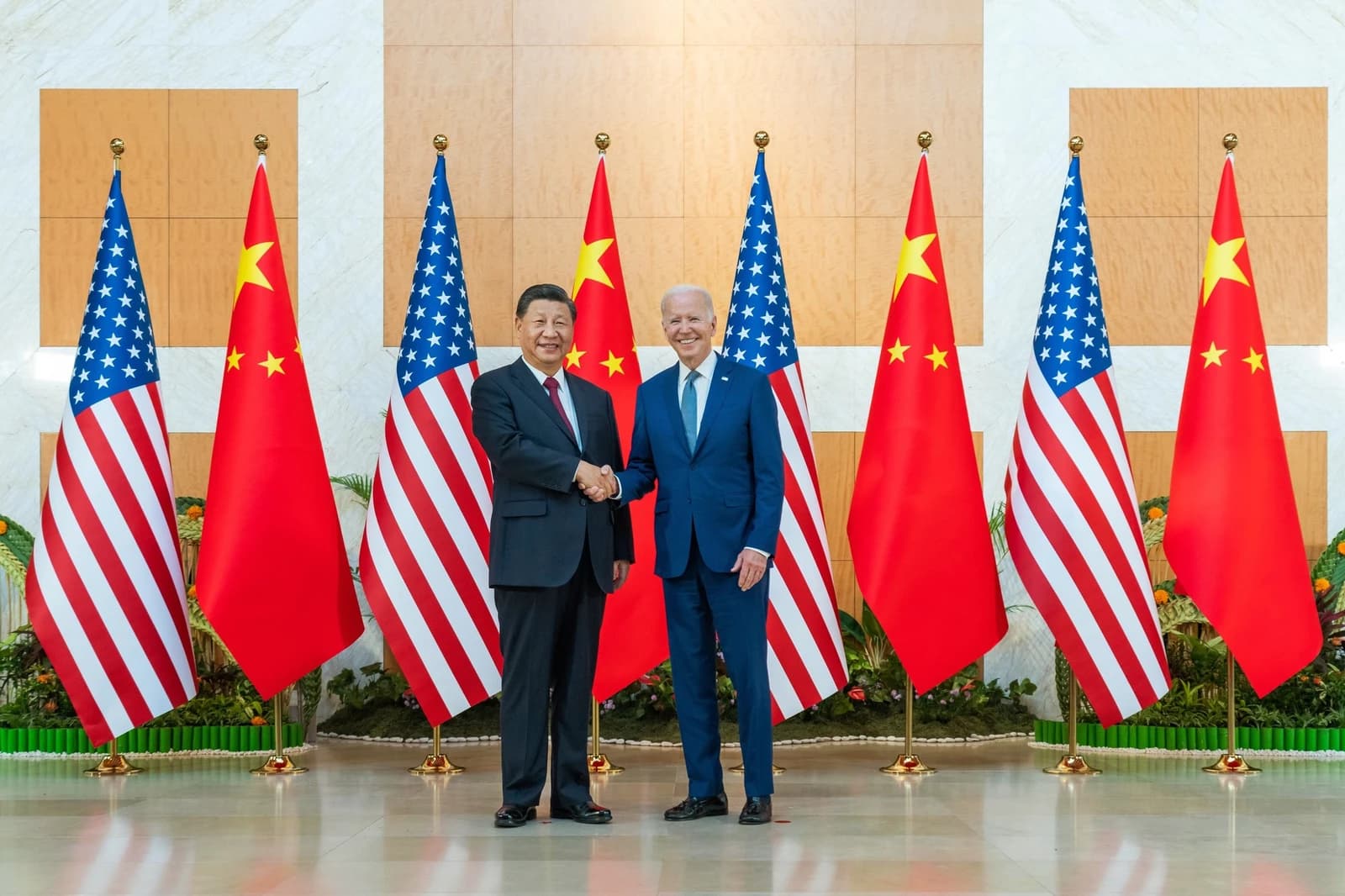
China firms are once again in the sanctions crosshairs, and the market is already showing the strain as investors retreat from Chinese equities and tech exposure.
China ETFs FXI and KWEB Fall on Sanctions Risk
The warning matters because sanctions are no longer a niche geopolitical headline — they are a direct pricing input for capital, trade, and valuation. When Washington broadens pressure on China-linked companies, or when Beijing pushes back against U.S. sanctions policy, the result is often tighter financing conditions, more compliance risk, and a heavier discount on sectors dependent on global supply chains, dollar funding, and cross-border sales.
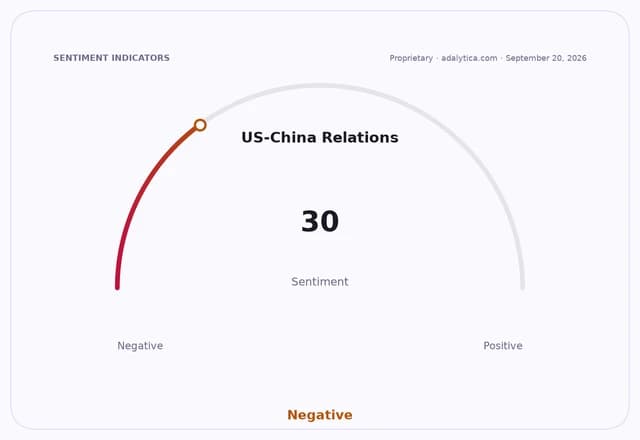
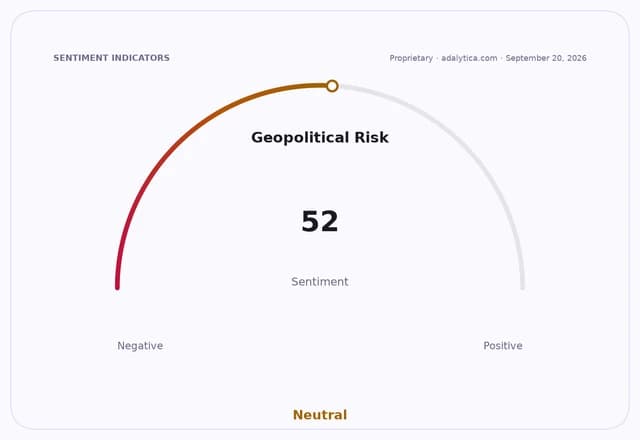
That is exactly the backdrop now. U.S.-China relations sentiment tracked by Adalytica has fallen to 30, in “Fear,” with a sharp 67-point drop over seven days, while global stability sentiment is only neutral. The message for markets is not just diplomatic friction, but a higher probability that China-related assets stay trapped in a risk-off regime.
The price action says investors understand that. The iShares China Large-Cap ETF, FXI, has slid to 34.32, below its 50-day moving average of 35.15 and under its 200-day average of 36.28, while the RSI near 36.6 shows weak momentum rather than washed-out capitulation. The KraneShares CSI China Internet ETF, KWEB, is even more fragile, trading at 24.83 versus a 50-day average of 26.61 and a 200-day average of 29.64, with RSI at 32.6. That is not a market bidding up a sanctions-proof China rebound; it is one pricing persistent policy overhang.
US-China Relations — 30-day sentimentadalytica.com
Explore this data interactively — full history, time series and cross-market comparisons.Open AlphaPulse
For investors, the implication is broader than just a short-term trade in FXI or KWEB. Sanctions risk can compress multiples across Chinese internet, consumer, and export-linked names by raising the discount rate on future cash flows and increasing the odds of forced restructuring, vendor disruption, or restricted access to U.S. technology and capital. Companies with heavy overseas revenue, listings, or supply-chain exposure are most vulnerable. Firms with domestic pricing power and limited external financing needs should prove more resilient, but they will not be immune if the policy climate worsens.
This is why the opportunity set is shifting from broad China beta to select beneficiaries of de-risking elsewhere. If sanctions pressure deepens, capital can migrate toward U.S. semiconductor supply-chain alternatives, defense, cybersecurity, reshoring, and non-China Asia manufacturers that can absorb redirected orders. In other words, the market may be underestimating the second-order winners from a prolonged U.S.-China sanctions cycle.
My view is that the dominant trade is not a sudden China collapse; it is a sustained valuation tax on China exposure until there is real evidence of policy easing. For now, the burden of proof sits with Beijing and the companies caught between Washington’s sanctions regime and China’s pushback. Until that changes, investors should stay selective, reduce broad China ETF exposure, and look for the capital-flow winners created by the friction itself.
| Entity | Gains | Losses |
|---|---|---|
| U.S. sanctions hawks | ▲More leverage | ▼More escalation risk |
| China-linked equities | ▲None | ▼Higher valuation discount |
| FXI and KWEB holders | ▲Selective trading opportunities | ▼ETF downside pressure |
| U.S. defense, cyber, reshoring plays | ▲Capital inflows | ▼None |