The European Union is moving to rewrite public procurement rules to steer more of the bloc’s €2.6 trillion-a-year in government buying toward European companies, a shift that could reshape who wins public work across the region and reduce reliance on China in key industries.
EU Procurement Rules to Favor European Companies

The proposal matters because public contracts account for about 15% of EU economic output and roughly €600 billion is put out to tender each year. By giving local authorities more room to weigh security of supply, sustainability and “European preference” alongside price, Brussels is turning procurement into an industrial policy tool rather than a pure cost exercise.
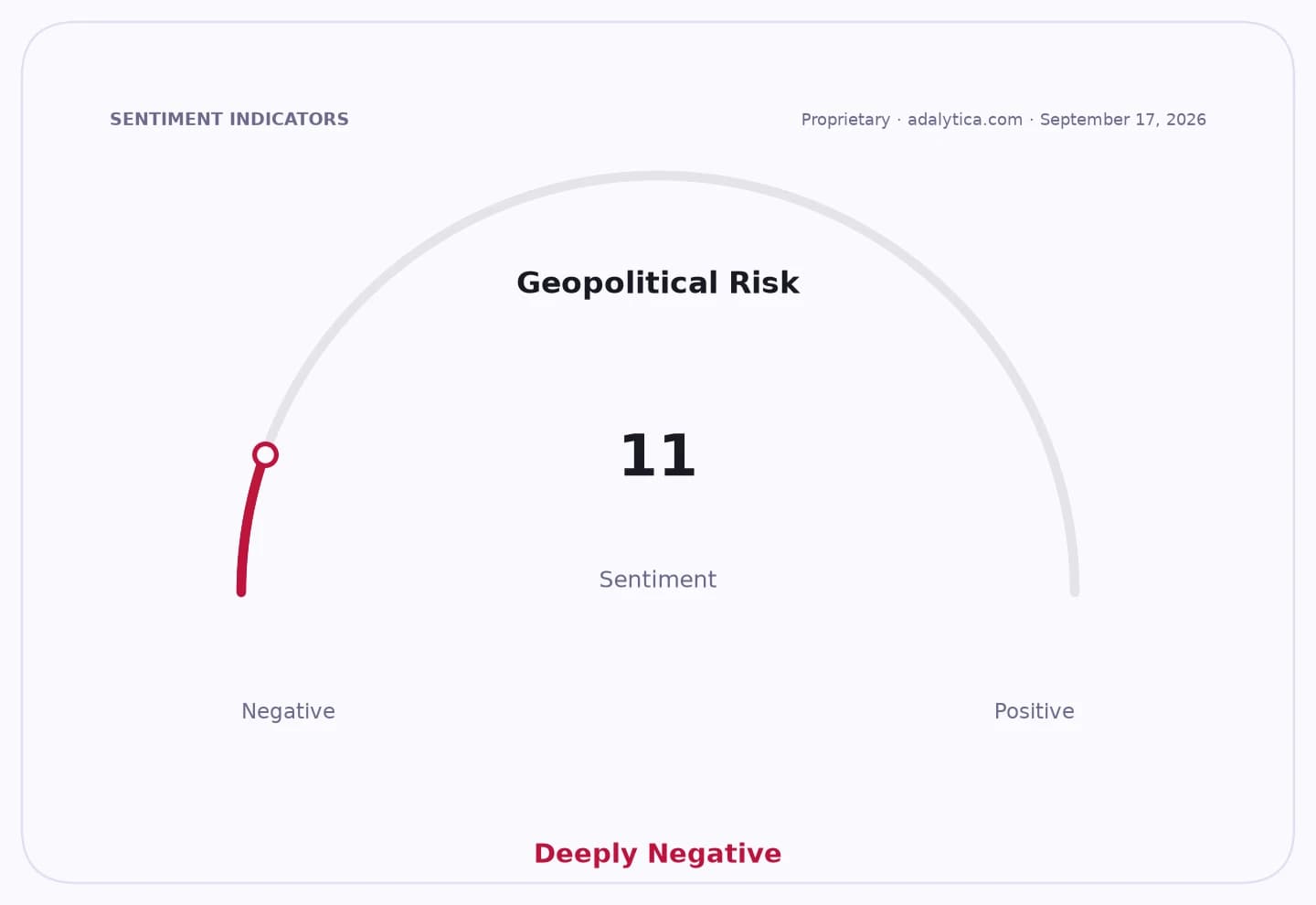
Sentiment IndicatorsⓘProprietary · adalytica.com · September 10, 2026
This is a snapshot — live sentiment, awareness and momentum for 130+ markets update continuously in the dashboard.Open AlphaPulse
EU industry chief Stephane Sejourne said the bloc is responding to an era in which China, India and the United States are using public purchasing to back their own industrial strategies. The European Commission wants to shrink the procurement rulebook from 900 pages to 200 and create a single platform for tenders, a move it says would lower barriers for smaller firms while making it easier for governments to buy locally.
For investors, the reform could channel more demand toward European contractors, industrial suppliers, transport groups and other businesses that compete for state-funded work, while pressuring lower-cost foreign bidders, especially Chinese suppliers of buses, equipment and infrastructure-related goods. It also raises the odds of more fragmented bidding criteria across the bloc as municipalities and national governments decide how aggressively to use the new discretion.
The policy fits a broader push in Brussels for “strategic autonomy” as trade tensions with the US and China linger and European policymakers look for ways to protect domestic industry without outright tariffs. The next test will be how much latitude member states actually use once the rules are rewritten, and whether the reforms materially shift contract flow away from foreign groups or remain largely optional.
| Entity | Gains | Losses |
|---|---|---|
| European firms | ▲More contract preference | ▼Harder competition from imports |
| Chinese suppliers | ▲Limited gains in price-led bids | ▼Fewer public contract wins |
| EU local authorities | ▲More procurement discretion | ▼More political scrutiny |
| Foreign low-cost bidders | ▲Some access remains | ▼Weaker pricing advantage |