The EU and China are sliding back toward open trade conflict just weeks after striking a fragile truce, a shift that matters because it raises the risk of fresh tariffs, export bans and supply-chain shocks across European industry.
EU-China Trade Tensions Rise Again

What makes this moment economically important is that neither side appears willing to absorb pressure quietly. Beijing is warning of swift counterstrikes, while Brussels is preparing fast-track export bans, according to the briefing around the Brussels event. That combination turns a political disagreement into a market problem: once retaliation becomes the default response, trade flows, pricing power and corporate investment plans all get harder to predict.
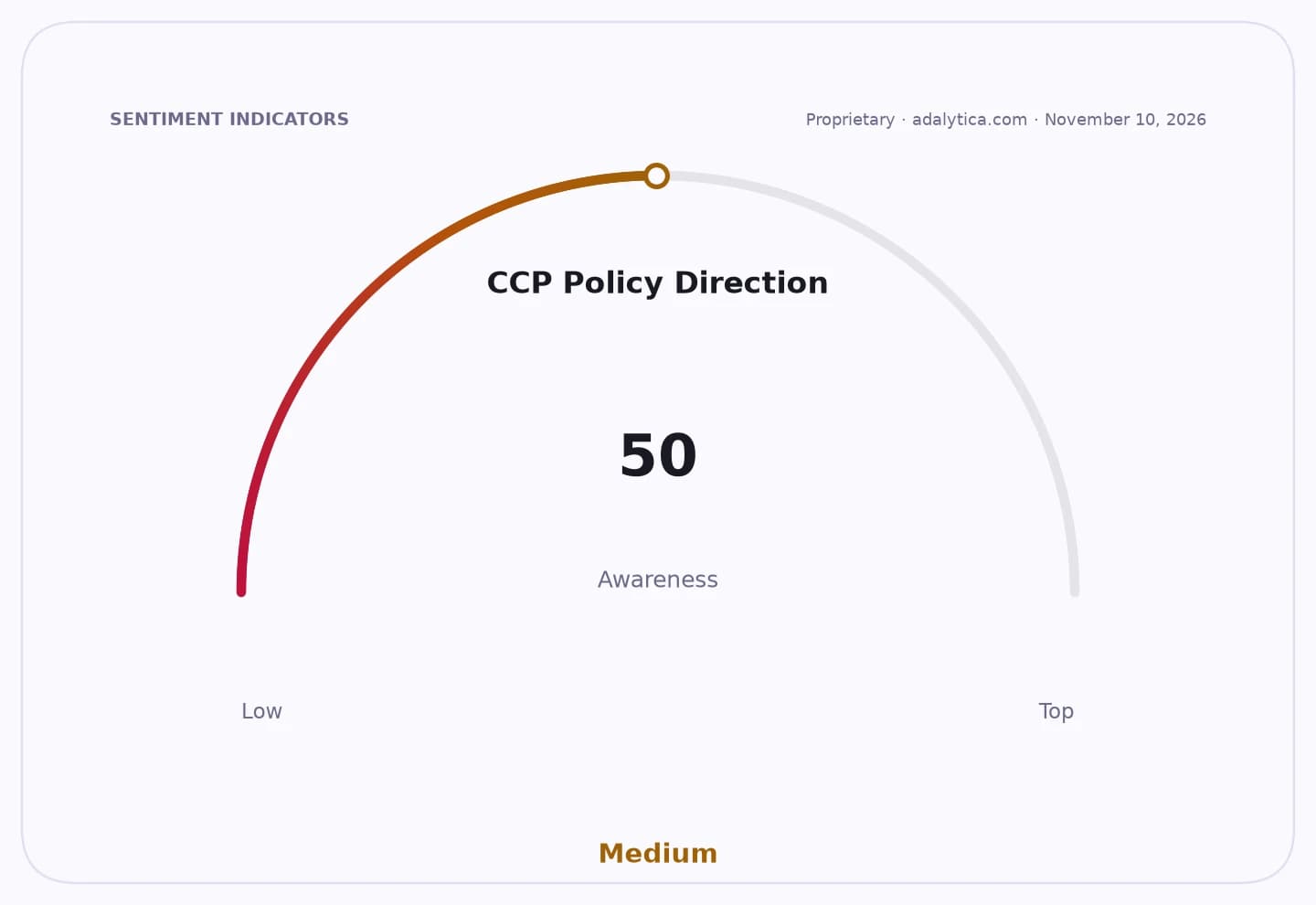
Sentiment Indicators

For investors, the danger is not just headline volatility. A renewed EU-China trade fight would hit sectors that rely on Chinese inputs or sales into China, while also reinforcing the case for companies tied to supply-chain re-routing, defense, industrial localization and domestic European manufacturing. Germany is especially exposed given its reliance on Chinese demand for autos, machinery and chemicals, while China’s continuing trade surplus underscores how much leverage Beijing still has in high-tech and industrial supply chains.
The truce is fraying at a time when China’s external position remains powerful. Its trade surplus has topped $1 trillion in the first 10 months of the year, supported by resilient exports and a broader push in high-tech industries. That gives Beijing room to retaliate, but it also heightens the political pressure in Europe to act before local producers are squeezed further by import competition.
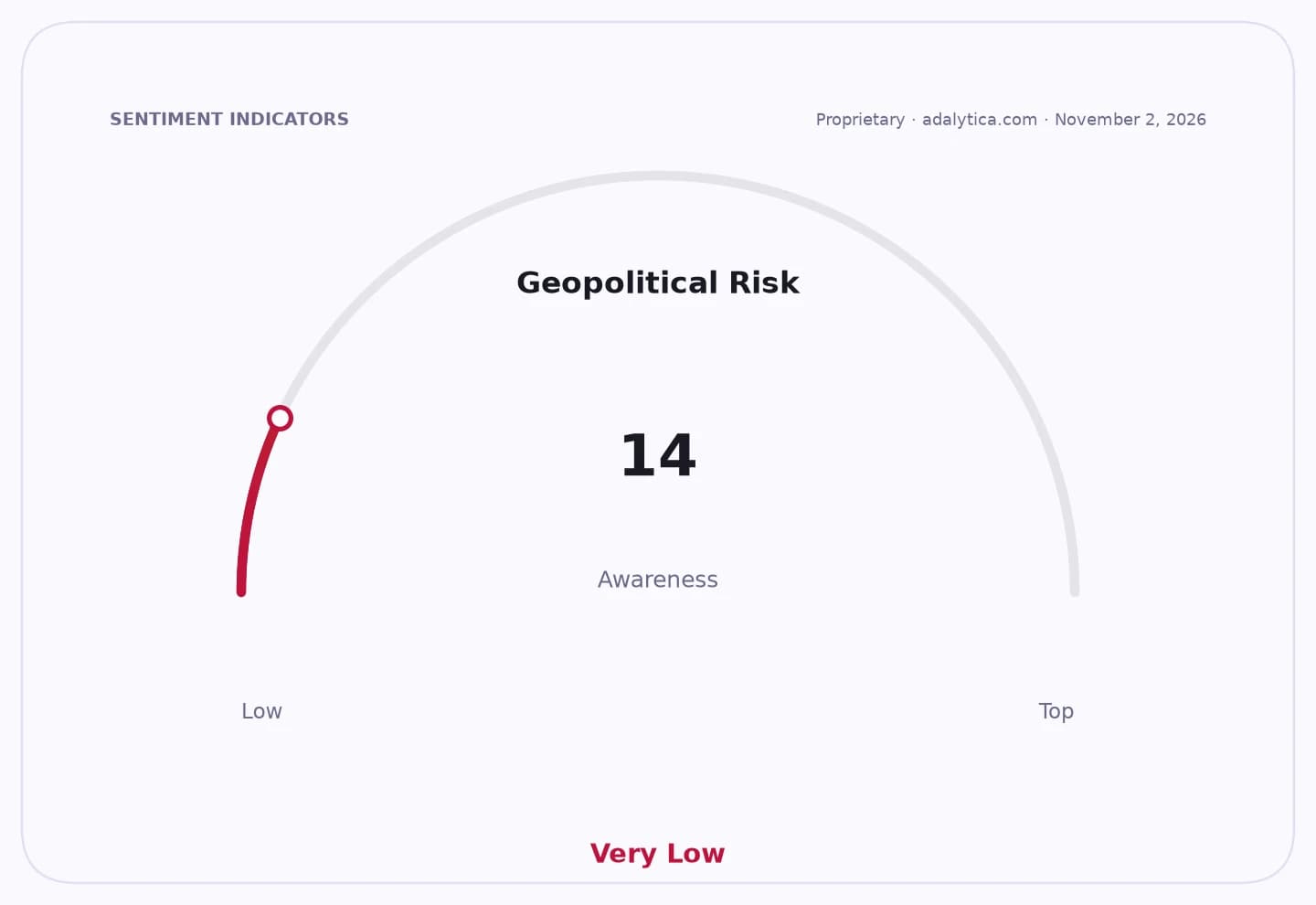
Geopolitical Risk
Markets are already sensitive to the shift. The China-focused ETF FXI was last at 34.66, below its 200-day moving average of 35.38, while the Germany ETF EWG has been choppy but recently traded around 42.99, just above its 50-day average. The broader EFA fund, which captures developed markets outside North America, has also been volatile, reflecting how quickly global assets reprice when trade tensions re-emerge. On the sentiment side, Adalytica’s US-China Relations gauge has fallen to “Extreme Fear,” a sign that investors are again treating trade friction as a macro risk, not a side story.
The real narrative here is that the EU and China are moving from tactical diplomacy back toward strategic economic confrontation. That creates winners and losers. I believe investors should lean into the businesses that benefit from decoupling, industrial policy and supply-chain diversification, while staying cautious on exporters and cyclicals most exposed to a retaliatory spiral. The next phase of this story will be driven less by speeches in Brussels than by whether either side actually pulls the trigger on restrictions.
| Entity | Gains | Losses |
|---|---|---|
| EU industrial localizers | ▲More protectionism | ▼Higher costs |
| China exporters | ▲Near-term leverage | ▼EU market access |
| German automakers | ▲None | ▼Tariff and demand risk |
| Defense and supply-chain stocks | ▲Policy tailwind | ▼No direct downside |