The European Commission is preparing to ease the bloc’s gas storage requirement for countries that are falling behind, a move that underscores how tight Europe’s winter energy balance has become and how far policymakers are willing to go to avoid a scramble for supplies.
EU gas storage rule may be eased to 75%
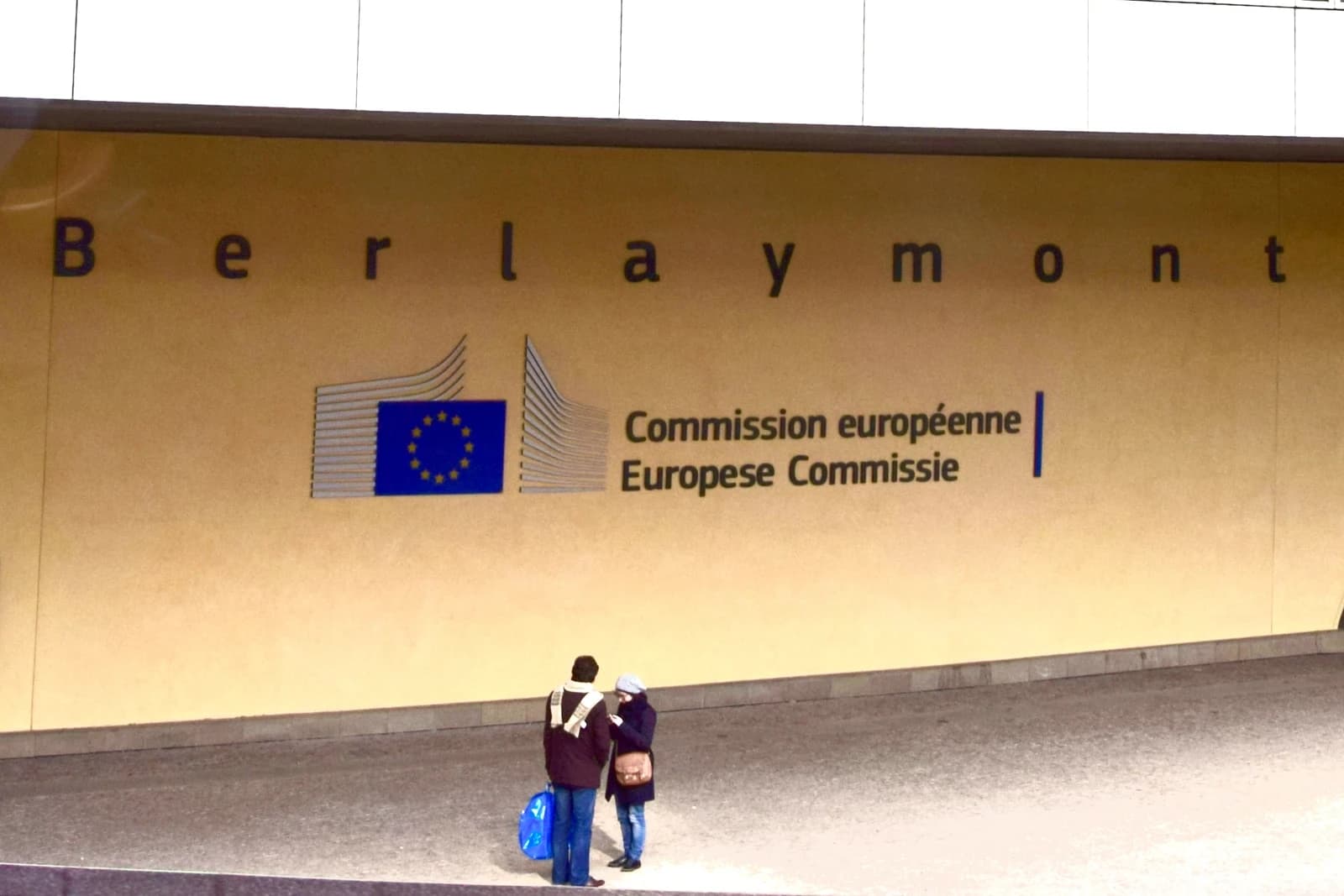
Brussels is ready to let lagging member states meet a 75% filling target instead of the legal 90% threshold, according to a commission briefing on Thursday. Officials said 80% would be enough to cover winter demand, with another 5 percentage points of flexibility already built into the law. The shift matters because it acknowledges that the EU is entering the heating season with storage levels that are materially weaker than in recent years, leaving less room for disruptions, cold snaps or competition from Asia for cargoes.
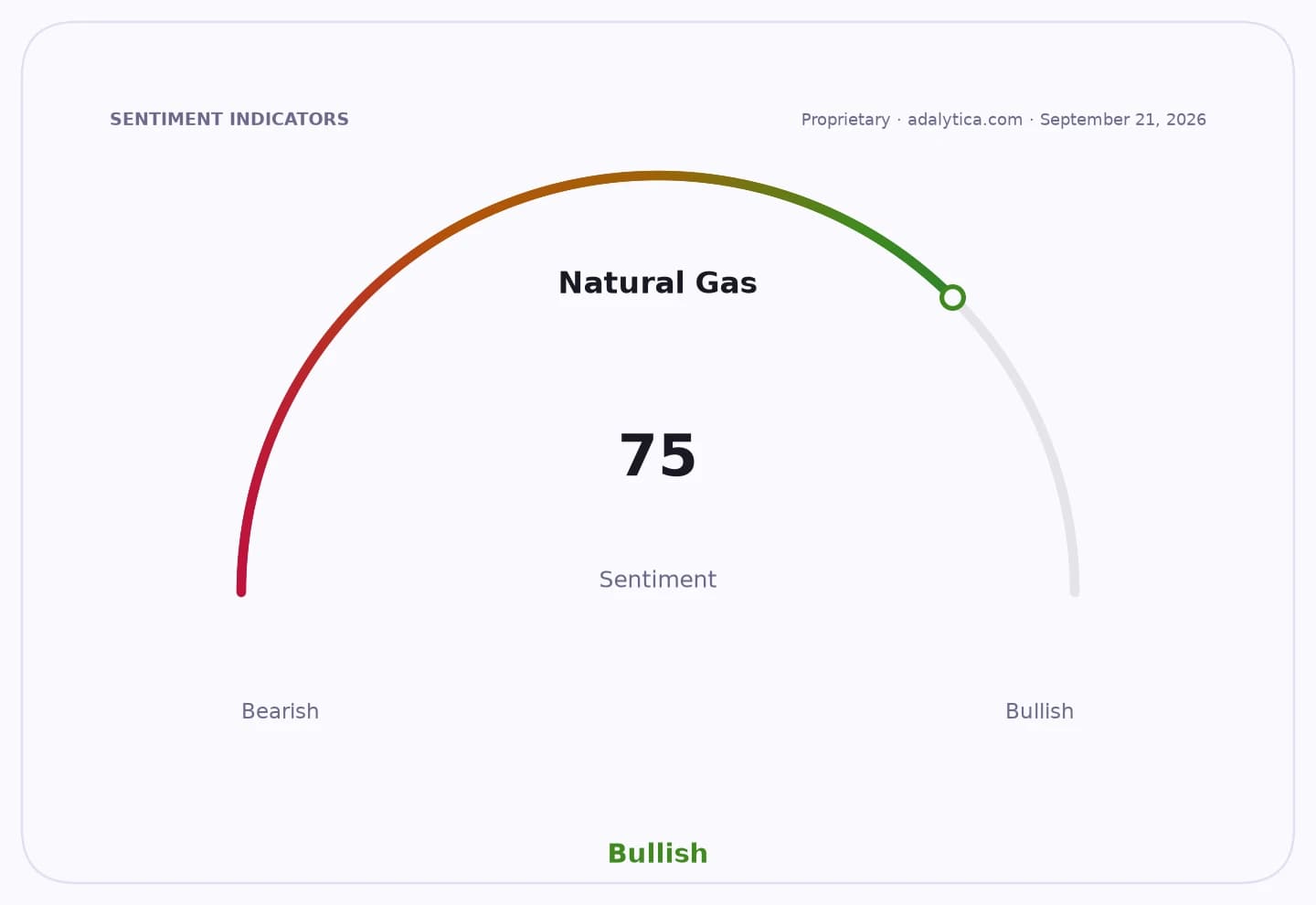
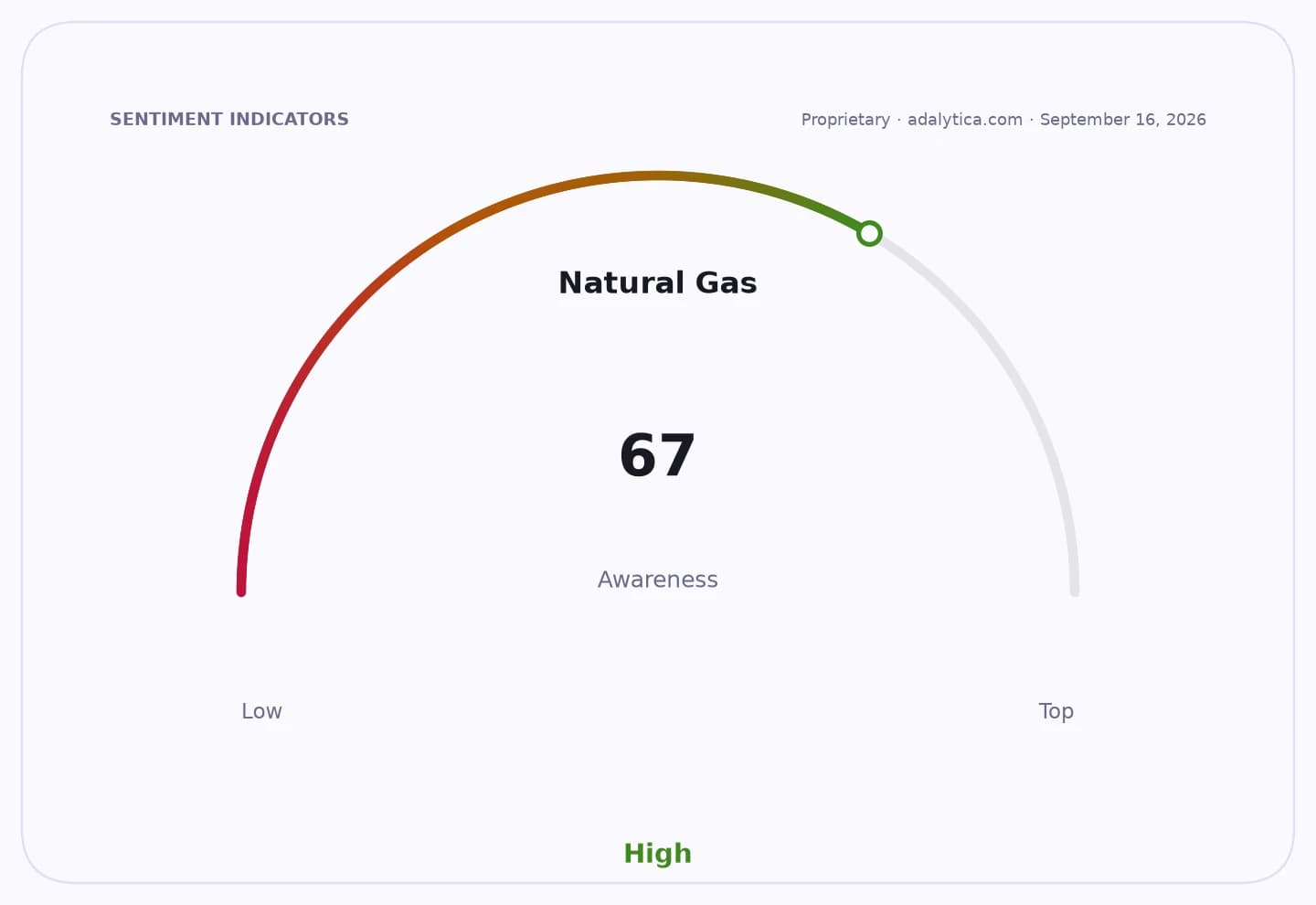
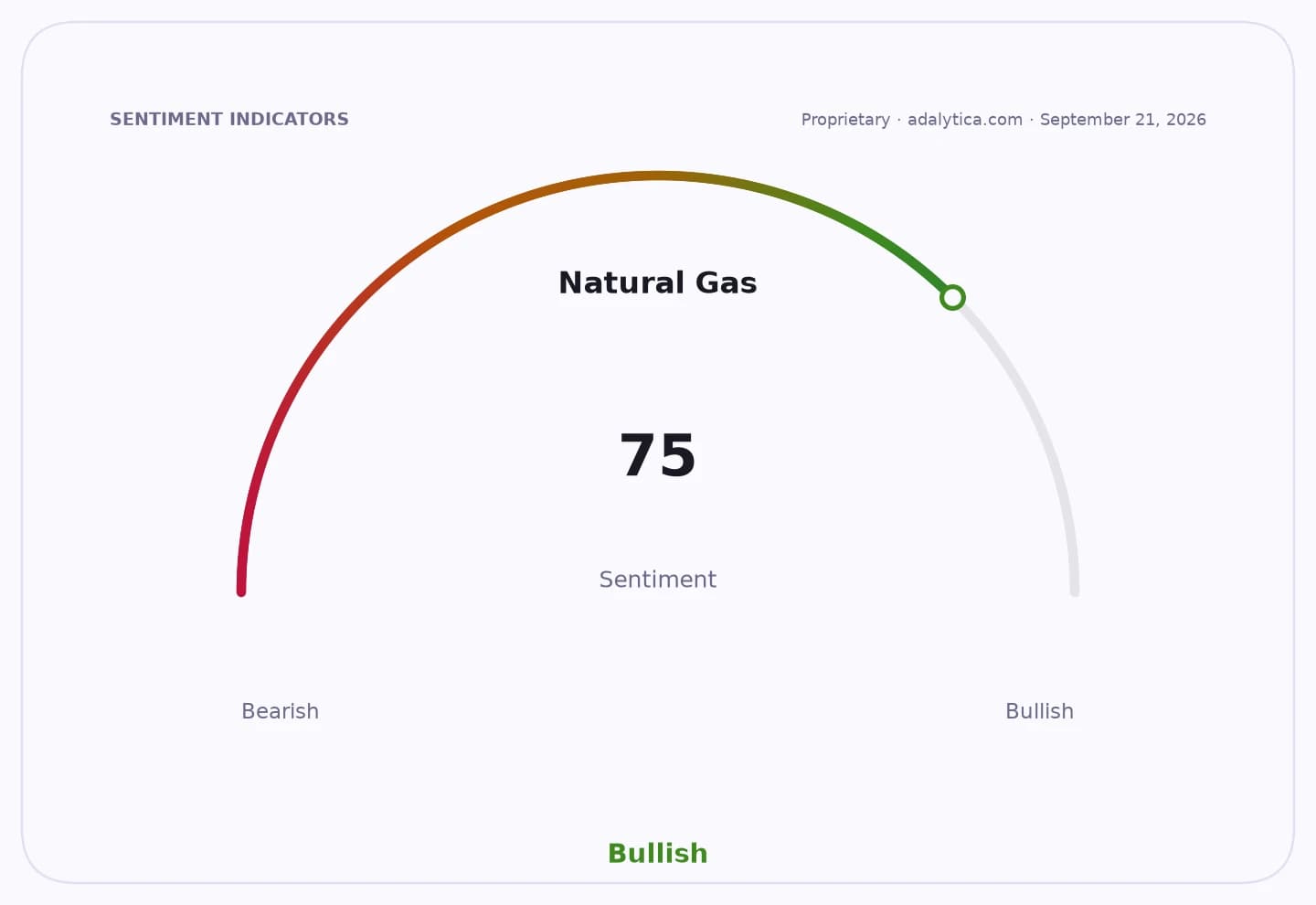
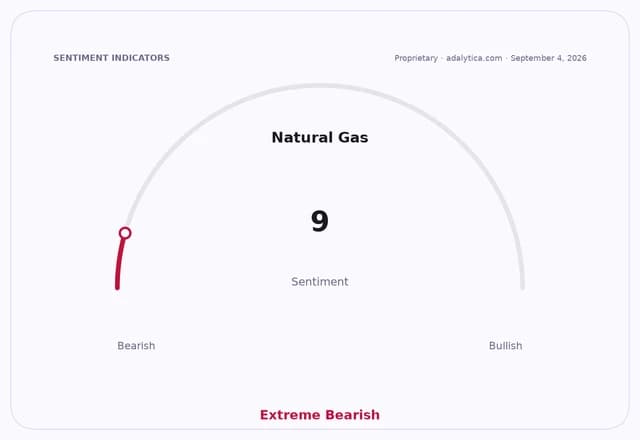
Sentiment IndicatorsⓘProprietary · adalytica.com · September 4, 2026
This is a snapshot — live sentiment, awareness and momentum for 130+ markets update continuously in the dashboard.Open AlphaPulse
The average EU storage fill rate is about 65%, the commission said, which is well below the formal target and highlights uneven progress across the bloc. A lower compliance bar may reduce immediate pressure on governments and utilities that have struggled to top up inventories, but it also signals that the region’s energy security buffer is thinner than policymakers would like. That makes winter pricing more sensitive to weather, pipeline flows and LNG availability, and raises the odds of short-term volatility in European gas benchmarks.
For investors, the implications cut two ways. A softer rule may temper the most extreme near-term rally in gas by lowering the urgency of late-season spot buying. But the underlying message is still bullish for gas as a market: Europe remains structurally short of supply flexibility, and any interruption in imports could force governments back into emergency demand-management measures. Traders in European gas, LNG shipping and power markets will be watching whether the commission’s planned gas coordination meeting in September leads to broader contingency planning.
The policy change also reinforces Europe’s dependence on imports, particularly LNG from the United States, at a time when geopolitical risk remains elevated and alternative supply sources are limited. That makes storage policy more than an administrative issue: it is a proxy for the continent’s ability to absorb shocks without resorting to industrial curbs or household conservation. If winter proves mild, the relaxed threshold may pass with little market impact. If not, the EU’s decision to lower the bar could be remembered less as flexibility than as an early warning.
| Entity | Gains | Losses |
|---|---|---|
| Lagging EU states | ▲Easier compliance | ▼Less storage cushion |
| Gas utilities/importers | ▲Lower immediate buying pressure | ▼Greater winter exposure |
| LNG suppliers | ▲Steadier demand for cargoes | ▼Less emergency upside from panic buying |
| European consumers | ▲Lower odds of forced rationing | ▼Higher risk of price spikes |