Europe’s biggest economic challenge is no longer just growth — it is strategic self-reliance in defense, AI and the industrial infrastructure that powers both, and that puts ASML, SAP and Airbus at the center of the continent’s next investment cycle.
Europe defense AI capex favors ASML, SAP, Airbus
The market still treats Europe’s response to China as a political debate. It is becoming a capital-allocation story. If the region wants to avoid being trapped between U.S. technology dominance and China’s manufacturing scale, it must build more common defense capacity, more data centers, more chip supply and more energy infrastructure. That is not a slogan. It is a multi-year capex program with direct consequences for earnings, margins and market leadership.
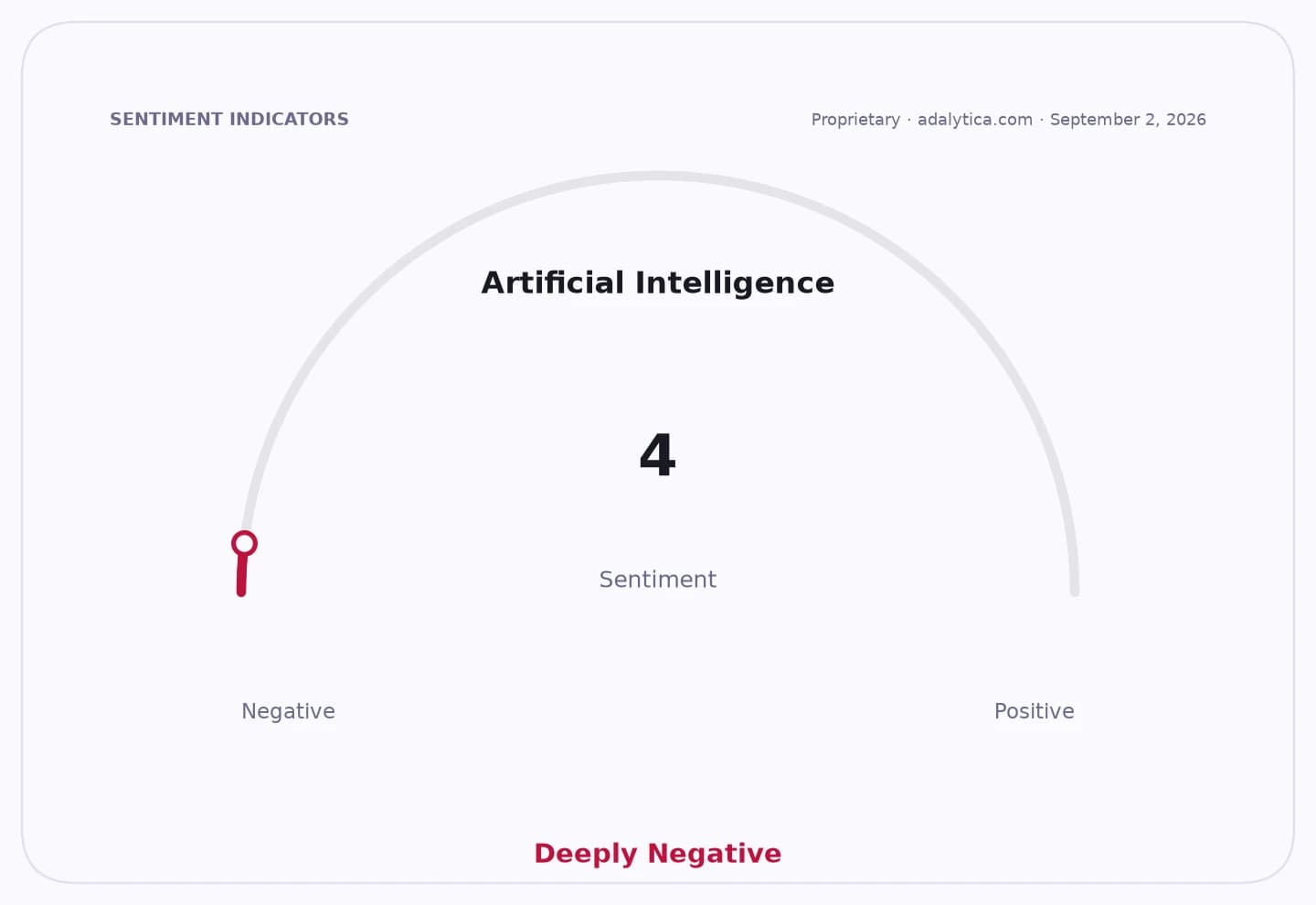
Sentiment IndicatorsⓘProprietary · adalytica.com · September 6, 2026
This is a snapshot — live sentiment, awareness and momentum for 130+ markets update continuously in the dashboard.Open AlphaPulse
That is why the real opportunity is not in the rhetoric around European sovereignty, but in the companies that turn sovereignty into hardware and software. ASML is the clearest toll road on Europe’s semiconductor ambitions. SAP sits in the enterprise software layer that will be tied to AI adoption across manufacturing, logistics and public-sector systems. Airbus is the industrial beneficiary if Europe finally moves from fragmented national defense spending toward coordinated procurement and dual-use technology.
The urgency is rising because China is no longer competing only on cheap manufacturing. It is moving up the value chain through robotics, automation and the integration of AI with industrial and pharmaceutical production. For Europe, that means the old playbook of quality branding alone is not enough. If Europe does not accelerate investment in chips, compute and data centers, it risks becoming a customer of American cloud platforms and Chinese industrial ecosystems rather than an owner of its own future stack.
The latest price action underlines how the market is already sorting winners from laggards. ASML has rebounded sharply from early-summer weakness and now trades well above its 200-day moving average, even after a pullback, reflecting its strategic role in the semiconductor supply chain. SAP has recovered from a deep drawdown and remains above its long-term trend, showing investors still want exposure to European software franchises with AI optionality. Airbus, meanwhile, has held up better than the broader defense debate would suggest, with the stock still supported by the prospect of sustained military and aerospace demand.
Technically, ASML’s 200-day moving average sits far below the current price, a sign of a powerful longer-term trend even if short-term momentum has cooled. SAP remains above both its 50-day and 200-day moving averages, suggesting institutional buyers have not abandoned the story. Airbus is also trading comfortably above its 200-day average, reinforcing the view that European industrial and defense names remain supported by structural demand, not just headline risk.
The broader market implication is straightforward: Europe’s next industrial policy will not be judged by speeches about autonomy, but by whether capital is mobilized into the companies that can build the physical and digital backbone of sovereignty. That means semiconductors, enterprise software, aerospace, defense systems, data-center power and the electrical grid. The spending will be enormous, but the beneficiaries will be concentrated.
Investors should think in terms of second-order effects. A European push for common defense and AI capacity would lift not only prime contractors, but also chip equipment, network gear, cloud-adjacent software, electrical infrastructure and cyber defense. It would also create a stronger domestic demand base for energy producers and grid operators, because AI infrastructure is power-hungry and data centers cannot run on political declarations.
The market underestimates how quickly this theme can compound once budgets and procurement frameworks align. Europe does not need to match the U.S. or China in every layer. It needs to own the infrastructure layers where scarcity creates pricing power. That is why the best risk-adjusted exposure now is in the picks-and-shovels of European sovereignty, not in the most obvious political trade.
For investors, the takeaway is to stay early and stay selective: own the companies that make Europe’s common defense, AI buildout and data-center expansion possible, because that is where the next secular rerating is likely to come from.
| Entity | Gains | Losses |
|---|---|---|
| ASML | ▲AI chip demand | ▼China export curbs |
| SAP | ▲European AI adoption | ▼Legacy software vendors |
| Airbus | ▲Defense capex | ▼Fragmented national procurement |
| Europe’s industrial base | ▲Strategic autonomy | ▼Dependence on U.S./China ecosystems |