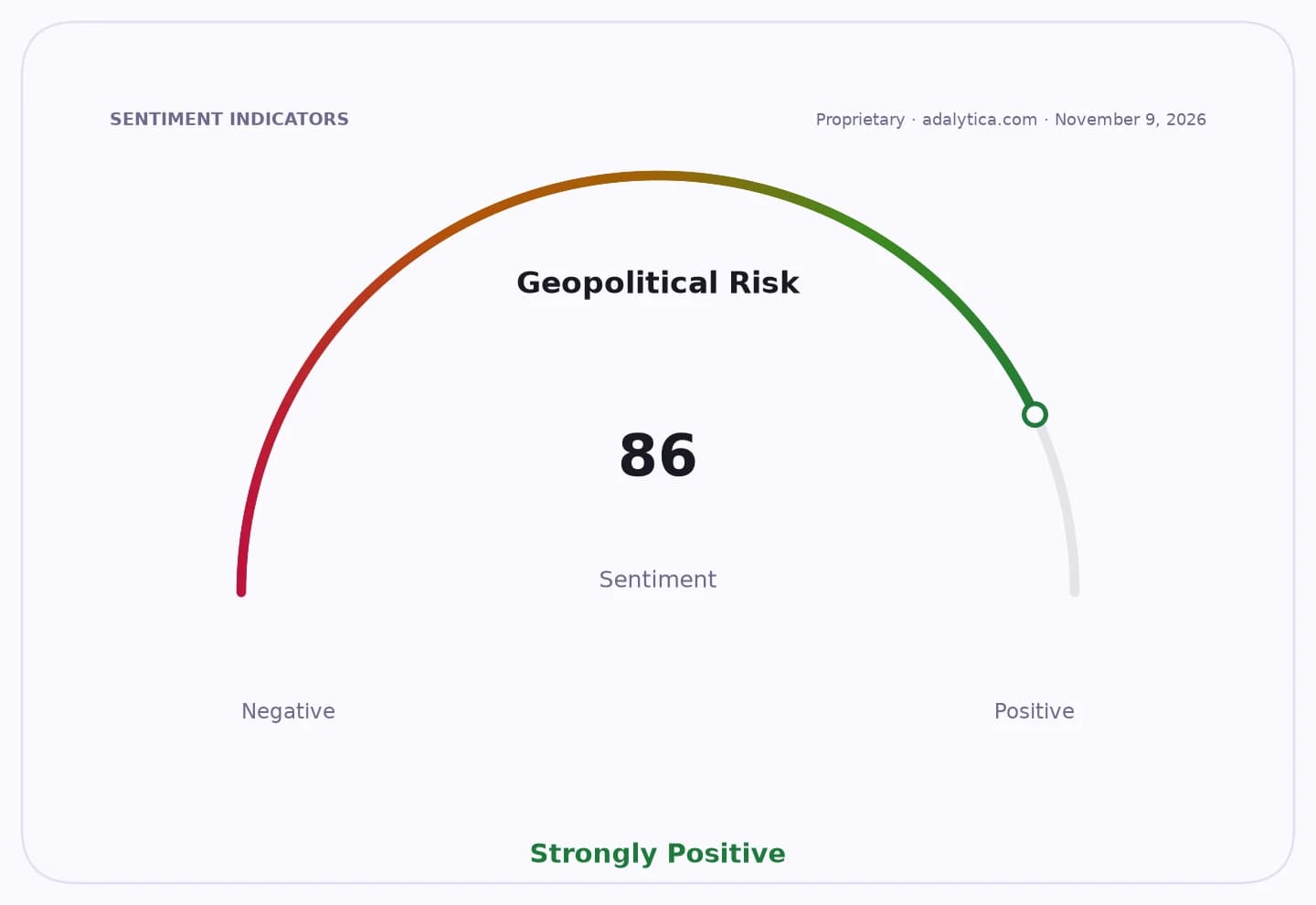
European equities are holding up after the U.S. midterm backdrop as investors look for steadier exposure outside the bruised Magnificent 7 trade and into regions less tied to the latest bout of U.S. growth anxiety.
Europe ETFs Hold Up as U.S. Tech Slips

That matters because the real market story is not just election noise — it is capital rotation. As the U.S. tech complex has been hit by volatility, large-cap Europe funds have proved comparatively resilient, and that is pulling attention back to international diversification, dividend income and more cyclical exposure. The move is showing up in exchange-traded funds tracking developed markets: iShares MSCI EAFE ETF (EFA) is trading around 101.89 after a sharp selloff from earlier highs, but remains above its 200-day moving average of 102.57, while the 50-day average at 104.65 shows the recent pullback is testing trend support rather than breaking the longer-term uptrend.

The broader Europe gauges tell a similar story. Vanguard FTSE Europe ETF (VGK) finished at 87.31, also still above its 200-day moving average of 87.08, while the iShares Core MSCI Europe ETF (FEZ) closed at 65.03, just below its 200-day average of 66.55. That kind of positioning matters for investors because it suggests Europe has not been sold off in the same disorderly way as U.S. mega-cap tech. Instead, it is acting like a relative safe harbor for money searching for earnings that are cheaper, less crowded and less dependent on AI-related valuation expansion.
The technical picture is mixed but constructive enough to keep Europe on watch lists. EFA’s relative strength index at 46.2 is no longer oversold after briefly falling below 30 in March, while VGK’s RSI at 53.8 and FEZ’s 49.6 point to a market that is consolidating rather than collapsing. In plain terms, Europe is holding up because the market is still paying for stability, and that stability looks more attractive when the U.S. market’s leadership narrows.
For investors, the implication is clear: this is not a signal to chase every Europe index higher, but it is an argument to keep allocating to the region while the U.S. remains dominated by a handful of expensive names. If volatility in the Magnificent 7 persists, Europe stands to benefit from a continuing rebalancing into value, dividends and global cyclicals. The best setup is for investors who want exposure to that rotation without betting on a single country or sector. The trade is not about a dramatic Europe breakout; it is about owning the market that the crowd has underpriced for steadier returns.
| Entity | Gains | Losses |
|---|---|---|
| Europe equity ETFs | ▲Relative inflows | ▼U.S. tech leadership |
| Dividend and value stocks | ▲Re-rating potential | ▼Growth-stock concentration |
| U.S. mega-cap tech | ▲None | ▼Volatility premium |
| Global allocators | ▲Diversification benefits | ▼Home bias in U.S. assets |