The world economy is set to keep expanding through 2027, but the real investment story is that growth is proving resilient even as geopolitics, energy prices and tight financial conditions continue to squeeze corporate margins and capital spending.
Global growth holds as defense and energy benefit
Geopolitical Risk
Coface expects global GDP to rise 2.5% in 2026 and edge up to 2.6% in 2027, a picture of stabilization rather than acceleration after a period of slowdown. That matters because it suggests the next phase of the cycle will not be driven by a broad demand boom, but by a more uneven recovery in which companies with pricing power, resilient balance sheets and exposure to structural capex trends can outperform while weaker borrowers and cyclical exporters remain exposed.
Sentiment Indicators
The insurer’s latest Risk Review underscores the split in the global economy. Advanced economies are forecast to grow just 1.6% in both 2026 and 2027, while emerging and developing markets should do better, accelerating from 3.5% this year to 3.9% next year. India remains the standout at 7.5% growth in 2026 and 7% in 2027, while China continues its gradual slowdown to 4.3%. The U.S. is expected to outgrow most developed peers at 2.1% in 2026 and 1.9% in 2027, but still at a pace that is hardly enough to wash away corporate strain from higher funding costs and persistent uncertainty.
That strain is exactly why this forecast matters to investors. Coface says the balance of risks remains clearly negative, citing geopolitical tensions, higher energy prices, supply-chain disruption and restrictive monetary conditions. In practical terms, that means more pressure on working capital, more caution from lenders and more volatility in earnings guidance. The companies most exposed to imported inputs, tariff risk and refinancing needs are likely to stay under the most pressure, while defense, logistics, energy and infrastructure names with durable demand may keep drawing capital.
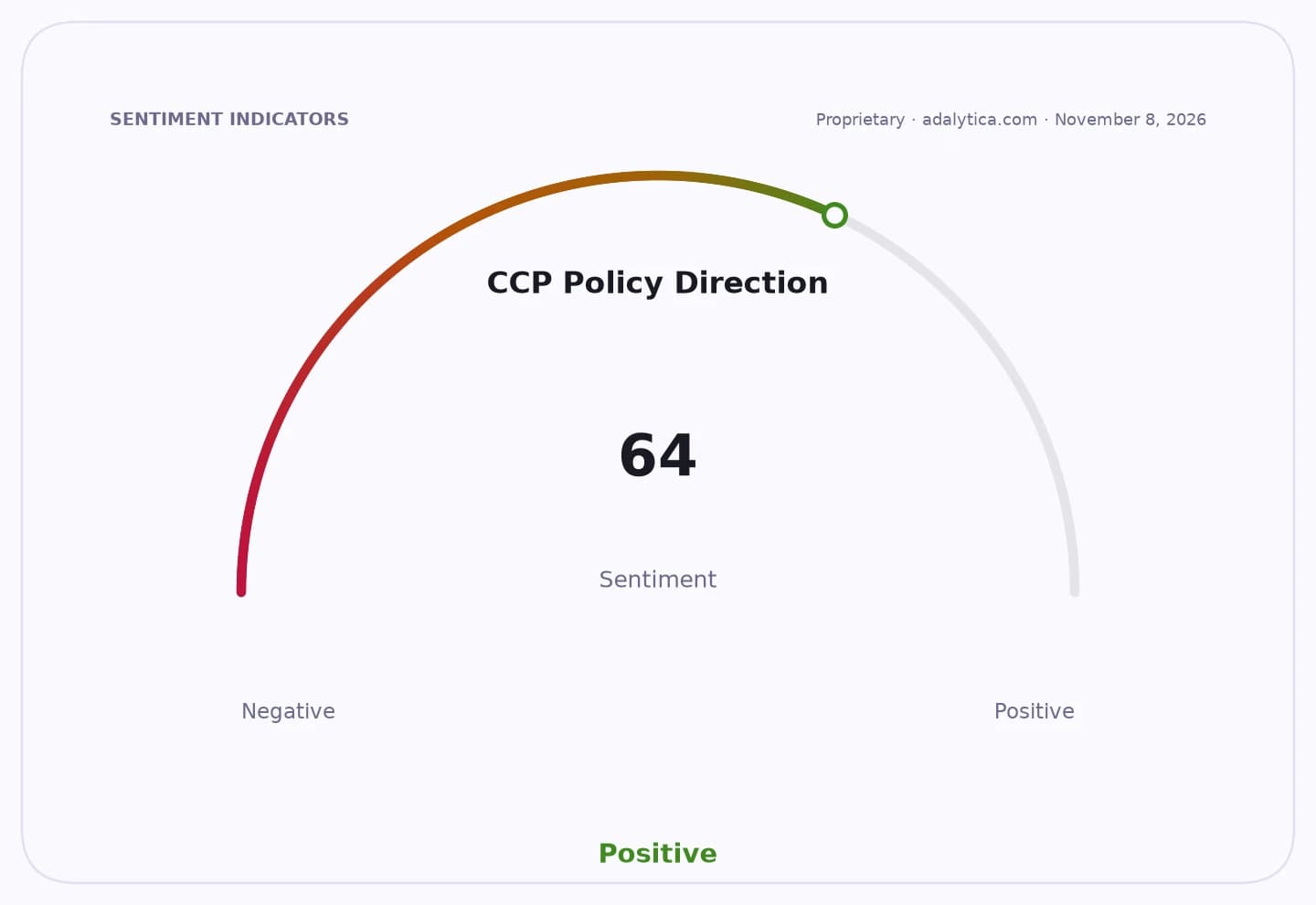
Geopolitical Risk — 30-day sentimentadalytica.com
Explore this data interactively — full history, time series and cross-market comparisons.
The market backdrop fits that message. U.S. benchmark futures and risk assets have been choppy, with the S&P 500 ETF recently trading well above its 200-day moving average even as momentum has weakened, a sign that investors are still willing to pay for growth but are less comfortable with crowded positioning. Energy has been the clearest geopolitical hedge: the Energy Select Sector SPDR fund has held near its long-term trend even after a recent pullback, reflecting how supply shock risk keeps a floor under the group. Investment-grade credit, meanwhile, has remained relatively stable, suggesting investors are still distinguishing between balance-sheet strength and vulnerable borrowers rather than pricing a broad downturn.
Adalytica’s Global Stability sentiment gauge shows why that split is likely to persist: the market is reading geopolitical conditions with “Extreme Greed” on the sentiment side, but “Extreme Fear” on awareness, a combination that usually means complacency on headline risk and very real caution underneath. The message for portfolios is simple. This is not a cycle to chase the broad index blindly; it is a cycle to own the beneficiaries of fragmentation, re-shoring, energy security and defense spending, while avoiding companies that need cheap money and benign trade conditions to hit their targets.
For industrials and suppliers, the signal is equally clear. Defense contractors have already warned in SEC filings that conflicts in the Middle East, Europe and the Pacific are reinforcing security requirements while inflation and supply-chain issues remain material headwinds. That is why I believe the market underestimates the second-order winners of a geopolitically stressed but still growing world: defense, freight, energy infrastructure, select industrial automation, and companies tied to domestic capex are the best asymmetric plays if global growth merely stabilizes instead of reaccelerating.
The takeaway for investors is to position for resilience, not perfection. A 2.6% global growth world can support earnings, but only if you own the businesses that can pass through costs, protect margins and benefit from structural spending shifts. The macro backdrop says volatility will not disappear in 2027 — which is precisely why selective exposure to the right sectors could be more valuable than ever.
| Entity | Gains | Losses |
|---|---|---|
| Defense contractors | ▲Higher security demand | ▼Cost pressure from supply chains |
| Energy producers | ▲Geopolitical supply premium | ▼Demand-sensitive consumers |
| Domestic industrials | ▲Re-shoring capex | ▼Trade-dependent rivals |
| Highly leveraged firms | ▲None | ▼Higher financing costs |