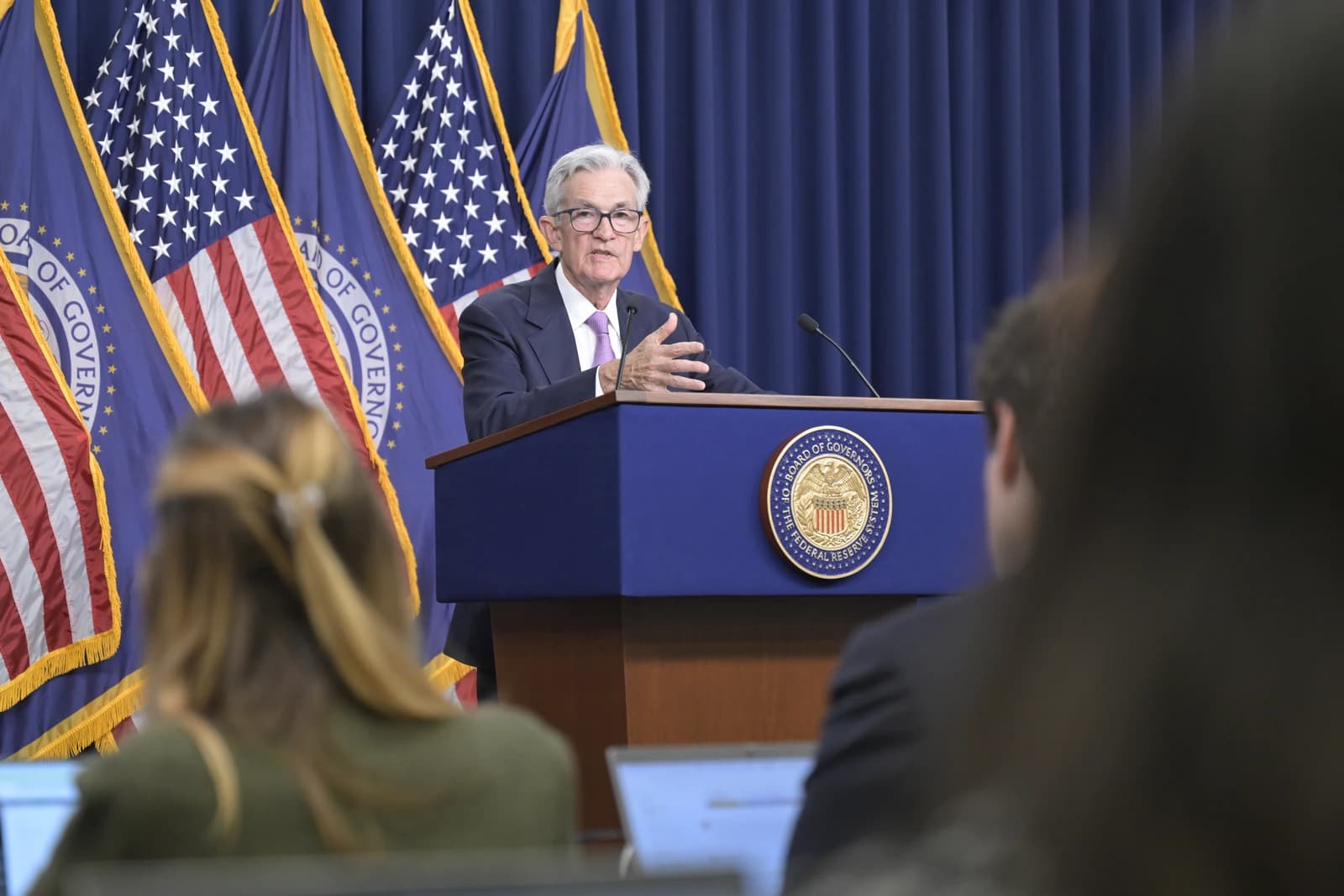
The International Monetary Fund is warning that the global economy is running out of room to absorb another financial or geopolitical shock, even as it nudged up its 2026 growth forecast to 3.1%.
IMF warns on global economy after growth forecast hike

That’s the real message from the IMF’s October World Economic Outlook: the world economy may still be expanding, but its resilience is thinning fast. For investors, that matters because growth is being propped up by a narrow set of forces — high interest rates, a debt load that is already enormous, energy and food inflation tied to conflict, and an AI boom that is increasingly concentrated in the U.S. and China.
Sentiment IndicatorsⓘProprietary · adalytica.com · October 13, 2026
This is a snapshot — live sentiment, awareness and momentum for 130+ markets update continuously in the dashboard.Open AlphaPulse
The fund’s tone is more urgent than the forecast itself. It kept 2027 growth at 3.4%, but said the system is effectively “held together by threads,” a striking phrase for a world still digesting wars, fragile supply chains and expensive refinancing costs. The IMF said the war in the Middle East has already delivered the biggest energy supply shock in recent memory, pushing up prices and testing logistics networks. Countries that import energy and rely less on technology-linked trade are taking the hardest hit, while energy exporters and economies plugged into the AI supply chain are faring better.
That split matters economically because it widens the gap between winners and losers in the global economy. Cheaper imports and healthier balance sheets help some countries maintain demand, but for debt-heavy, energy-dependent economies, higher fuel costs and elevated borrowing rates are a painful double squeeze. The IMF’s warning is essentially that the world has less fiscal and monetary firepower left to cushion the next shock.
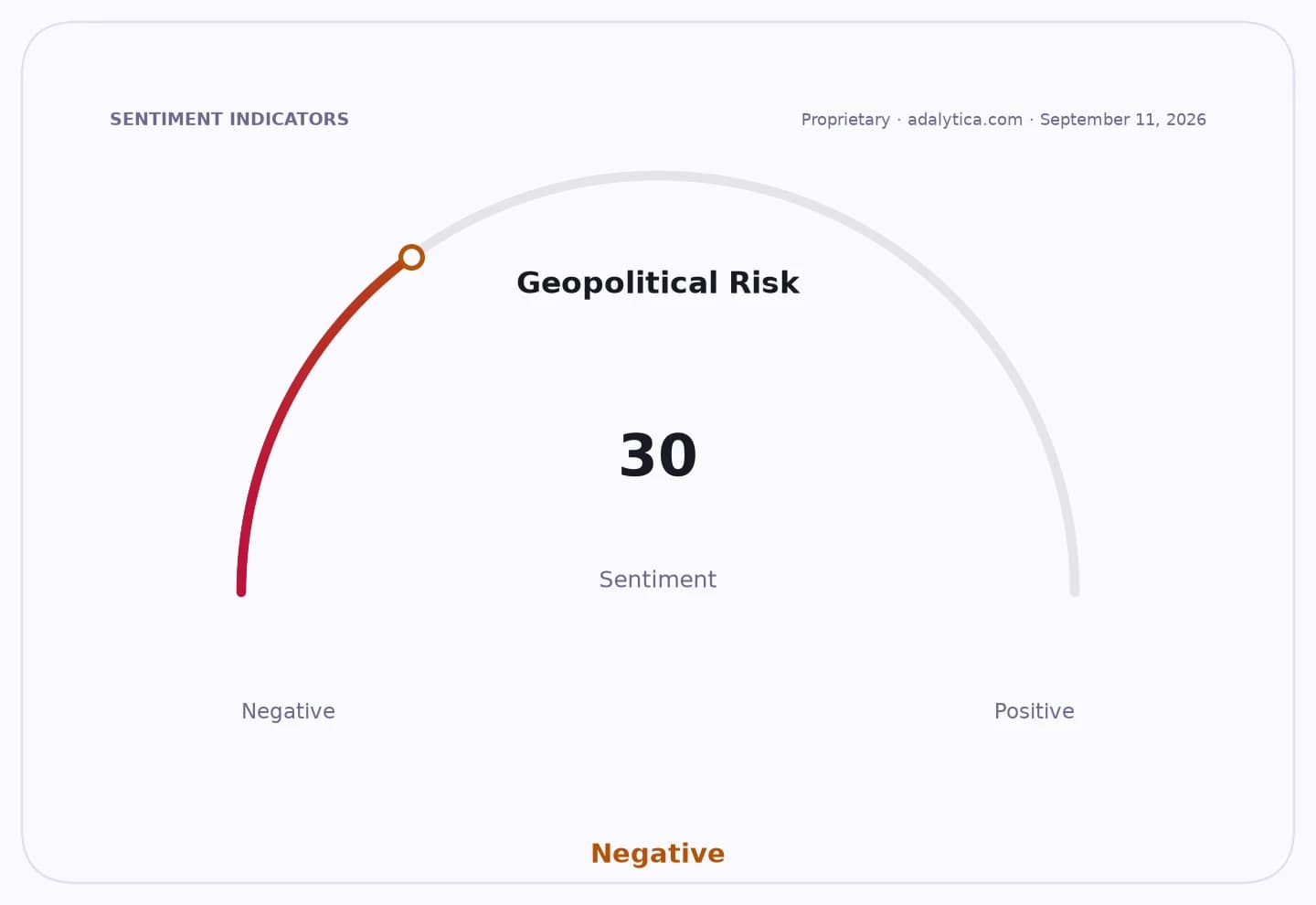
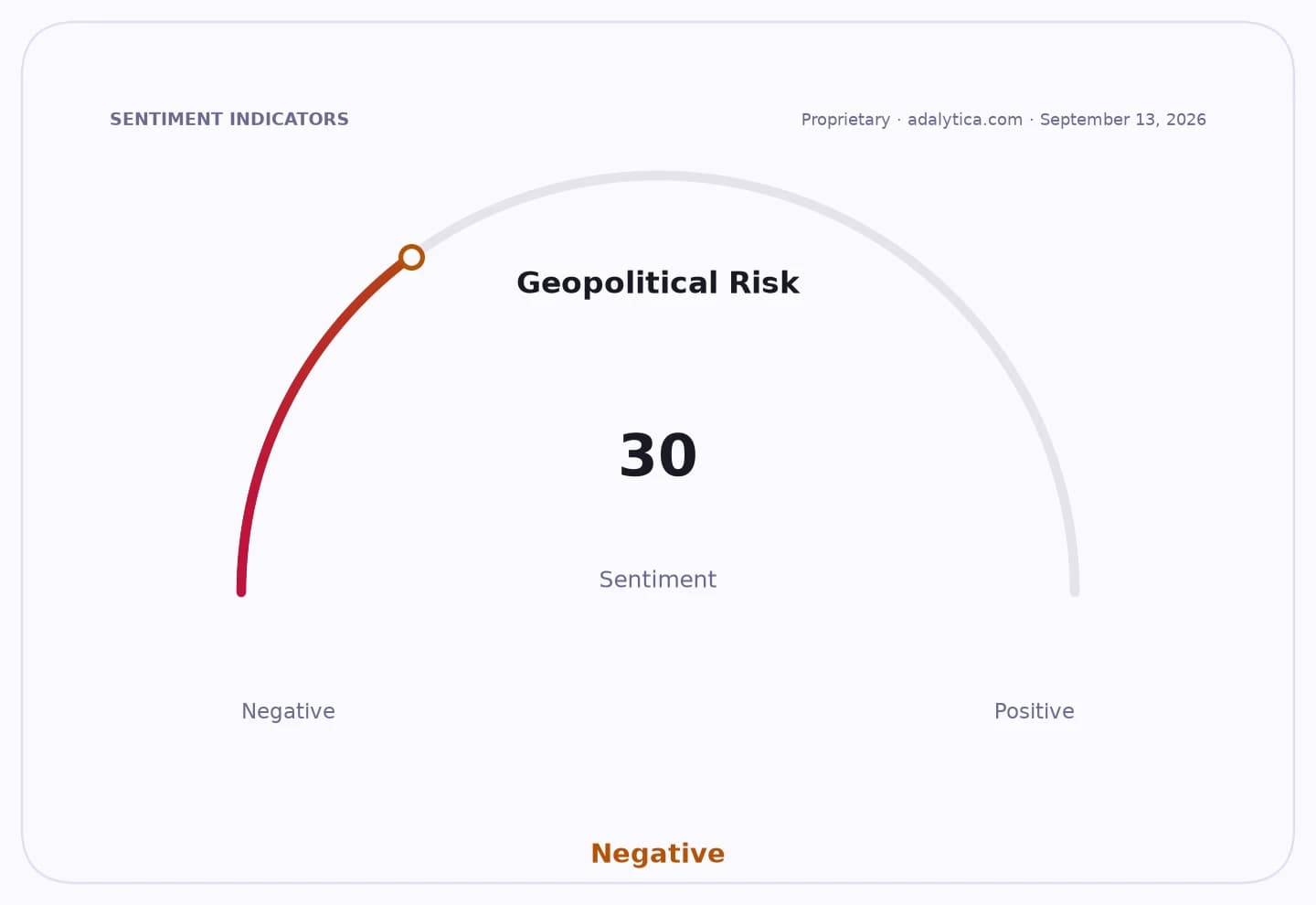
Geopolitical Risk — 30-day sentimentadalytica.com
Explore this data interactively — full history, time series and cross-market comparisons.Open AlphaPulse
Markets are already pricing that tension in a familiar way: the U.S. 10-year Treasury yield has been hovering around 5.2%, a level that keeps borrowing costs restrictive, while high-yield credit spreads remain wide enough to show investors are still charging for risk. In equity markets, the S&P 500 has stayed near record territory, but the conventional technical indicators suggest a market that is still extended rather than cheap, with the index trading well above both its 50-day and 200-day moving averages. That is not the backdrop for carefree risk-taking.
The IMF also put a spotlight on the AI investment boom, which has helped support global growth but is creating its own pressures. Massive spending on data centers and chips has become a pillar of U.S. corporate earnings, yet it also pushes up electricity demand and concentrates benefits in a small number of countries and companies. For long-term investors, that is both an opportunity and a warning: AI remains a powerful secular theme, but it is not lifting the entire world equally.
There is a portfolio lesson in all this. When the IMF says the world economy cannot comfortably withstand more shocks, it is really saying correlations rise when stress hits. Energy importers, highly leveraged borrowers and weaker emerging markets tend to suffer first; exporters of energy, owners of scarce infrastructure and companies tied to AI capex can hold up better. Defensive positioning, balance-sheet strength and broad diversification matter more when policy room is limited.
The next test will be whether governments can rebuild fiscal buffers without choking off growth and whether central banks can avoid staying tight for too long. For investors with a three- to 10-year horizon, the message is not to flee risk, but to own businesses and assets that can survive a world with slower growth, stubborn inflation and recurring shocks. That makes this IMF warning worth watching closely, not because it changes the long-term story, but because it reinforces how selective investors will need to be.
| Entity | Gains | Losses |
|---|---|---|
| Energy exporters | ▲Higher commodity revenues | ▼— |
| Energy importers | ▲— | ▼Higher import bills |
| AI leaders in U.S. and China | ▲Capital spending tailwind | ▼Benefits concentrated in few markets |
| Highly leveraged governments | ▲— | ▼Higher refinancing costs |