China is leaning harder into industrial self-reliance in its new 5-year plan, a shift that matters far beyond politics because it will shape supply chains, capital spending and the earnings outlook for companies from chipmakers to carmakers.
China 5-Year Plan Focuses on Industrial Self-Reliance
CCP Policy Direction
For investors, the message is clear: Beijing is not stepping back from rivalry with the West. It is doubling down on domestic capability in sectors that matter most to growth and strategic power, from advanced manufacturing to the technologies that sit behind the electric-vehicle and AI boom. That raises the odds of more policy support for favored Chinese industries, but also more friction with the United States and its allies, which could keep tariff, export-control and sanctions risk elevated.
Sentiment Indicators
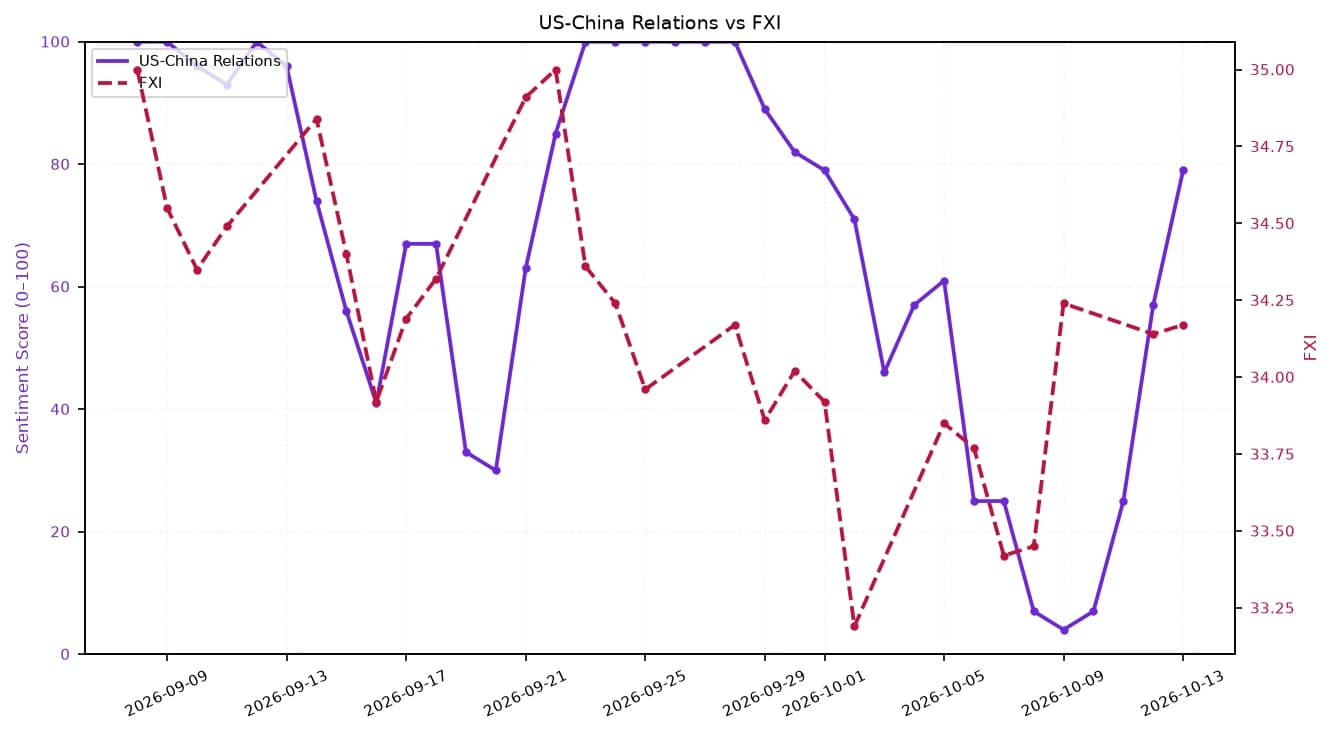
Markets are already reading that tension into Chinese assets. The iShares China Large-Cap ETF, FXI, was recently trading at 34.95, below its 200-day moving average of 35.4, even after a modest rebound. The broader China ETF, MCHI, was at 51.89, also under its 200-day average of 55.25. That underperformance tells you investors are still demanding a discount for policy uncertainty and geopolitical risk, even as Beijing tries to stabilize sentiment at home.
The stakes are especially high in the industries that sit in the middle of the new industrial contest. Chinese vehicle brands, including motorcycles, are gaining traction in Europe, showing how quickly Beijing’s manufacturers can move up the value chain when the policy environment and pricing line up. At the same time, Europe’s push to secure rare earth supplies from Brazil underscores that rivals are also building defenses against China’s dominance in critical inputs. That two-way contest — China expanding abroad while others diversify away from it — is exactly the kind of dynamic that can reshape profits for years, not quarters.
CCP Policy Direction vs FXIadalytica.com
Explore this data interactively — full history, time series and cross-market comparisons.
Bond markets suggest the macro backdrop is still one of caution rather than crisis. The U.S. 10-year Treasury yield is around 4.845%, the two-year near 4.497%, and the federal funds rate is hovering around 3.89%, a reminder that financing conditions remain restrictive. If trade tensions intensify, capital could continue flowing toward perceived havens, while exporters, importers and multinationals with China exposure face a more complicated operating environment.
Adalytica’s China CCP policy-direction gauge sits in neutral territory, but the broader geopolitical backdrop is still flashing caution, with U.S.-China relations sentiment weak and global stability readings pointing to extreme greed paired with very low awareness. In plain English: markets may be complacent, but the policy risk is not going away.
The long-term takeaway for investors is not to chase the headlines, but to understand the compounding effects of industrial policy. China’s plan can support domestic champions and create opportunities in selective sectors, yet it also raises the odds of a more fragmented global economy. That is why diversified investors should think in years, not days, and keep a close eye on companies with real pricing power, strong balance sheets and exposure to secular trends rather than just geopolitics. Worth watching.
| Entity | Gains | Losses |
|---|---|---|
| China’s domestic manufacturers | ▲Policy support, easier access to capital | ▼Dependence on foreign technology |
| U.S. and European rivals | ▲Supply-chain diversification opportunities | ▼Market share in China-linked industries |
| FXI and MCHI investors | ▲Potential stimulus-led rebounds | ▼Geopolitical and policy uncertainty |
| Export-reliant multinationals | ▲Broader demand if tensions ease | ▼Tariffs, sanctions and controls |