China’s decision to give up the special treatment attached to developing-country status at the World Trade Organization is the clearest sign yet that Beijing is trying to reshape the terms of global trade before others do it for it.
China Gives Up WTO Developing-Country Privileges

The move matters because it removes one of the most politically sensitive advantages China has long defended in multilateral talks: longer timelines to open markets, softer obligations and exemptions that helped emerging economies protect domestic industries while they caught up with richer rivals. For investors, that is more than a diplomatic gesture. It signals that the world’s second-largest economy is moving closer to the rules applied to developed markets, which could accelerate trade liberalization, alter competitive dynamics for exporters and importers, and reset expectations around how China presents itself in future negotiations.
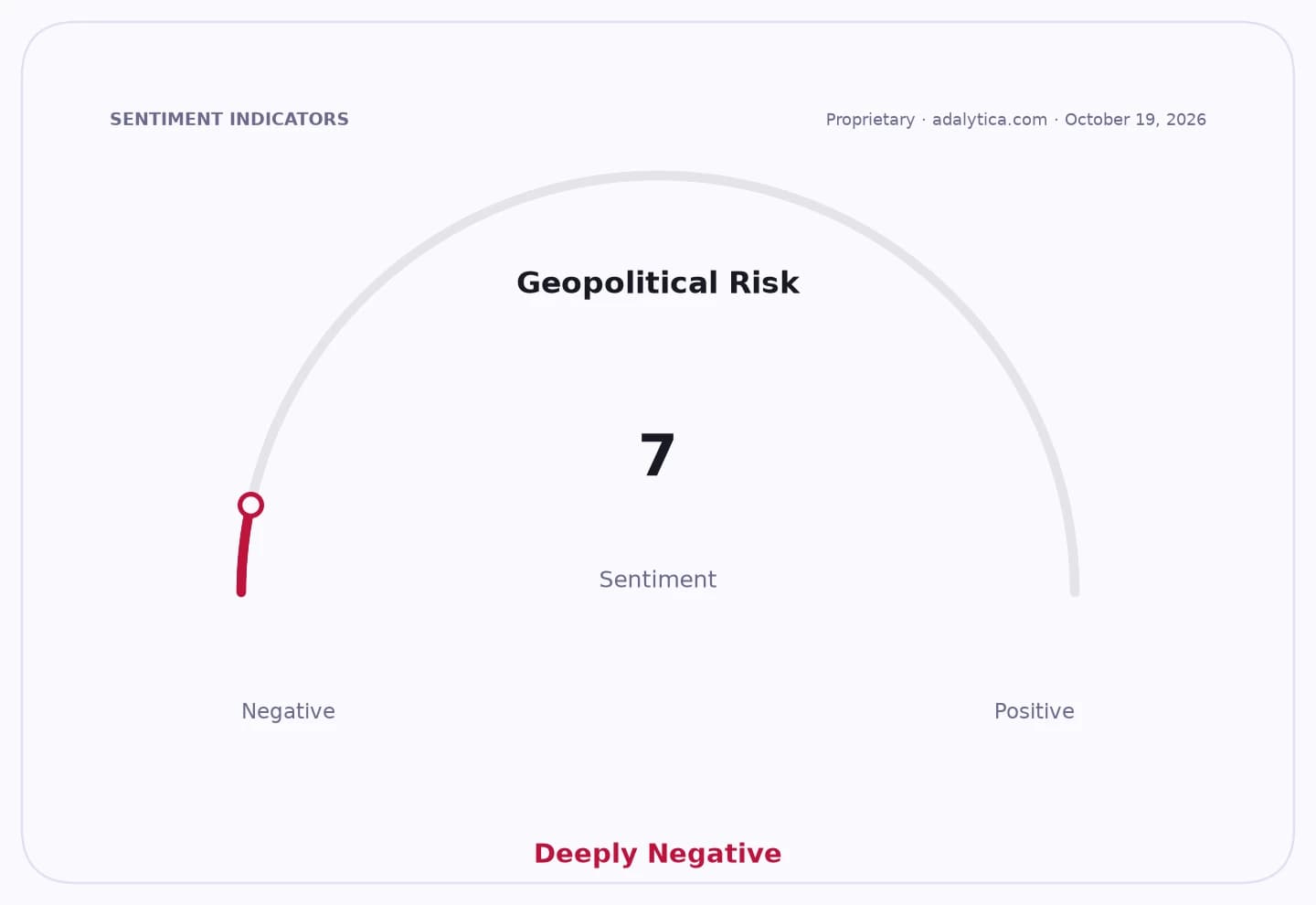
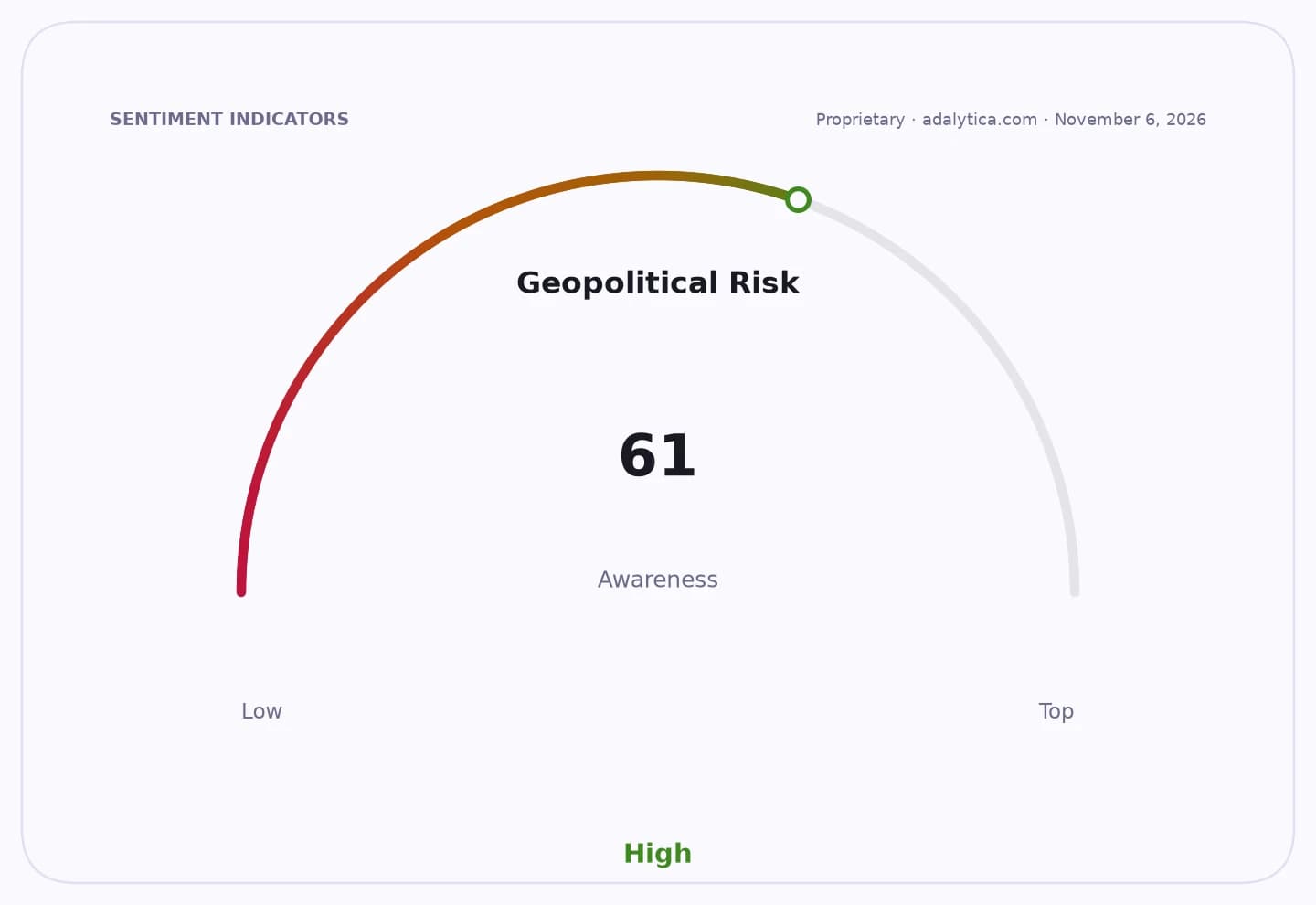
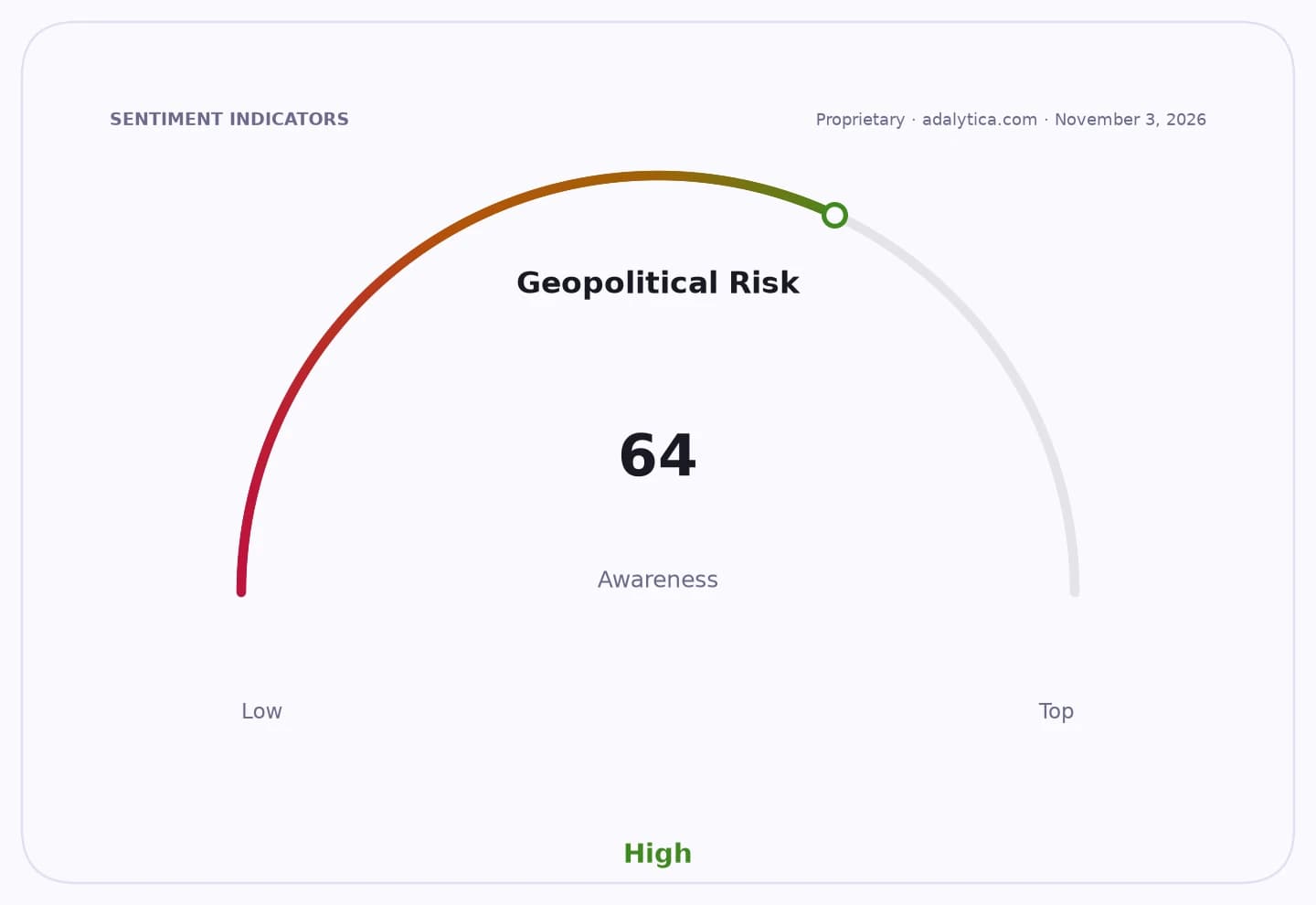
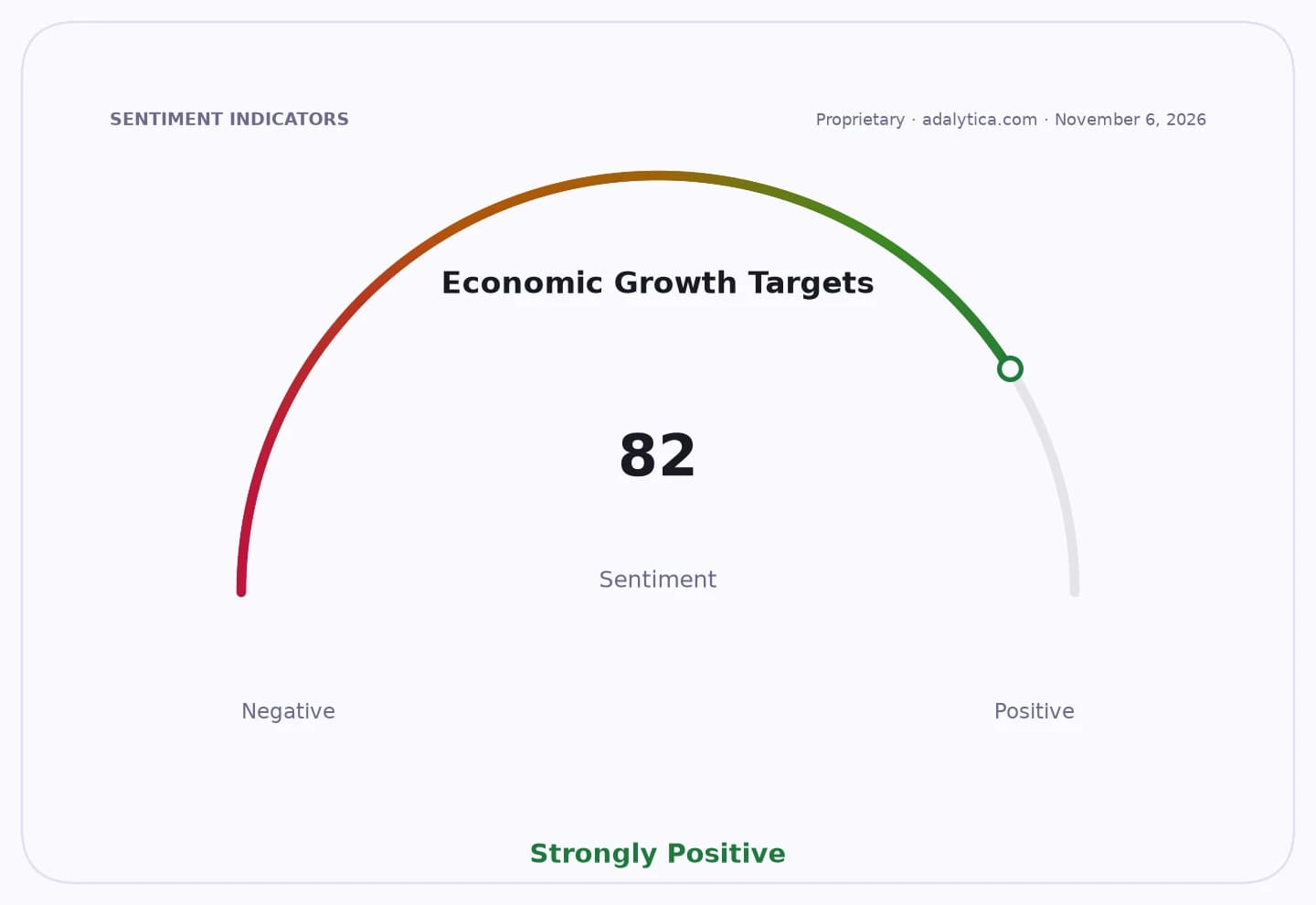
Sentiment Indicators
Geopolitical Risk
Premier Li Qiang unveiled the decision in New York at a forum on the sidelines of the UN General Assembly, and Beijing cast it as a way to strengthen a multilateral system under strain from protectionism and tariff battles. The message is aimed squarely at Washington and Brussels. The United States has long argued China should not keep claiming emerging-market privileges while dominating global manufacturing and finance, and the European Commission is now pressing for the waiver to apply even to existing agreements.
That makes this a structural story, not a one-day headline. If China is willing to step away from developing-country benefits at the WTO, it strengthens the case for a broader reset in trade architecture at a time when governments are trying to protect supply chains, reshore critical production and police subsidies more aggressively. It also gives the WTO a rare reform narrative after years of paralysis.
The economic significance is especially clear in sectors tied to industrial policy, infrastructure and cross-border investment. China still says it remains a developing country by its own measure, pointing to its middle-income status and its role financing large infrastructure projects abroad. But the practical effect of this WTO decision is to reduce one of the main arguments that has shielded Beijing from stricter commitments. That could increase pressure on Chinese exporters over time, while giving rivals in Asia, Europe and North America more room to argue for reciprocity.
For investors, the ripple effects extend beyond China itself. A more rules-based trade environment is constructive for multinational suppliers, logistics networks and companies exposed to a reordering of manufacturing footprints. It may also support the case for countries such as Vietnam and Mexico, which stand to benefit if global firms keep diversifying supply chains away from China. The WTO separately has used Vietnam’s trade expansion as evidence that deeper integration can lift both exports and imports materially over time.
China-focused ETFs are not yet pricing a full regime shift, but the market backdrop shows investors are watching policy inflection points closely. The iShares China Large-Cap ETF, FXI, has rebounded to 34.95, just above its 50-day moving average of 34.05, while still below its 200-day average of 35.40. The iShares MSCI China ETF, MCHI, at 51.89 is also hovering near its 50-day average of 52.02 and remains under its 200-day level of 55.25. That tells you the market is treating China as a tactical trade, not yet a conviction allocation. A real shift in trade governance could help change that.
Technically, both funds have stabilized after a rougher stretch, and momentum indicators have improved from earlier weakness. But the more important catalyst is political: if Beijing is signaling it wants to be judged more like a major power than a protected developing economy, then trade negotiations, market access disputes and subsidy fights may increasingly be framed around reciprocity rather than exception.
That is the investable takeaway. The market may be underestimating how much a symbolic WTO concession can matter when it comes from China. If this opens the door to broader trade-rule reform, the winners are likely to be exporters, supply-chain diversifiers and the infrastructure heavyweights of the next manufacturing map. The losers are those still relying on the old bargain.
| Entity | Gains | Losses |
|---|---|---|
| WTO / multilateral trade system | ▲Reform momentum | ▼Status quo inertia |
| US, EU trade negotiators | ▲Stronger reciprocity case | ▼China’s old exemptions |
| Vietnam, Mexico, supply-chain diversifiers | ▲More investment inflows | ▼China-centric manufacturers |
| China exporters | ▲Clearer rules over time | ▼Special treatment leverage |