Europe’s biggest financial story is not a lack of savings, but a failure to put those savings to work.
Europe savings in deposits and capital markets

A new Revolut study says households across 20 EU markets have about 6.3 trillion euros parked in low-yield deposits, where returns are lagging inflation and eroding purchasing power. That matters because Brussels is now trying to mobilize private capital for the continent’s next growth cycle — artificial intelligence, clean energy, defense and infrastructure — at a moment when public balance sheets are too stretched to do it alone.
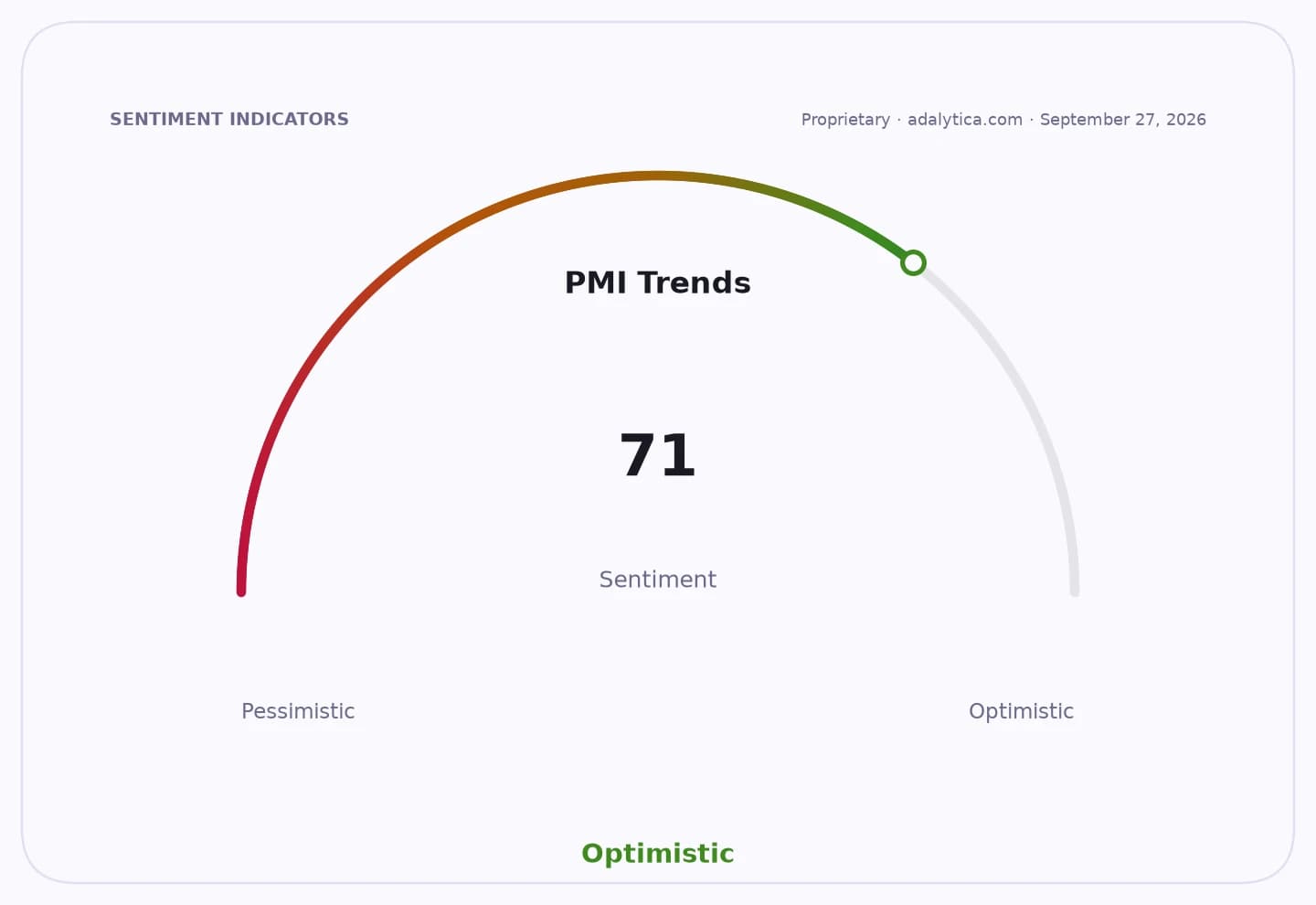
Sentiment IndicatorsⓘProprietary · adalytica.com · September 27, 2026
This is a snapshot — live sentiment, awareness and momentum for 130+ markets update continuously in the dashboard.Open AlphaPulse

The numbers are hard to ignore. Revolut estimates Europeans lose 294 euros of buying power for every 10,000 euros left in the bank, with average deposit rates of 2.76% trailing inflation at 2.94%. On a broader investment basis, the cost is even larger: if that idle cash earned something closer to the MSCI Europe ETF’s 10-year annual return of 9.06%, the missed opportunity amounts to roughly 638 euros a year per 10,000 euros, or about 422 billion euros in potential annual growth capital across the 6.3 trillion euros sitting in low-yield accounts.
That is the real macro trade here. Europe is trying to fund a 750 billion- to 800 billion-euro annual investment gap through 2030, according to the Draghi report, without relying entirely on higher sovereign borrowing. With EU public debt already near 82.9% of GDP and euro area debt at 88.9%, policymakers need household money to move from deposit accounts into capital markets, pension products and listed assets.
For investors, that makes the EU’s Savings and Investments Union one of the most important policy themes in the region. The plan, backed by the European Commission, aims to create simpler savings and investment accounts, deepen capital market access and reduce the friction that keeps retail money trapped in cash. Brussels says the package could unlock as much as 470 billion euros in additional investment. If even a fraction of that lands in European equities, asset managers, exchanges, brokers and digital wealth platforms stand to benefit.
The market is already signaling where that flow could go. The iShares MSCI Eurozone ETF, EZU, and the Vanguard FTSE Europe ETF, VGK, have both held above their 200-day moving averages, even as momentum has cooled in recent sessions. That leaves room for a rotation trade if retail savings begin migrating from deposits into European risk assets. More importantly, the real winners may not be the broad indexes first, but the financial infrastructure around them: low-cost investing platforms, passive products, custodians, exchanges and fund distributors.
Revolut’s own data points to the scale of the opportunity. The company says active EU investors on its platform rose 56% year on year, and the median first investment is just 18 euros. That tells you this is not about forcing households into speculation. It is about lowering the barriers to entry. The biggest obstacles are perception of risk, cited by 29% of non-investors, and lack of knowledge at 27%. Fragmented apps and accounts also keep money inert. In other words, the bottleneck is behavioral and structural, not monetary.
That is why the policy debate matters so much. Brussels is not proposing to seize deposits or dictate allocation. It is trying to make saving and investing feel less like separate financial worlds. If it succeeds, Europe could finally convert a stagnant pool of household wealth into a funding engine for the continent’s industrial and strategic priorities. If it fails, the region will keep exporting capital and underfunding the sectors it says are vital to its future.
The investment takeaway is straightforward: Europe’s savings problem is also its capital markets opportunity. I believe the most asymmetric trades are in the picks-and-shovels of financial liberalization — platforms, brokers, exchanges and diversified European equity vehicles — before the flow turns obvious and consensus catches up.
| Entity | Gains | Losses |
|---|---|---|
| Revolut and digital wealth platforms | ▲More retail inflows | ▼Deposit-only banks |
| European asset managers/exchanges | ▲Higher trading and fund activity | ▼Cash hoarders |
| European equities/ETFs | ▲New capital formation | ▼Idle savings |
| EU households | ▲Better returns and purchasing power | ▼Inflation-eroded deposits |