Europe’s factory sector is still expanding, but the bigger economic story is that momentum is fragile and investors should not mistake one steady PMI print for a clean recovery.
Euro area manufacturing PMI holds at 52.7
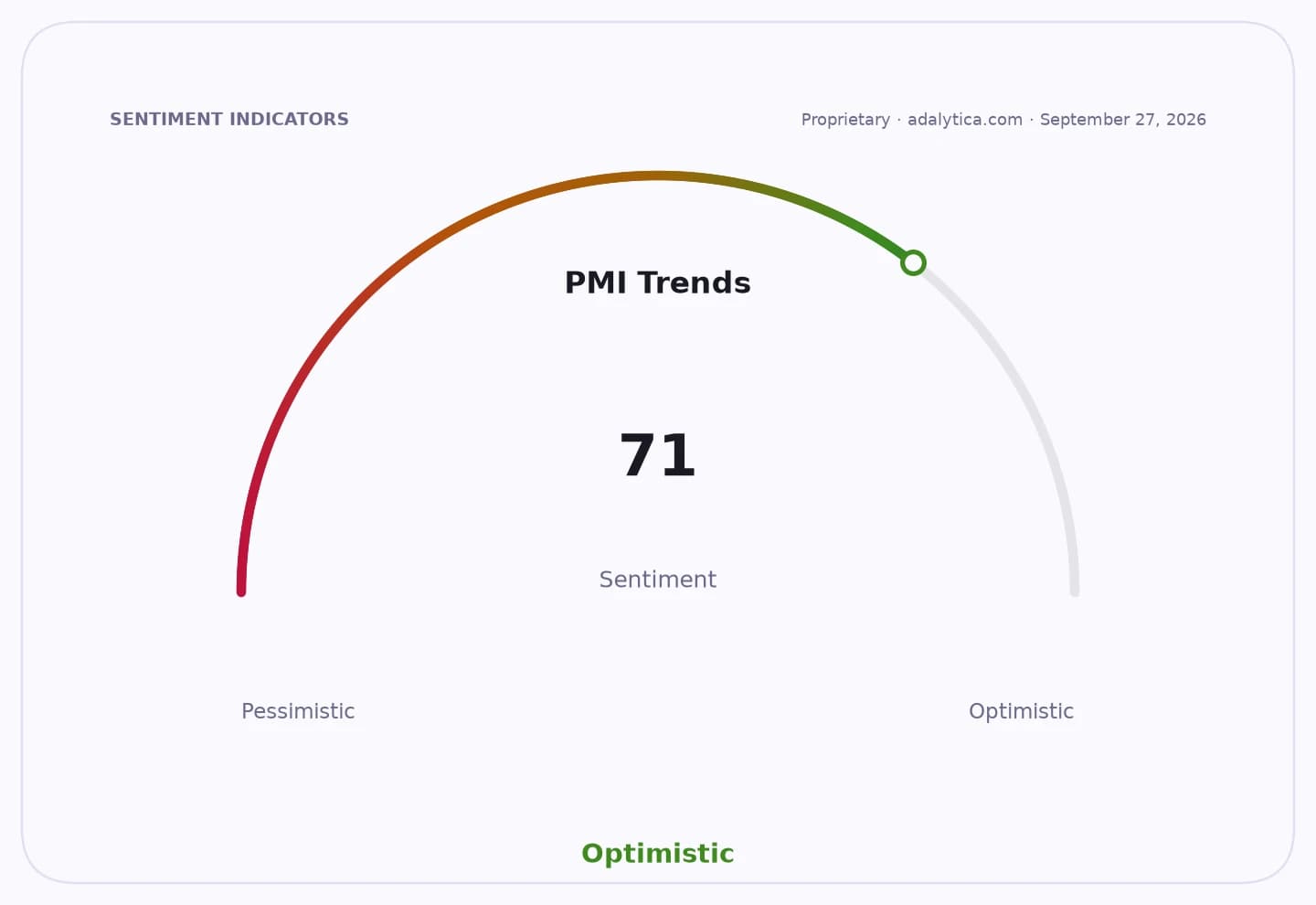
The euro area manufacturing purchasing managers’ index came in at 52.7 in September, unchanged from August and just ahead of expectations for 52.6. That keeps the sector in expansion territory, but the reading also underscores how little cushion Europe has as growth remains vulnerable to softer global demand, higher borrowing costs and uneven industrial output across the bloc.
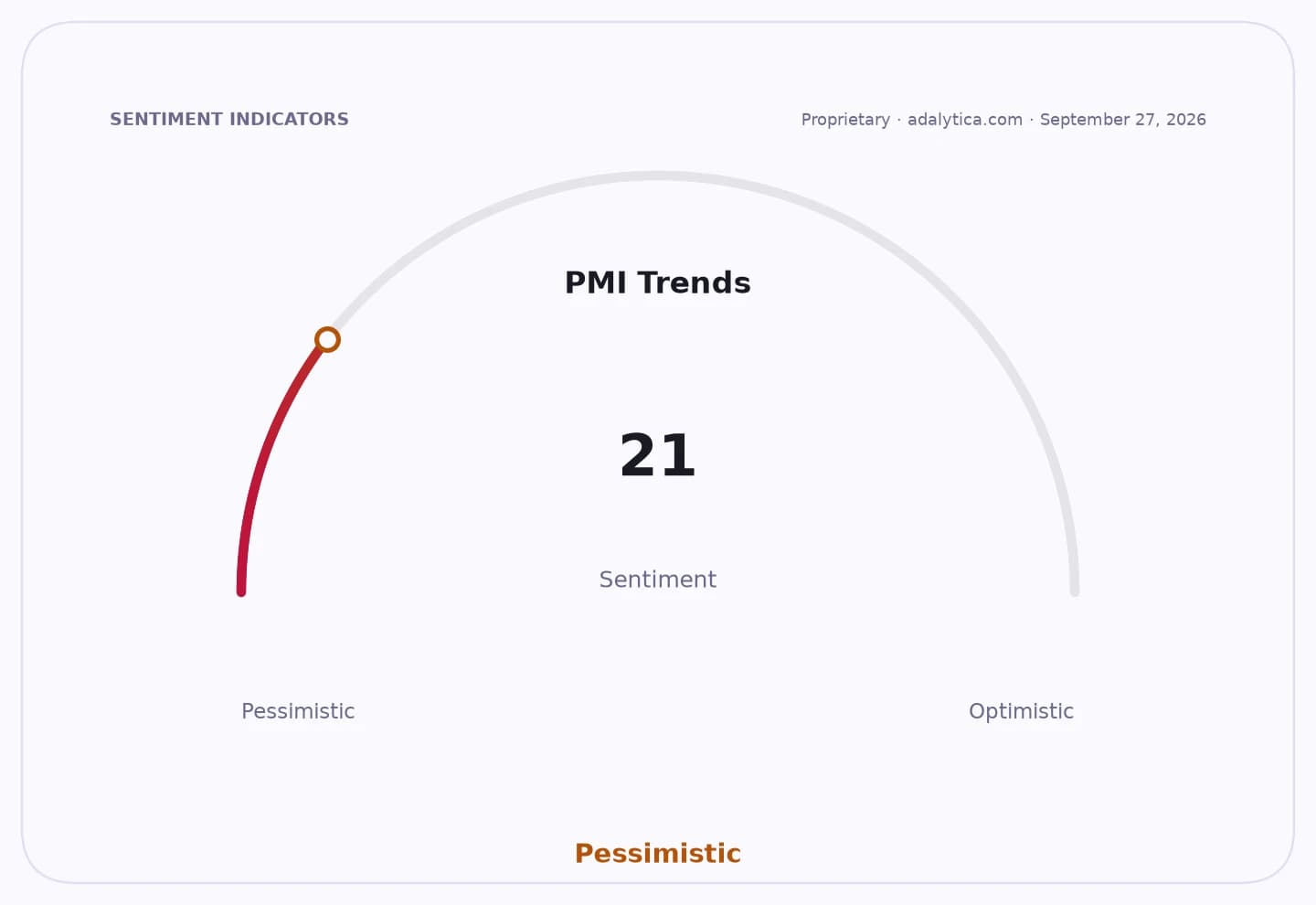
Sentiment IndicatorsⓘProprietary · adalytica.com · September 27, 2026
This is a snapshot — live sentiment, awareness and momentum for 130+ markets update continuously in the dashboard.Open AlphaPulse
For markets, the number matters because manufacturing is often the first place weakness shows up when the cycle rolls over. A stable PMI at 52.7 is not recessionary, but it also does not suggest the sort of broad-based acceleration that would justify an aggressive re-rating of cyclicals. With the Euro Stoxx and German export-heavy shares already highly sensitive to China, U.S. demand and energy costs, investors are likely to keep treating Europe as a trade-on-trade-out market rather than a convincing earnings growth story.
That leaves the European Central Bank in a delicate position. A PMI holding above 50 gives policymakers room to argue the economy is not collapsing, but it does little to remove pressure from manufacturers still dealing with weak pricing power and cautious capital spending. In other words, the data supports a slow-growth, uneven-recovery narrative rather than one that would force the ECB into a more hawkish posture.
The real opportunity, in our view, is not in broad European industrial exposure but in the parts of the market that can benefit from selective capex rather than overall growth. Automation, electrical equipment, industrial software and defense-linked manufacturers remain better positioned than classic export cyclicals because their demand is being driven by structural spending themes, not just the manufacturing cycle. If Europe’s factories are stuck in a low-growth holding pattern, the winners will be the firms selling efficiency, energy resilience and rearmament capacity.
That is why investors should read this PMI as confirmation of a market split, not a headline to trade blindly. Europe’s manufacturing base is still alive, but it is not yet strong enough to power a broad earnings breakout. Until the region shows clearer acceleration, the better play is to stay selective and favor businesses tied to secular investment themes over the old industrial beta trade.
| Entity | Gains | Losses |
|---|---|---|
| Automation and industrial software firms | ▲Capex-linked demand | ▼Broad cyclicals |
| Defense manufacturers | ▲Structural rearmament spending | ▼Export-sensitive industrials |
| ECB policymakers | ▲Room to stay cautious | ▼Noneconomic pressure to tighten |
| European exporters | ▲Stable PMI backdrop | ▼Weak global demand |