Nine EU governments are pressing Brussels to rewrite state-aid rules that can block young, fast-growing start-ups from public support, a move that could unlock more financing for Europe’s most capital-hungry tech firms at a time when the region is trying to catch up in AI, defense tech and other strategic industries.
EU states push to ease start-up state-aid rules
That matters because Europe’s innovation problem is not a lack of ideas, but a financing framework that still treats early losses as a sign of distress. Under current rules, a start-up or scale-up can be classed as an “undertaking in difficulty” simply because it is burning cash in its first years, even if it is attracting investors and scaling quickly. For investors, that is more than a legal nuance: it affects whether public money can complement private capital, which companies can survive the valley of death, and how much of the next generation of European winners will be built at home rather than in the U.S. or Asia.
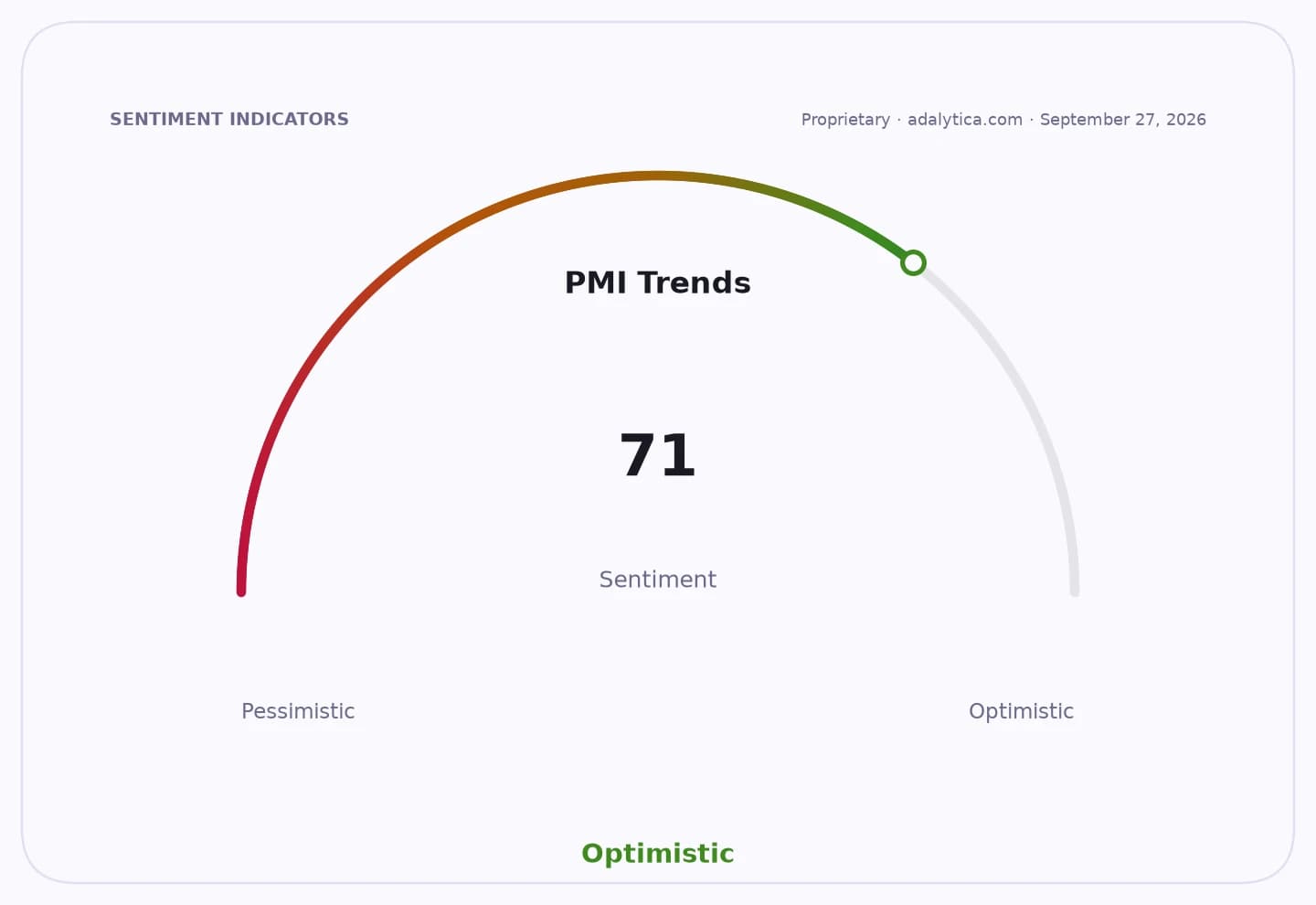
Sentiment IndicatorsⓘProprietary · adalytica.com · September 28, 2026
This is a snapshot — live sentiment, awareness and momentum for 130+ markets update continuously in the dashboard.Open AlphaPulse

Belgium, the Czech Republic, Germany, Italy, Latvia, Luxembourg, Poland, Slovakia and the Netherlands signed the joint position, with France also backing the call, and the issue is due to be discussed by EU competitiveness ministers in Brussels on Thursday at the Netherlands’ request. The coalition is asking for a change to the definition of a troubled company so it no longer blocks access to funding for innovative smaller firms, especially in advanced technology sectors where losses are often a byproduct of rapid expansion rather than weakness.
The push also lands as the European Commission reviews state-aid rules. In February, Brussels proposed some relief, including exempting certain innovative start-ups from parts of the distress test and taking account of some hybrid financing instruments when assessing capital. But the nine governments argue the Commission has not gone far enough. Their complaint is that the current framework does not reflect how modern start-ups are funded, with equity rounds, convertible structures and other quasi-capital tools that are common in high-growth sectors.

For markets, this is a policy catalyst with second-order effects. If Brussels loosens the rules, the beneficiaries are not only founders and venture funds, but also industrial groups, banks and sovereign-backed investment vehicles that are trying to channel capital into European technology. The losers would be incumbents that rely on a slower, more restrictive subsidy regime, and start-ups that continue to face a financing disadvantage versus U.S. peers backed by deeper pools of capital and more flexible public support.
The investment case is straightforward: Europe is trying to build strategic autonomy in the sectors that will matter most over the next decade, and that requires a funding architecture that does not penalize high-burn innovation. The market underestimates how powerful a rule change like this could be if it improves the odds of scaling more European AI, energy and industrial software companies before they are forced to sell out early or move abroad.
The broader backdrop reinforces that thesis. Investor appetite for European start-ups remains real, even after a difficult funding cycle, and valuations in frontier tech continue to show that capital is available for the right companies. But access, not just appetite, is the bottleneck. If EU ministers move the rules even modestly in favor of young innovators, it could widen the pipeline of companies eligible for public co-funding and make Europe a more competitive place to build the next generation of growth assets.
My view: this is an underappreciated policy inflection point for Europe’s venture ecosystem. If you want exposure, look first at the picks-and-shovels of the innovation economy — exchanges, venture platforms, banks with startup lending franchises and broad European equity exposure — because a friendlier subsidy regime could expand the entire risk capital stack long before it shows up in headline GDP.
| Entity | Gains | Losses |
|---|---|---|
| EU start-ups | ▲Easier access to public aid | ▼Less likely to be classified as distressed |
| Venture capital investors | ▲Larger financing pipeline | ▼Fewer funding bottlenecks |
| EU incumbents | ▲More innovation partners | ▼Stricter subsidy competition |
| U.S./Asian rivals | ▲— | ▼Europe narrows the capital gap |