European stocks ended higher on Friday, but the rebound was too small to erase a bruising week for investors still wrestling with elevated U.S. Treasury yields, a stronger dollar and the prospect that borrowing costs may stay restrictive for longer.
European Stocks Rise as Higher Yields Pressure Markets

The VGK Europe ETF finished at 92.72, up from 92.01 the day before, while Germany’s EWG and the U.K.’s EWU also edged higher. But the broader message was not one of renewed risk appetite: the region’s equities still closed out the week in the red, underscoring how quickly optimism can fade when macro conditions tighten and global money gets pulled back toward higher-yielding U.S. assets.
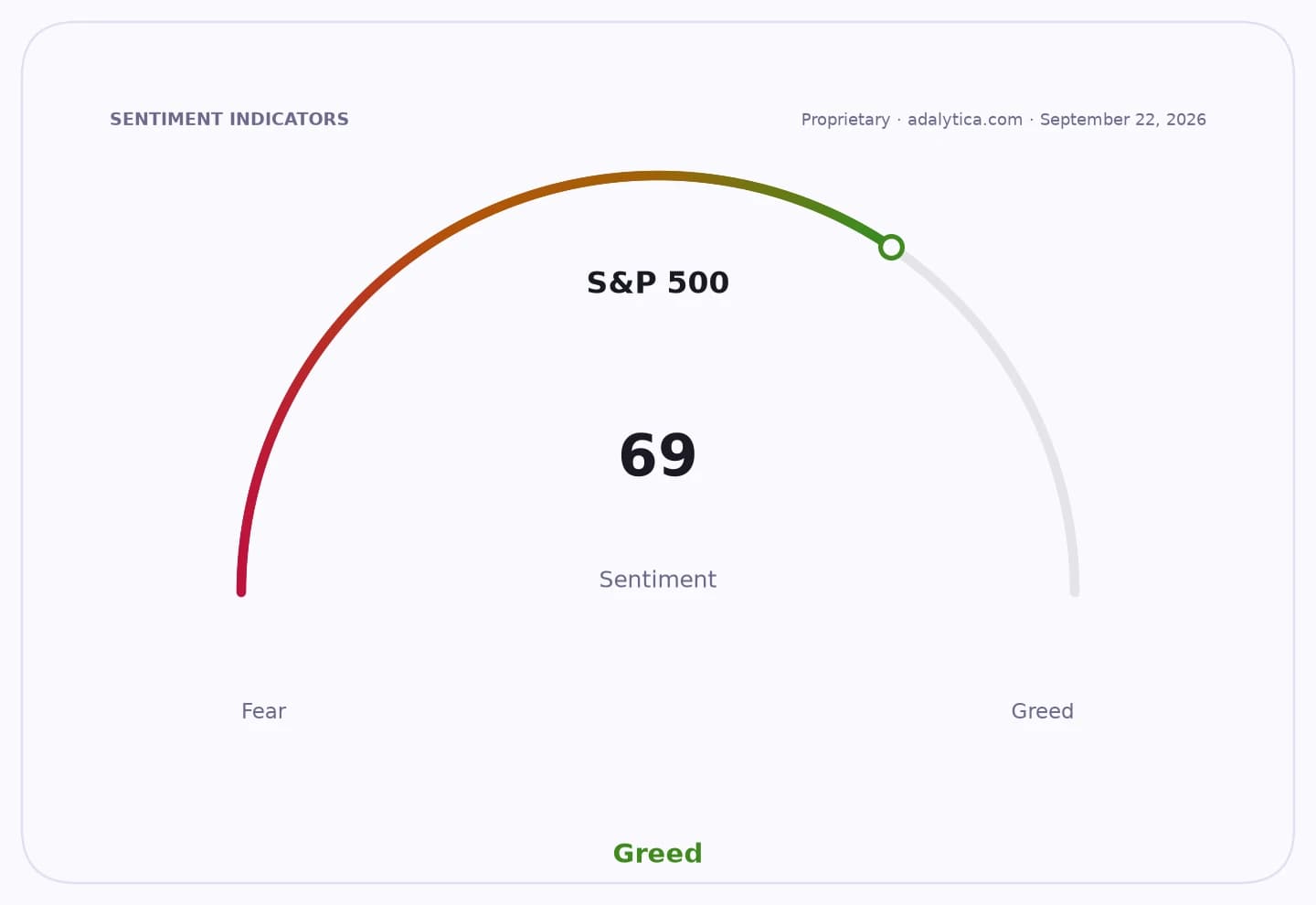
Sentiment IndicatorsⓘProprietary · adalytica.com · August 22, 2026
This is a snapshot — live sentiment, awareness and momentum for 130+ markets update continuously in the dashboard.Open AlphaPulse

That matters because Europe remains more exposed than the U.S. to funding costs, trade sensitivity and cyclical growth. A 10-year U.S. Treasury yield holding near 4.68% and a 2-year spread at 0.50 percentage point keep the market locked in a “higher for longer” regime that tends to compress equity valuations, especially outside the U.S. where earnings momentum is weaker and policy room is thinner. The Adalytica.com snapshot on the S&P 500 also shows trade sentiment flipping back to Fear even as awareness stays elevated, a sign that investors are staying engaged but defensive.
For European shares, that combination is toxic for multiple expansion. When rates are this high, investors demand more from earnings, and Europe has not yet delivered enough growth to justify a sustained rerating. The fact that the VGK’s 50-day moving average has climbed above its 200-day average offers technical support, but the week’s loss suggests the rally is still vulnerable if bond yields firm again or if risk capital keeps favoring U.S. mega-cap growth and defensive balance sheets.
The move also highlights a market that is still trading more on macro cross-currents than on Europe-specific fundamentals. Stronger dollar signals from Adalytica.com underscore the pressure on non-U.S. assets, while the absence of a U.S. recession flag in the latest economic backdrop keeps the Federal Reserve from undercutting yields. That leaves European equities stuck between improving price action and an unforgiving macro environment.
Investors should treat the late-week bounce as a tradable reprieve, not a regime change. The opportunity remains in sectors and vehicles that can benefit from persistent rate pressure — banks, insurers, exporters and select defense and infrastructure names — while broad Europe benchmarks are likely to keep lagging until yields fall decisively or earnings growth broadens enough to overpower the valuation drag. For now, the best setup is still selective exposure, not passive optimism.
| Entity | Gains | Losses |
|---|---|---|
| European exporters | ▲Stronger pricing power | ▼Sluggish domestic demand |
| Banks and insurers | ▲Higher-for-longer rates | ▼Growth-sensitive cyclicals |
| U.S. dollar assets | ▲Capital inflows | ▼Non-U.S. equities |
| Broad Europe equity ETFs | ▲Short-term rebound trades | ▼Weekly performance and multiples |