European wheat futures strengthened as an inconclusive US diplomatic visit to Ukraine left traders with little evidence that Black Sea grain exports will be stabilized soon, keeping a geopolitical risk premium embedded in the market.
European Wheat Futures Rise on Black Sea Risk
The move matters because wheat is once again being priced less on agronomy and more on the probability that shipments from one of the world’s most important export corridors remain vulnerable. With Russia having rejected a Black Sea grain export plan, the market is already treating the region as a supply choke point. Any sign that Western diplomacy is failing to unlock a clearer export path tends to tighten availability expectations and support European benchmark contracts.
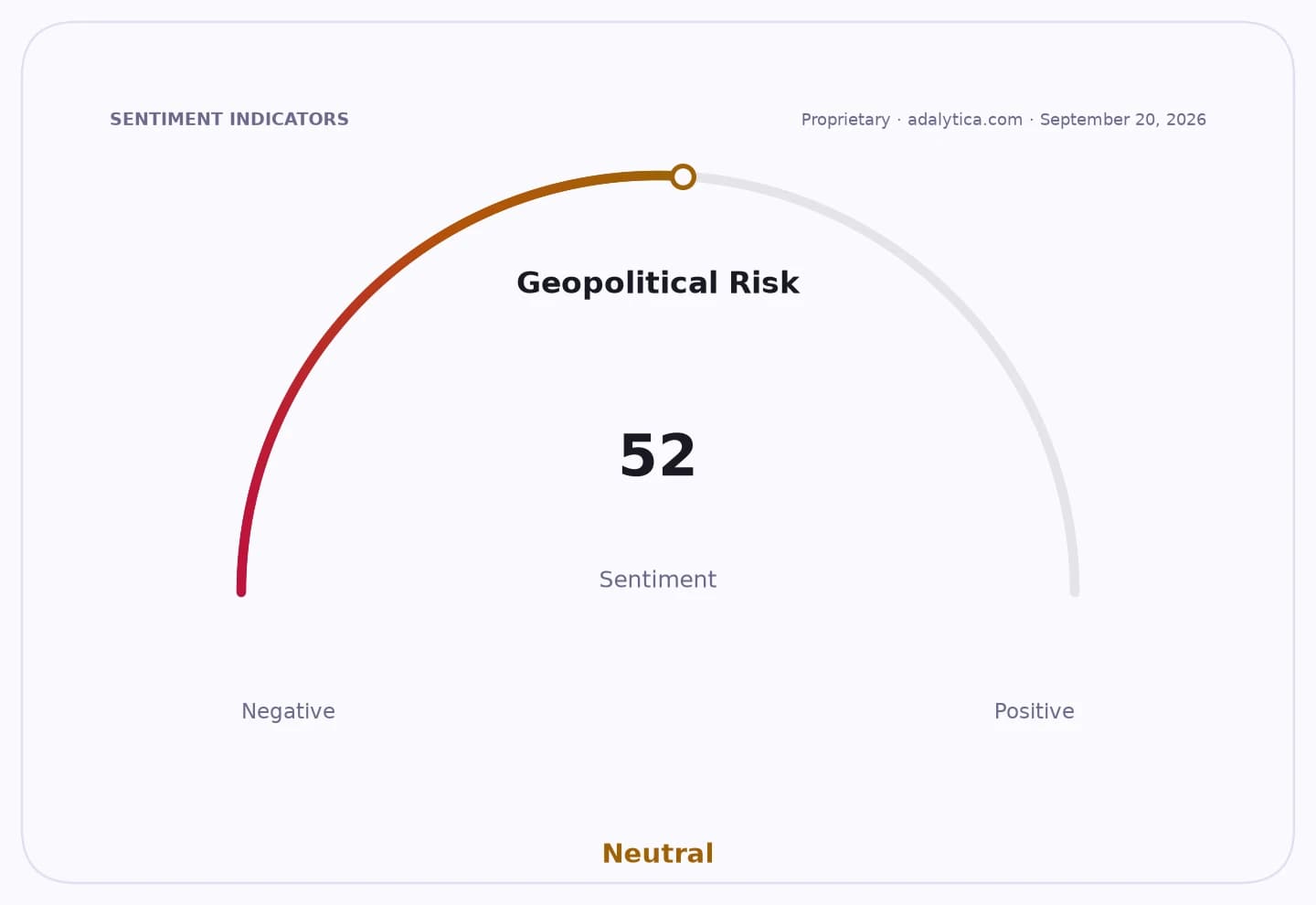
Sentiment IndicatorsⓘProprietary · adalytica.com · September 8, 2026
This is a snapshot — live sentiment, awareness and momentum for 130+ markets update continuously in the dashboard.Open AlphaPulse
That dynamic is reinforced by tight global wheat conditions more broadly. Chicago wheat has recently climbed to multi-year highs, reflecting concerns over Ukrainian supply, while Europe’s own crop outlook is complicated by intense heat that has brought harvests forward by about 20 days. An earlier harvest does not automatically mean bigger supplies: hotter conditions can reduce both yield and quality, and traders are reluctant to assume comfortable replenishment when weather and geopolitics are moving in the same direction.
For investors, the rally suggests the market is rewarding assets exposed to global grain scarcity and penalizing those tied to buyers and consumers of wheat. Importers face higher procurement costs and greater volatility in bread, feed and food inflation, while growers and grain merchants gain pricing power. In listed markets, the Invesco DB Agriculture Fund’s wheat-heavy exposure, tracked by WEAT, has extended a sharp breakout, with the ETF closing at $26.49 on Sept. 4, well above its 50-day moving average of $24.71 and 200-day average of $22.71. Its RSI at 63.6 and a positive MACD show momentum remains firm even after the recent surge.
Soybean exposure has also firmed, with SOYB near $27.65 and its own RSI still elevated above 80, underscoring that the agricultural complex is being pulled higher by broad commodity inflation and a weaker dollar backdrop. Adalytica’s US dollar trade signals show sentiment in “Greed” territory, which can support dollar-priced commodities by easing financial conditions and drawing speculative flows into hard assets.
The bull case for wheat is that the market is still underpricing the risk of further Black Sea disruption and quality losses in Europe’s crop. The bear case is that any concrete diplomatic progress, or better-than-feared European yields, could unwind part of the premium quickly. For now, though, the market is telling a simple story: until Ukraine’s export route looks more secure, European wheat remains bid.
| Entity | Gains | Losses |
|---|---|---|
| European wheat producers | ▲Higher prices | ▼Input-cost pressure |
| Grain importers | ▲— | ▼Higher procurement costs |
| Wheat ETF holders | ▲Price momentum | ▼Volatility risk |
| Consumers/food makers | ▲— | ▼Inflation pressure |