Eurozone inflation accelerated to 4.0% in October, the highest level in more than three years, intensifying pressure on the European Central Bank to keep interest rates restrictive for longer as energy costs re-emerge as the main driver of price growth.
Eurozone Inflation Rises to 4.0% in October

The rise from 3.8% in September and 3.2% in August is economically significant because it pushes consumer price growth even further above the ECB’s 2% target, undermining hopes that the disinflation process would settle in before year-end. Eurostat said higher energy prices were the key factor behind the latest increase, with economists broadly expecting the move. Still, the data reinforce the message that the eurozone’s inflation path remains vulnerable to commodity swings and imported cost shocks.
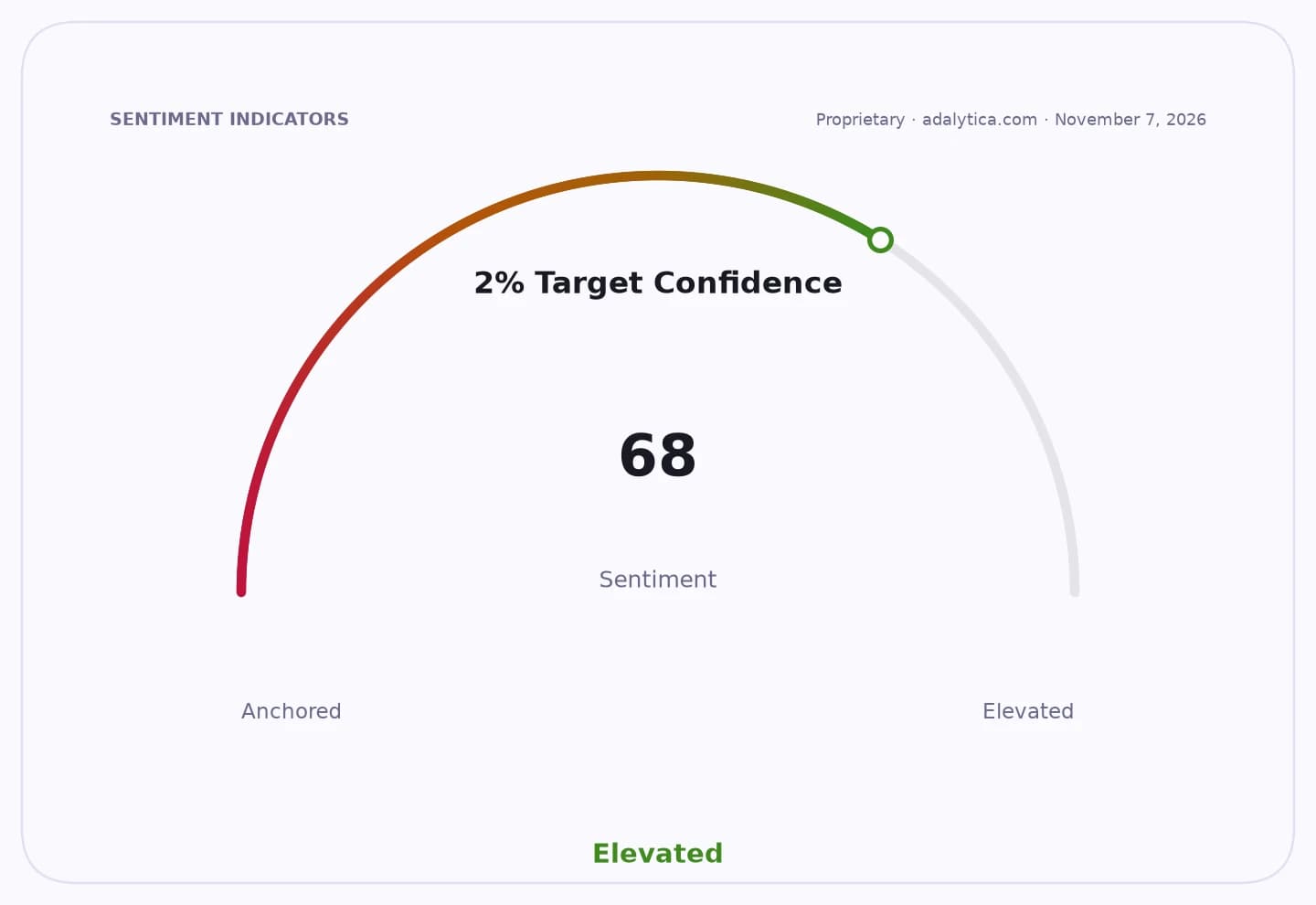
Sentiment Indicators

For policymakers, the print complicates an already delicate balancing act. Growth in the currency bloc remains uneven, but a faster pace of inflation limits the ECB’s room to ease financial conditions. Markets will read the data as reducing the likelihood of near-term rate cuts and increasing the chance that borrowing costs stay elevated well into 2026 if energy inflation feeds through into broader price expectations.
Investor implications are immediate across rates and currency markets. Higher inflation tends to support front-end bond yields and strengthen the case for a firmer euro if traders scale back easing bets. That dynamic is visible in euro-focused trading products, with the euro ETF FXE slipping to 102.77 on Friday even as it remains above its 200-day moving average, while the inverse euro fund EUO edged up to 32.79 and sits well above its 50-day average. The move suggests investors are beginning to price in a less dovish ECB path, even if the reaction has not yet become disorderly.
Long-term Inflation Expectations
The deeper risk is that energy-driven inflation proves harder to reverse than the ECB expected. If households and firms start to assume higher prices will persist, wage demands and pricing behavior can become more embedded, making the central bank’s job more difficult. That is why the October figure matters beyond a single monthly print: it strengthens the case for policymakers to keep monetary policy tight until there is clearer evidence that price pressures are fading durably.
The main question now is whether October marks a one-off energy shock or the start of a broader inflation rebound. If energy prices stabilize, the ECB may be able to look through the spike. If not, the latest data raise the odds of a longer period of elevated rates, weaker bond performance and renewed volatility in euro assets.
| Entity | Gains | Losses |
|---|---|---|
| ECB hawks | ▲Tighter-for-longer case | ▼Rate-cut expectations |
| Bond holders | ▲None | ▼Higher yields, weaker prices |
| Euro bulls | ▲Firmer policy support | ▼Near-term easing hopes |
| Energy producers | ▲Higher pricing power | ▼Consumers and importers |