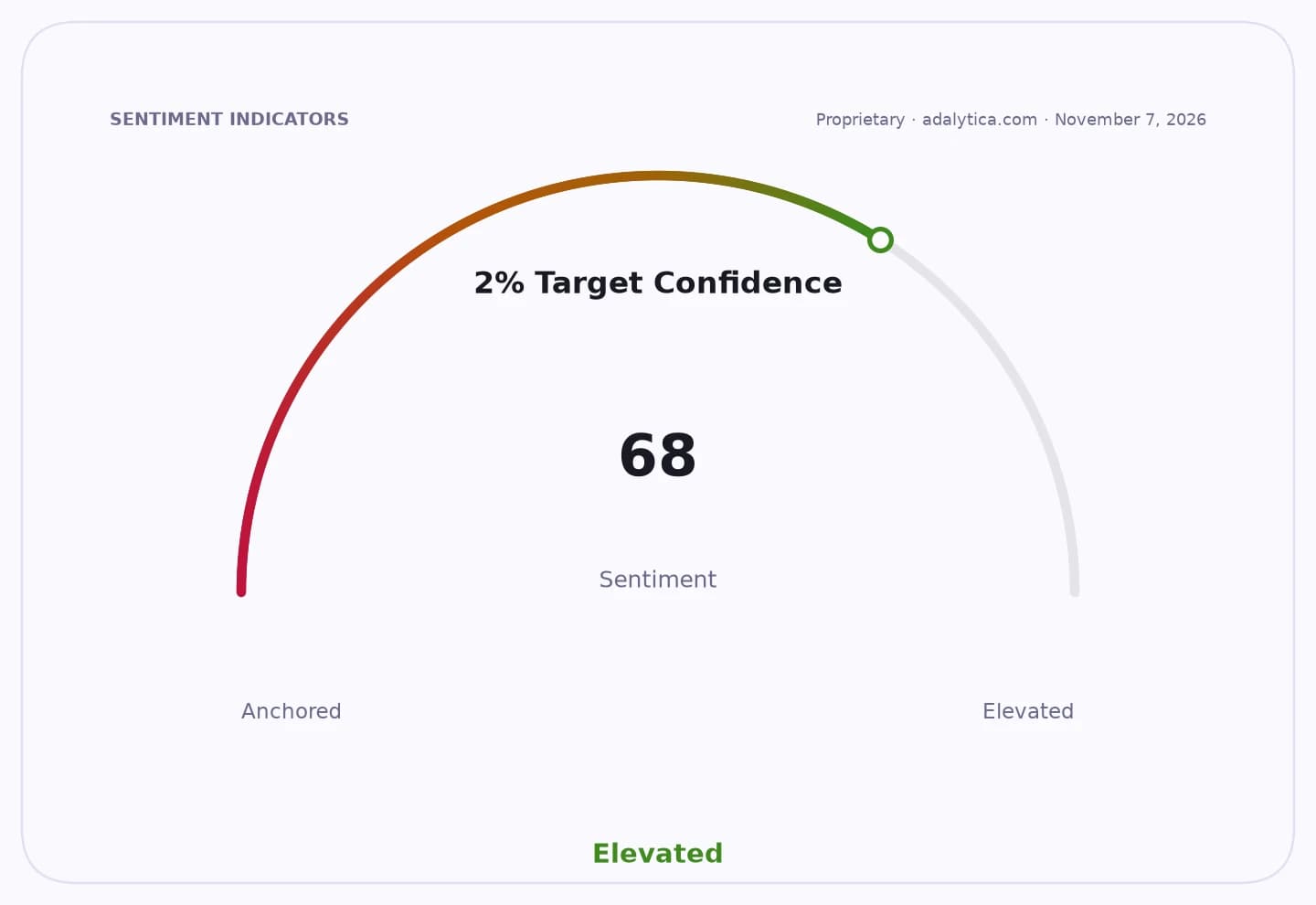
Inflation in the euro area rose back to 4.0% in October, strengthening the case for another European Central Bank rate increase before year-end and keeping pressure on bond, currency and equity markets already bracing for tighter policy.
Eurozone Inflation Rises to 4.0% in October

That matters because the ECB’s 2% target is now looking further away, not closer, and the re-acceleration in prices reduces the room for policymakers to pause after two hikes earlier this year. Eurostat’s flash estimate showed inflation accelerating from 3.8% in September, with the renewed price pressure driven by goods and services, and with Italy’s rate jumping to 5.6% as a reminder that inflation remains uneven across the bloc.
Sentiment Indicators

For investors, the message is simple: rates in Europe are not done rising, even if the market may be trying to price an endgame. ECB President Christine Lagarde has already leaned into the case for another move, while Bundesbank chief Joachim Nagel said a hike was “very likely necessary” and Austrian central bank governor Martin Kocher said inflation risks had “clearly increased.” The deposit rate would reach 2.75% if the ECB follows through, and derivatives markets are already floating as many as three more hikes, which would push the policy rate above 3%.
The economic significance is bigger than a single print. A return to 4% inflation in the euro area after three years above the ECB’s comfort zone means the central bank is fighting not just a transient energy shock but a broader persistence problem. That usually translates into tighter financial conditions for longer, higher borrowing costs for households and companies, and more strain on already fragile growth in the currency bloc. It also raises the risk that the ECB must keep policy restrictive even as the region’s economy cools.

Markets have started to reflect that tension. The euro has remained under pressure even as rate expectations firm, while European equity funds and broad euro-zone stock benchmarks are more exposed to a higher-for-longer rate path than their U.S. counterparts. Banks can benefit from wider margins in the near term, but rate-sensitive sectors such as housing, utilities and highly levered cyclicals face a tougher backdrop if the ECB keeps tightening into slowing growth.
The clearest investment takeaway is that Europe’s inflation surprise is not just a macro headline — it is a catalyst for a second-order trade in higher rates, stronger policy divergence and more volatility across European assets. Investors should stay positioned for further ECB tightening, favor balance-sheet strength over leverage, and look for beneficiaries of rising yields rather than hoping for an early pivot.
| Entity | Gains | Losses |
|---|---|---|
| Eurozone banks | ▲Wider net interest margins | ▼Higher credit stress risk |
| ECB hawks | ▲Stronger case for hikes | ▼Greater recession risk |
| Eurozone borrowers | ▲— | ▼Higher financing costs |
| European exporters | ▲Weaker euro support | ▼Slower domestic demand |