Eurozone wage growth is still cooling, but the European Central Bank’s latest indicator shows pay pressures may remain firm enough to keep inflation watchers on alert through 2027.
Eurozone wages seen rising 2.8% in 2027

The ECB said its updated tracker points to agreed wages, excluding one-off payments, rising an average 2.8% in the first three quarters of 2027, up from 2.6% for all of 2026. That is only a small step higher, but it matters because wages are one of the most important drivers of services inflation and a key input into how long the ECB can keep policy restrictive.
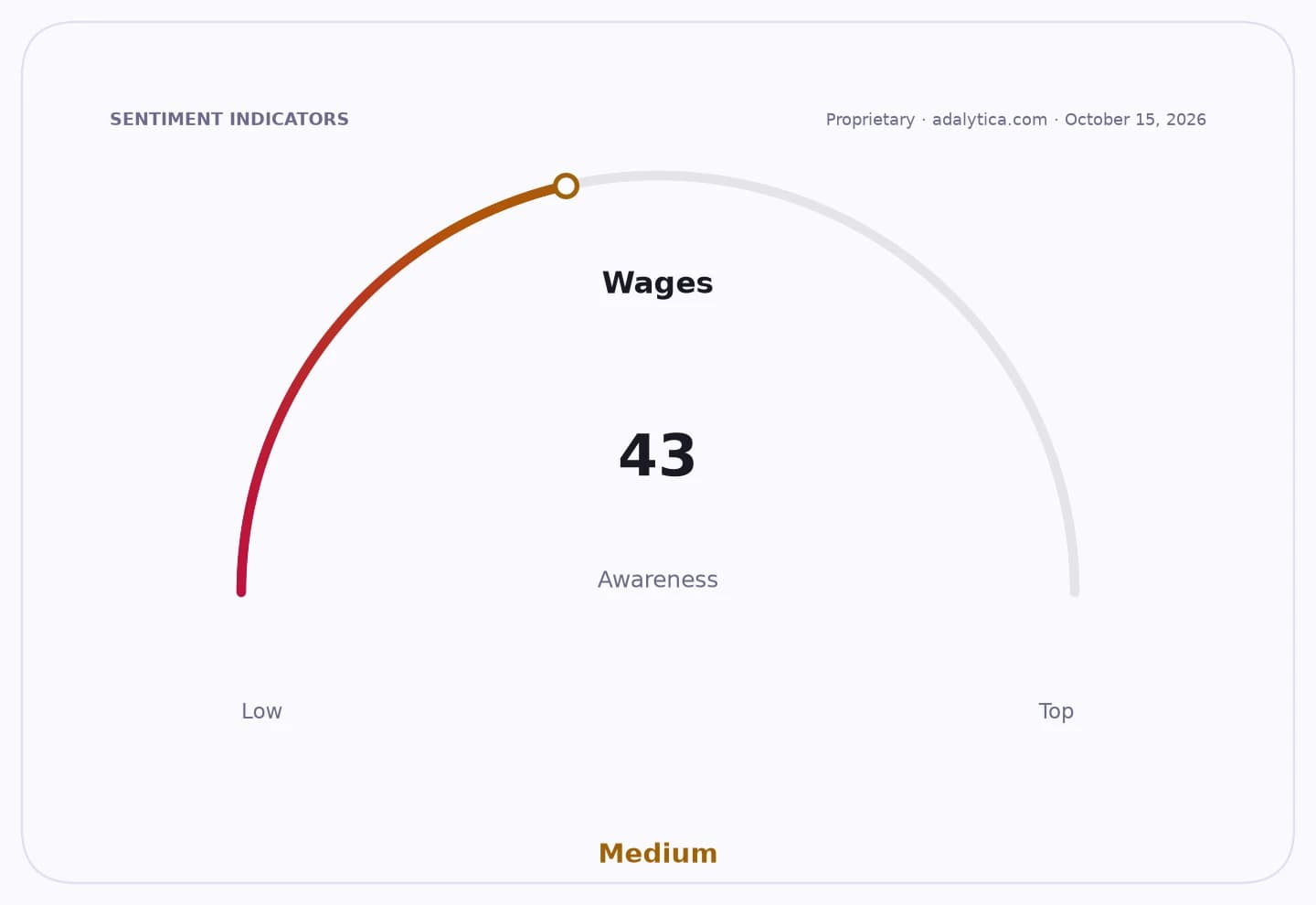
Sentiment Indicators

For investors, the message is not that Europe is heading back into a wage spiral. It is that the disinflation story may be slower and bumpier than markets would like. The central bank’s own data suggest negotiated pay will remain in a range that is consistent with lingering domestic price pressure, even as the broader economy remains soft.
The ECB was careful to say the figures are not a forecast. They are based on collective bargaining agreements signed up to mid-October and cover only nine eurozone countries. Coverage is also thin for the outlying periods: the included contracts account for 31.8% of workers in the first half of 2027 and 23.3% in the third quarter, versus 46.2% for 2026. That means the number will move as more deals are added.
CPI
Still, the direction is notable. The ECB revised the underlying measure slightly higher from September, by around 0.1 percentage point for the second half of 2026 and the first half of 2027. It also said one-off payments appear to be playing a limited role in newly signed deals, suggesting the wage trend is being driven more by base pay than by temporary bonuses.
That distinction matters for the ECB’s policy outlook. One-off payments can flatter wage readings without necessarily feeding into persistent inflation. Base-pay growth, by contrast, tends to flow more steadily into costs, prices and eventually company margins. If negotiated wages stay near 2.8% while growth remains weak, the central bank could be reluctant to ease policy quickly, especially with inflation still vulnerable to shocks.
The latest figures also sit alongside the ECB’s September macroeconomic projections, which showed compensation per employee in the eurozone rising 3.3% in 2026. That is still elevated enough to keep the debate alive over when wage growth has truly normalized.
The next update, due Dec. 18, will extend the horizon through the end of 2027 and should give markets a better read on whether pay momentum is flattening or settling into a higher plateau. For long-term investors, the key takeaway is simple: eurozone wages are not re-accelerating sharply, but they are not falling fast enough to make inflation concerns disappear either. That keeps the case for patient, selective investing in European assets intact.
| Entity | Gains | Losses |
|---|---|---|
| Eurozone workers | ▲Steadier pay growth | ▼Faster real wage gains if inflation stays sticky |
| ECB inflation hawks | ▲Stronger case for caution | ▼Pressure to cut rates quickly |
| European borrowers | ▲Gradual policy normalization | ▼Cheaper financing delayed |
| Companies with pricing power | ▲Easier to pass on labor costs | ▼Margin pressure from firmer wages |