UK wage growth held firm at 3.7% in the three months to the end of August, underscoring the persistence of domestic inflationary pressure just as the Bank of England weighs whether to tighten policy further.
UK wage growth holds at 3.7% before BoE decision
The increase, reported by the Office for National Statistics, was broadly in line with economists’ expectations and keeps pay growth elevated enough to worry policymakers that an energy-price shock could feed into broader inflation through higher labor costs. For the BoE, that is the critical question: whether recent price rises remain a temporary supply-side problem or are becoming embedded in wages and prices.
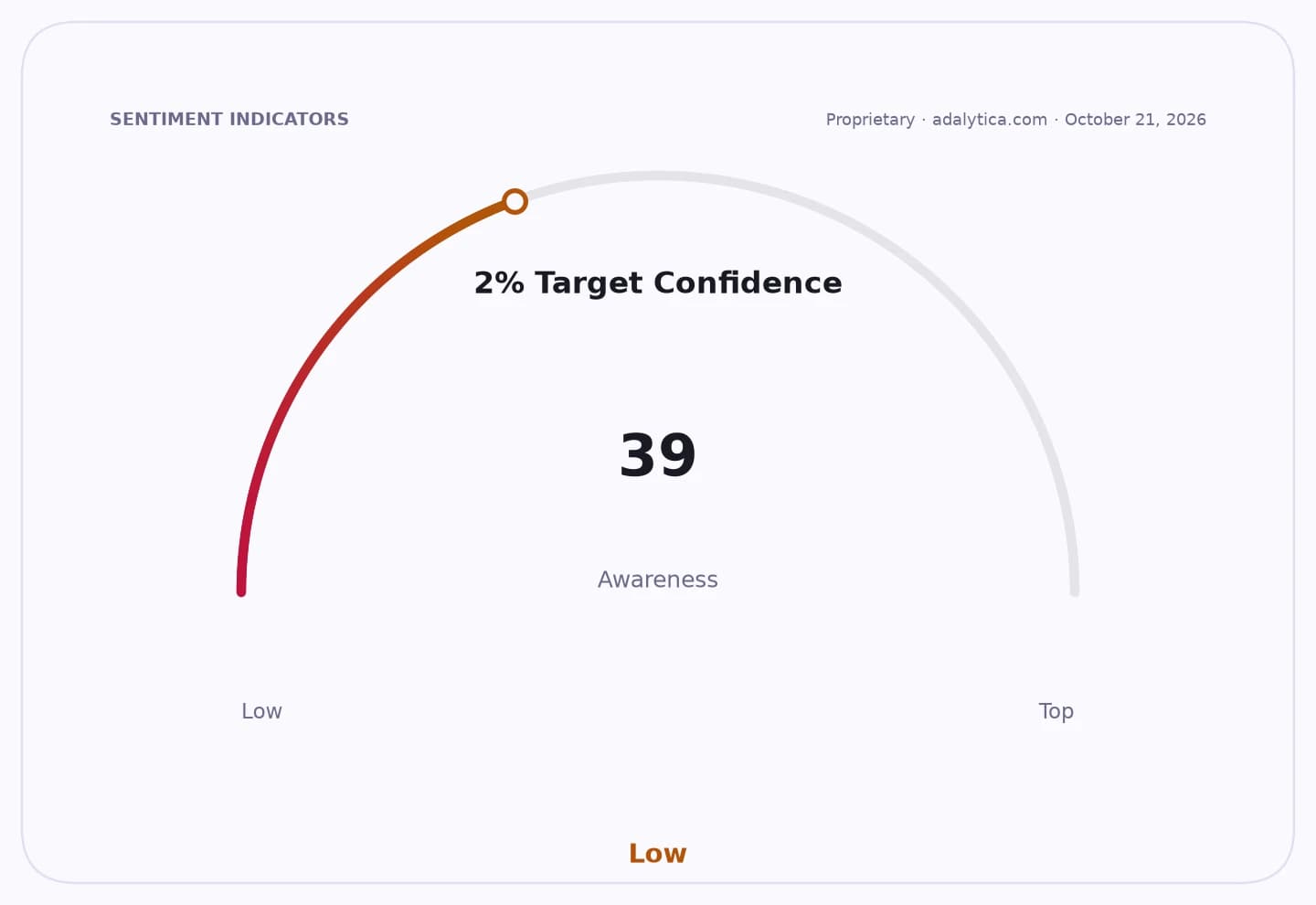
Sentiment IndicatorsⓘProprietary · adalytica.com · October 24, 2026
This is a snapshot — live sentiment, awareness and momentum for 130+ markets update continuously in the dashboard.Open AlphaPulse
The central bank has been looking for evidence that inflation is spreading beyond energy and imported goods into the domestic economy. Strong wage growth is one of the clearest signs it could be. With the labor market still tight, firms have continued to pass on higher pay demands, even as households face a squeeze from rising living costs. That dynamic raises the risk that inflation proves stickier than the BoE has so far suggested.
Investors are already leaning toward another rate increase next month, with markets expecting the Bank Rate to reach 4%. The BoE has so far lagged the Federal Reserve and the European Central Bank in raising borrowing costs after the surge in energy prices, but Governor Andrew Bailey has warned that the longer the shock lasts, the harder it becomes for policymakers to avoid a response. At the same time, he has said it is still too early to judge the scale of the problem and that price pressures remain “quite modest.”
For markets, the wage data matters because it speaks directly to the pace and depth of future tightening. If pay growth stays near current levels, the case for higher rates strengthens, supporting sterling but adding pressure to gilt valuations and borrowing costs for households and companies. A softer labor-market backdrop, by contrast, could let the BoE pause sooner and ease fears of a sharper slowdown.
The next focus will be whether inflation data and labor-market indicators confirm that wage growth is cooling or whether pay settlements remain stubbornly high. That will shape not only the BoE’s November decision, but also investor expectations for the path of UK rates into year-end.
| Entity | Gains | Losses |
|---|---|---|
| Savers | ▲Higher deposit returns | ▼Lower real spending power |
| Banks | ▲Wider lending margins | ▼Credit demand if rates rise further |
| UK workers | ▲Stronger nominal pay | ▼Higher inflation and tax drag |
| Borrowers | ▲— | ▼More expensive mortgages and loans |