Britain’s next budget is shaping up as a test of whether the government can stop managing inflation by committee and start governing with intent. Rising prices, higher debt-servicing costs and deteriorating confidence in the Fed’s 2% inflation anchor are feeding a global repricing of policy risk just as Chancellor Rachel Reeves faces pressure to prove fiscal discipline without choking growth.
UK budget, inflation, and market credibility

That matters because inflation is no longer just a cost-of-living problem — it is a capital-allocation problem. When investors lose confidence that policymakers can keep prices contained, bond markets demand more compensation, fiscal room shrinks and every spending promise gets more expensive. The UK is already trapped in that loop: the government needs a credible budget to reassure markets, but the more it leans on process, consultations and compromise, the harder it becomes to deliver a sharp fiscal pivot.
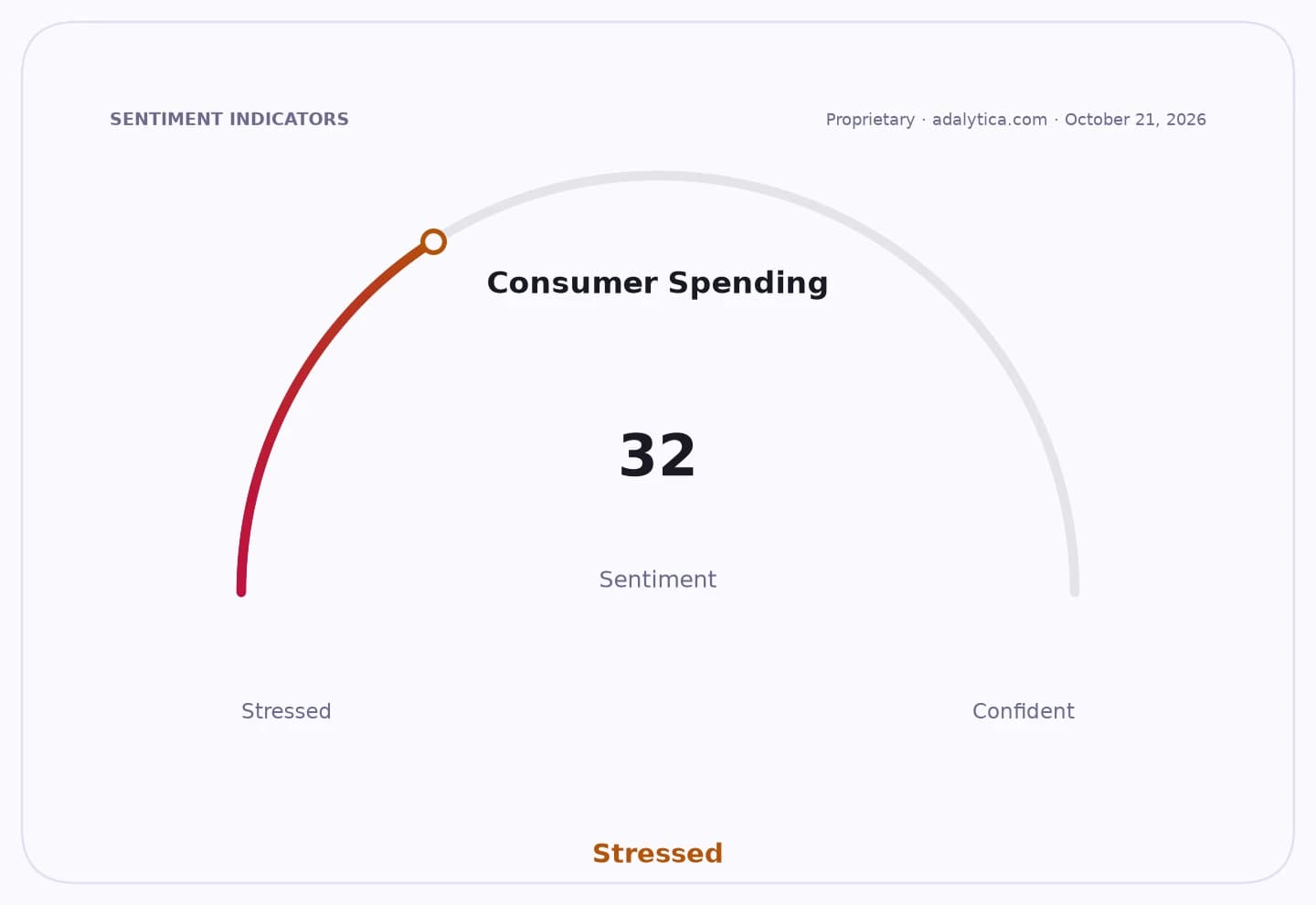
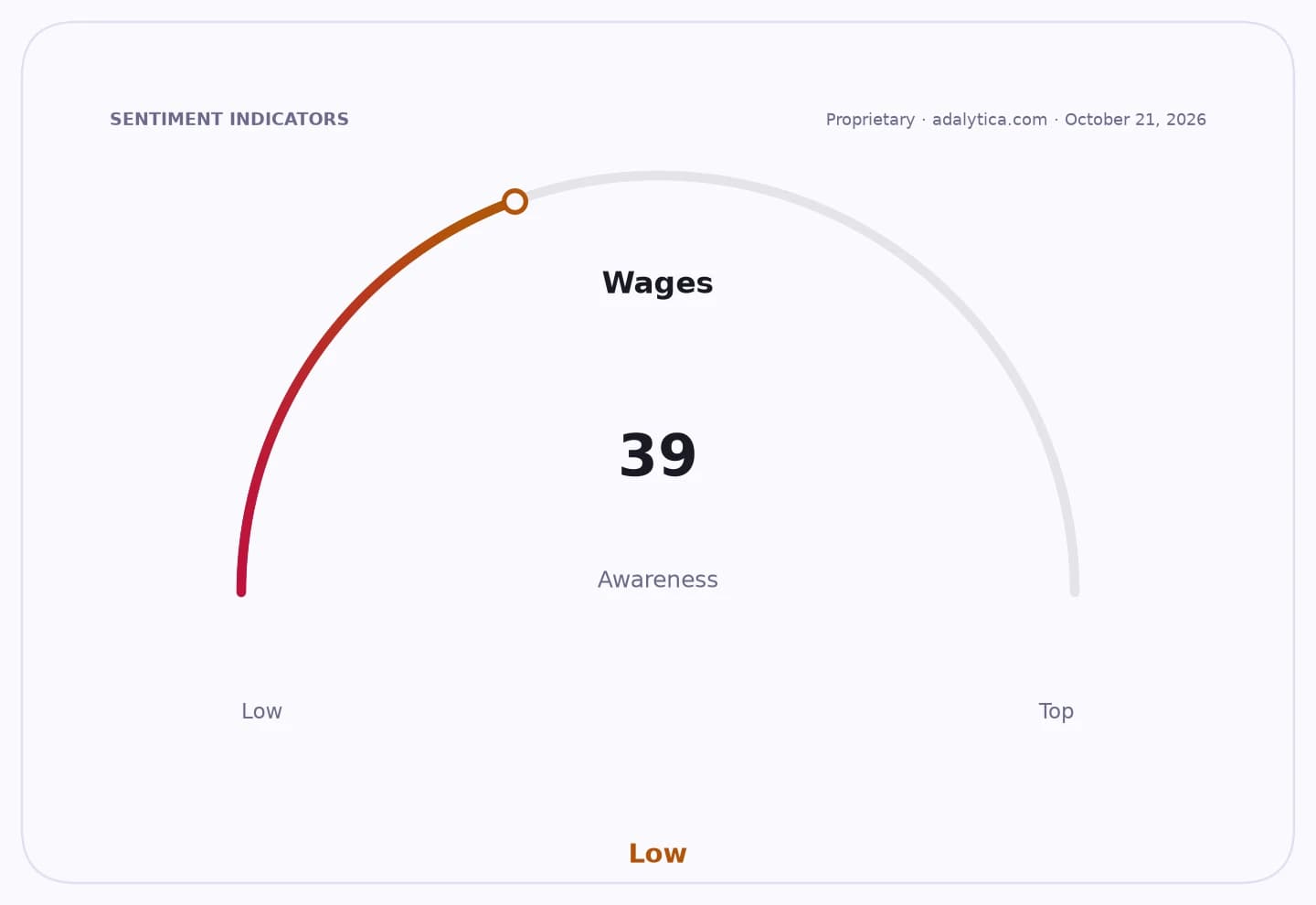
Sentiment IndicatorsⓘProprietary · adalytica.com · October 21, 2026
This is a snapshot — live sentiment, awareness and momentum for 130+ markets update continuously in the dashboard.Open AlphaPulse
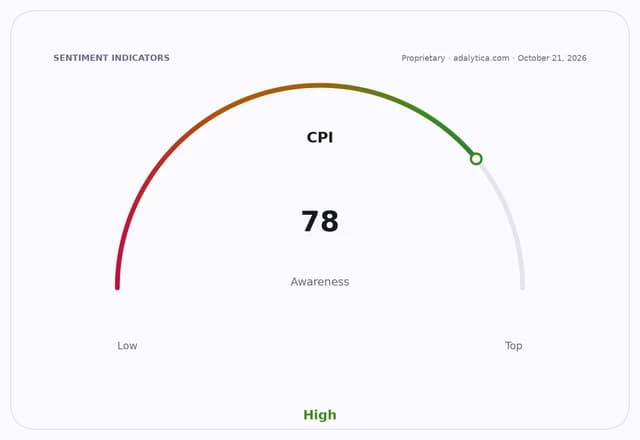
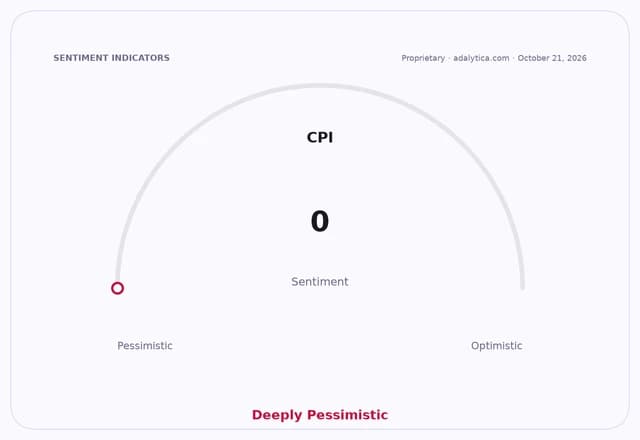
The market backdrop shows how fragile that confidence is. Adalytica’s inflation-target gauge has fallen to 21, labeled fear, from 93 just three days earlier, while the S&P 500 trade-signal snapshot is sitting at extreme fear even as the index itself remains near record territory. That disconnect is exactly what happens when markets sense policy is behind the curve: equities can keep levitating for a while, but the underlying macro regime is being rewritten by inflation expectations, debt math and the credibility of public administration.
The signal in rates is just as important. TLT, the long-duration U.S. Treasury ETF, has rebounded to 80.26, but it remains below its 200-day moving average and sits in a technically fragile range, underscoring that investors still want safety but are not yet convinced inflation is fully beaten. In other words, the market is hedging, not celebrating. That is the kind of environment that punishes indecision and rewards governments that can cut through bureaucracy and make hard calls quickly.
CPI — 30-day sentimentadalytica.com
Explore this data interactively — full history, time series and cross-market comparisons.Open AlphaPulse
That is why the seed idea here — breaking the “inflation committee” trap — matters well beyond Whitehall. Public administrations that rely on endless committees, layered oversight and slow consensus tend to generate the worst of both worlds: weak execution and weak accountability. The economic cost is slower policy transmission, higher borrowing costs, lower business confidence and a premium on defensive assets over productive capital.
For investors, the implication is straightforward: the next winners are the assets tied to policy clarity, pricing power and real-economy resilience, while the losers are the parts of the market most exposed to prolonged uncertainty and sticky inflation. That favors quality equities, infrastructure, defense, select financials and inflation-linked assets, while punishing long-duration rate-sensitive names if fiscal credibility erodes further.
The broader lesson is that inflation is as much a governance issue as a monetary one. Britain’s budget will not just be judged on the size of the numbers, but on whether it proves the government can act decisively, absorb political risk and restore trust before markets force the issue for it. In this regime, leadership is the catalyst — and procrastination is the trade to avoid.
| Entity | Gains | Losses |
|---|---|---|
| Decisive fiscal policymakers | ▲Credibility and market trust | ▼Less room for delay |
| UK gilts/sterling supporters | ▲Lower risk premium | ▼Higher volatility if indecision persists |
| Inflation-linked and quality equities | ▲Pricing power, resilience | ▼Rate-sensitive growth stocks |
| Long-duration bond holders | ▲Safe-haven demand | ▼Inflation and debt repricing |