Andrew Bailey has done what central bankers usually try hard to avoid: he has told markets that an external energy shock is pushing back the return to 2% inflation, and that the Bank of England may already be tightening financial conditions without lifting rates any further.
BoE Bailey Says Energy Shock May Delay Rate Cuts
That matters because it changes the path for UK policy at the exact moment investors were looking for room to price in rate cuts. If energy prices stay elevated, the BoE faces a harder trade-off between protecting growth and proving it can keep inflation expectations anchored. Bailey’s warning also raises the odds that borrowing costs stay restrictive for longer even if the official Bank Rate does not move again.
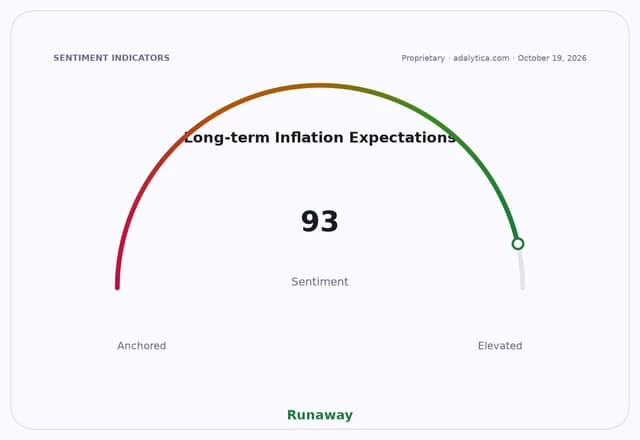
The market is already feeling that pressure. Brent-linked energy dynamics have kept oil elevated, with the US oil ETF USO near 2026 highs and up sharply again this week, while long-duration bonds have remained choppy as investors reassess the inflation pulse. In the UK, the implication is straightforward: higher fuel and utility costs feed through to households first, then to wages and services, and that second-round effect is what policymakers fear most.
This is why the BoE is not just reacting to one commodity spike. It is looking at whether a Middle East-driven energy shock becomes embedded in pricing behavior. Bailey’s comments suggest officials are unwilling to declare victory on inflation until they see how much of the increase leaks into expectations and core prices. That is a more hawkish stance than investors had hoped for, because it implies the easing cycle could be delayed even if growth weakens.
CPIAUCSL vs FEDFUNDS — macro contextadalytica.com
Explore this data interactively — full history, time series and cross-market comparisons.Open AlphaPulse
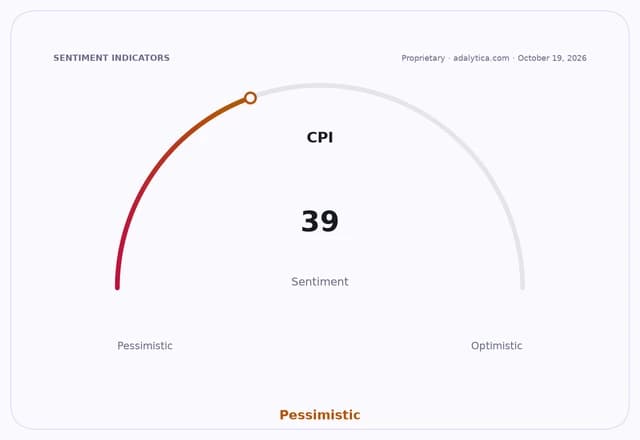
For investors, the key read-through is that inflation hedges regain value when energy shocks dominate the macro tape. Energy producers, tanker names and inflation-protected assets tend to benefit when central banks are forced to keep real rates tighter for longer. Rate-sensitive sectors, from homebuilders to leveraged consumer credits, are the obvious losers if the BoE has to stay on hold into year-end.
The broader investment thesis is that the market underestimates how quickly geopolitics can reprice policy. One sustained energy squeeze can do more to delay disinflation than several months of soft headline data can erase. If oil stays firm and UK inflation expectations keep creeping higher, the BoE’s next move may be less about cutting rates and more about preserving credibility.
Actionable takeaway: position for a longer-for-higher-rate backdrop, favor energy-linked and inflation-protected exposure, and stay cautious on UK rate-sensitive assets until the oil shock clearly fades.
| Entity | Gains | Losses |
|---|---|---|
| Energy producers | ▲Higher realized prices | ▼None |
| Inflation-linked assets | ▲Better protection | ▼Less policy easing upside |
| UK households | ▲None | ▼Higher fuel and bills |
| Rate-sensitive UK equities | ▲None | ▼Valuation pressure from tighter-for-longer policy |