Eurozone inflation accelerated to 3.8% in September, the fastest pace in three years, as surging energy costs continued to push consumer prices well above the European Central Bank’s 2% target and keep policymakers on alert.
Eurozone inflation rises to 3.8% in September

The jump from 3.2% in August and 2.9% in July matters because it shows the region is not yet done with inflation even after the ECB raised its deposit rate to 2.50% in September. While the central bank has emphasized price stability, the latest reading increases the odds that borrowing costs will stay restrictive for longer, weighing on growth, credit demand and government financing costs across the bloc.
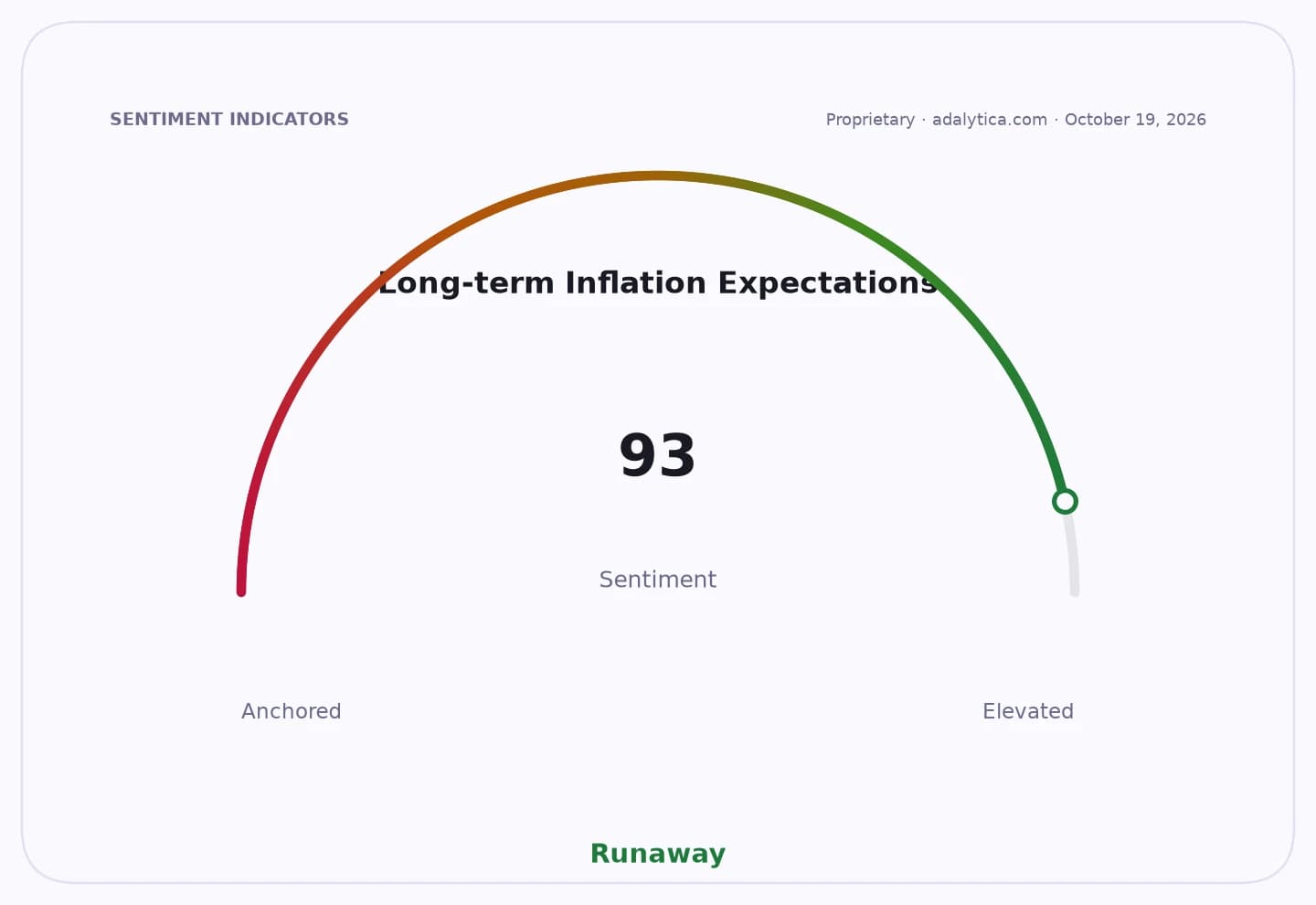
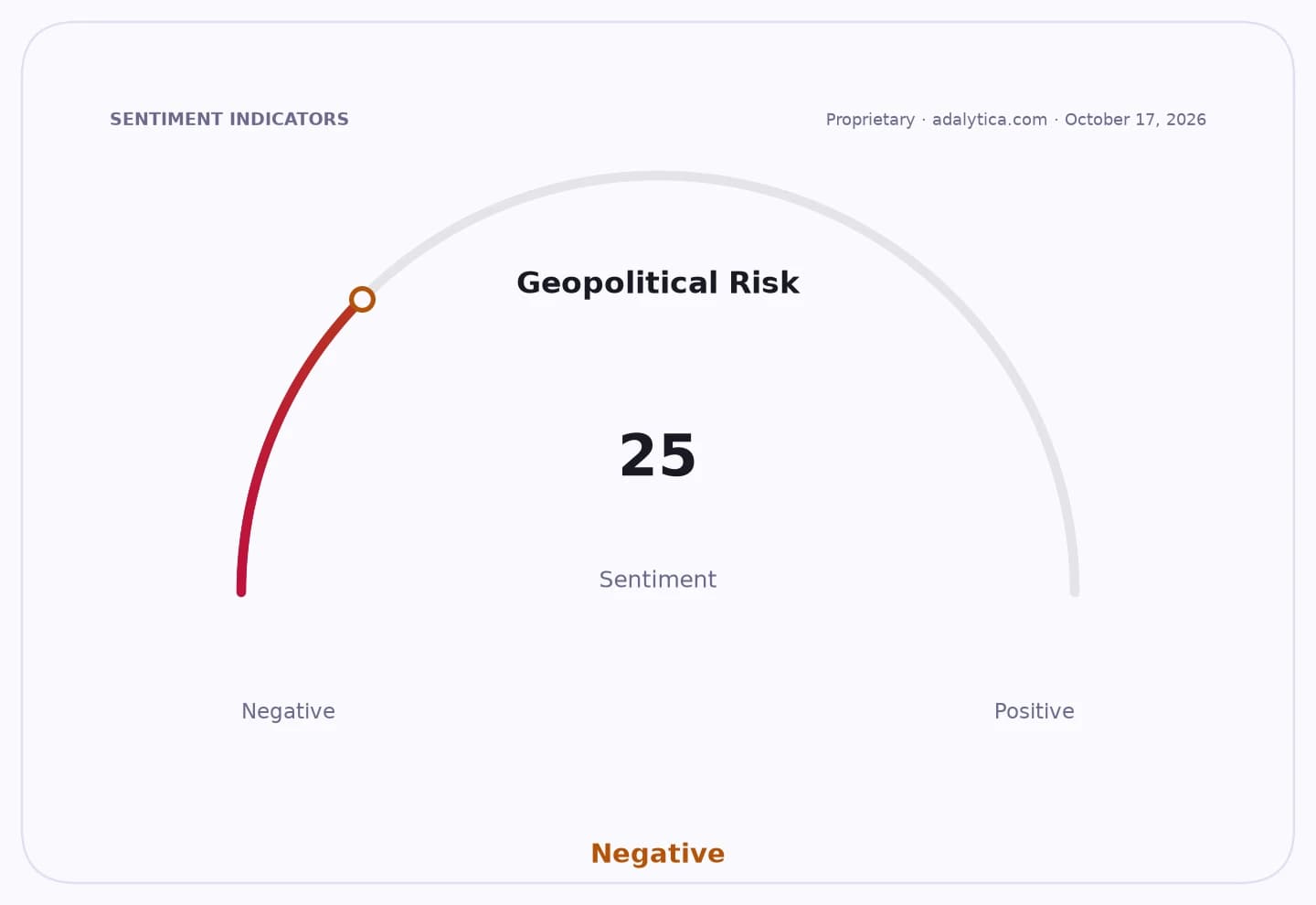
Sentiment IndicatorsⓘProprietary · adalytica.com · October 18, 2026
This is a snapshot — live sentiment, awareness and momentum for 130+ markets update continuously in the dashboard.Open AlphaPulse

Energy was the clear driver, with eurozone energy prices up 18.9% from a year earlier after the pace of increase quickened again in September. The report pointed to disruptions linked to the Iran-U.S. conflict and constrained oil transport from the Persian Gulf, with no durable reopening of the Strait of Hormuz in sight. That supply-side shock is the kind of inflation impulse the ECB can do little to offset with rates alone.
The more important question for investors is whether higher energy costs stay contained within the energy complex or spread into wages and broader services inflation. For now, the core rate, which strips out energy and food, rose only modestly to 2.5% from 2.4%, suggesting underlying price pressure remains comparatively contained. That gives the ECB some room to argue the latest spike is not yet a full-blown inflationary reacceleration.
Still, the geography of the reading underscores the breadth of the problem. Germany’s harmonized inflation rate rose to 3.3%, Spain’s to 5.0%, Italy’s to 4.2% and France’s to 3.4%, leaving few large economies insulated from the energy shock. That broadening matters for bond markets because it raises the risk that rate cuts get pushed further out, even if growth remains soft.
For equities, the setup is mixed. Energy producers and related funds stand to benefit from persistent crude strength, while consumer-sensitive sectors, transport, utilities and rate-heavy cyclical names face a tougher margin environment if input costs stay elevated. The recent move in oil-linked assets reflects that split: energy ETFs have outperformed while rate expectations have remained sticky.
The next catalyst is whether the ECB reads September’s inflation spike as a temporary energy shock or the start of a more durable setback in disinflation. If energy prices ease, the headline rate should follow; if geopolitical risks keep oil and gas elevated, markets may have to price in a longer period of tight policy and weaker eurozone demand.
| Entity | Gains | Losses |
|---|---|---|
| Energy producers | ▲Higher realized prices | ▼None |
| ECB hawks | ▲Stronger case for tight policy | ▼Rate-cut expectations |
| Consumers | ▲None | ▼Higher household costs |
| Rate-sensitive equities | ▲None | ▼Valuation pressure |