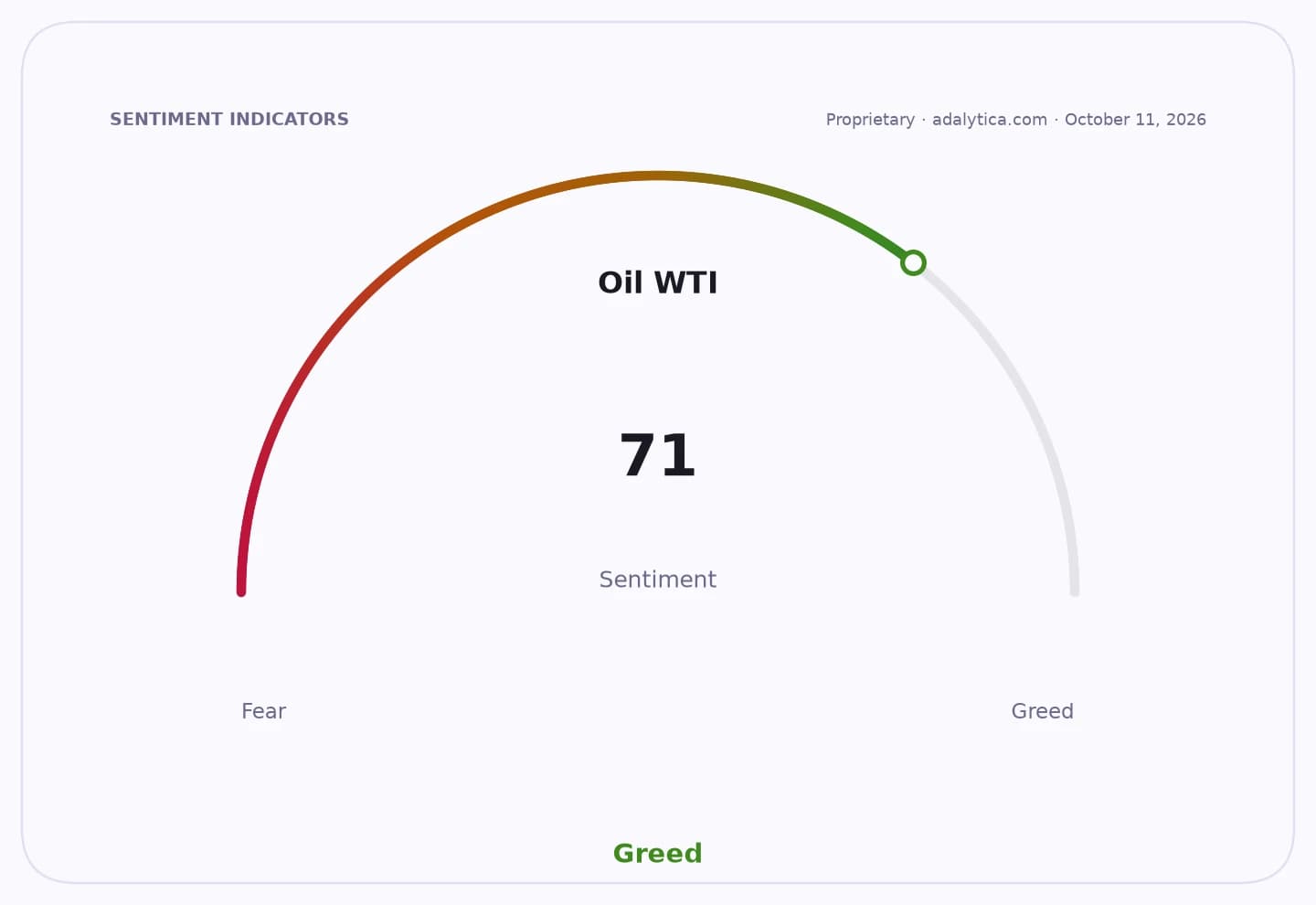
Germany’s gas supply is stable heading into the heating season, but households and industry are still exposed to elevated prices as Europe enters winter with storage levels well below last year’s, Energy Minister Armin Willingmann said.
Germany gas supply stable, prices remain high
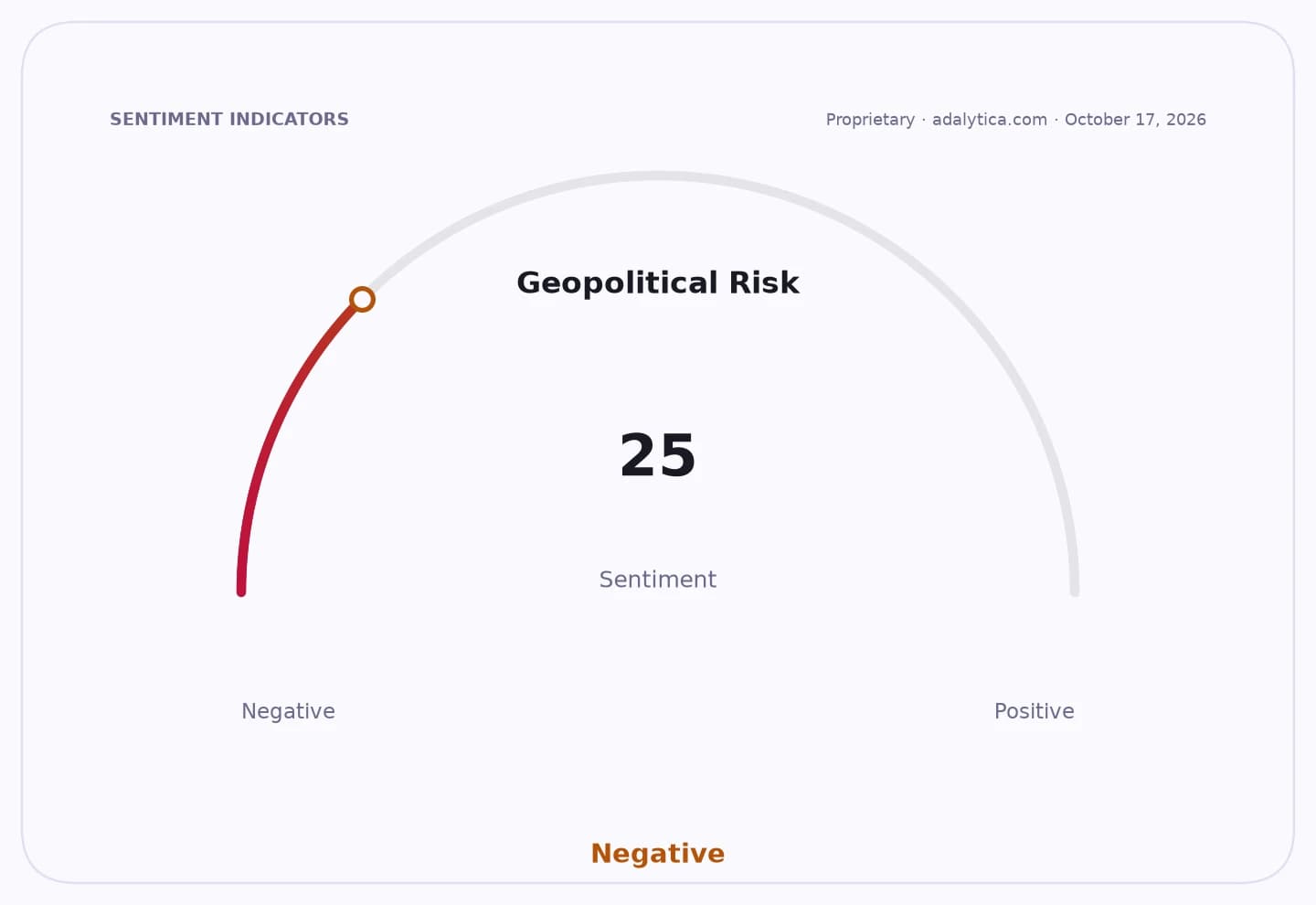
That split — adequate physical supply, but expensive fuel — is the key economic message for the German market. It suggests the immediate risk of rationing or shortages is limited, yet the cost burden on consumers and manufacturers remains material just as energy demand rises. For an economy already sensitive to input costs, that means gas may not be scarce, but it is still a drag.
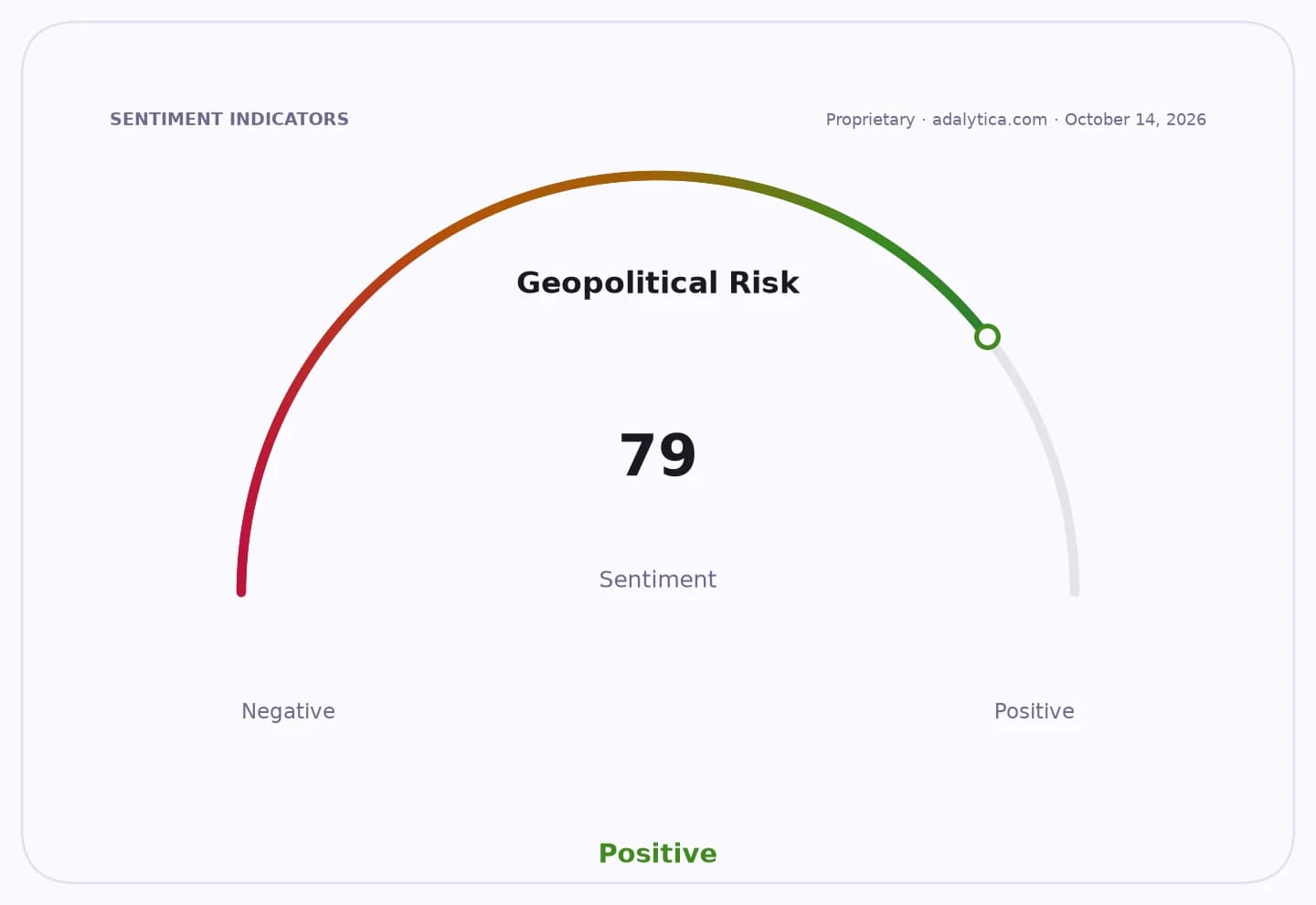
Sentiment IndicatorsⓘProprietary · adalytica.com · October 17, 2026
This is a snapshot — live sentiment, awareness and momentum for 130+ markets update continuously in the dashboard.Open AlphaPulse
Willingmann said Saxony-Anhalt, and by extension Germany, had enough gas for the winter despite storage facilities being filled to around 60% as of Oct. 13, compared with about 76% a year earlier. Lower inventories would normally raise alarm bells ahead of the coldest months, but the minister said no bottlenecks were expected. The more pressing issue is price formation: he linked the persistence of high gas prices to geopolitical tensions around Iran and the effective closure of the Strait of Hormuz, a route central to global energy flows.
That matters for investors because European energy costs continue to feed directly into margins across chemicals, utilities, manufacturing and retail, even if supply is secure. The market has already reflected that risk: U.S.-listed natural gas fund UNG fell to $10.66 on Oct. 16 from $11.22 two days earlier, while the Adalytica natural gas signal showed “Extreme Greed” at 96 and “Extreme Fear” on awareness, underscoring a market where price momentum is strong but conviction remains fragile. By contrast, energy equities have been bid up, with the XLE sector ETF rising to $68.24 and Shell’s U.S.-listed shares holding near $103.55, helped by the prospect that sustained energy volatility supports upstream earnings.
Willingmann used the backdrop to argue for more renewables and green hydrogen infrastructure in Germany, saying domestic wind and solar reduce dependence on distant trade routes and the price shocks that come with them. Politically, that keeps the debate focused on energy sovereignty rather than a return to Russian pipeline gas, which he dismissed as a source of fresh dependence and price risk.
The near-term outlook therefore hinges less on whether Germany has enough gas and more on whether winter weather, global LNG flows and Middle East tensions keep European benchmarks elevated. For investors, that means utilities and energy producers may continue to benefit from a supportive pricing backdrop, while energy-intensive industrials remain vulnerable if high fuel costs persist into year-end.
| Entity | Gains | Losses |
|---|---|---|
| Energy producers | ▲Higher gas price backdrop | ▼None in the near term |
| German households | ▲Stable winter supply | ▼Higher heating bills |
| Energy-intensive industry | ▲Supply security | ▼Margin pressure from costs |
| Renewables and hydrogen advocates | ▲Stronger policy case | ▼Fossil gas lobby |