European natural gas prices climbed back above 80 euros per megawatt hour as traders priced in renewed geopolitical risk, with the conflict in the Middle East and tensions around the Strait of Hormuz keeping a war-risk premium embedded in the market.
European Gas Prices Top 80 Euros on Geopolitical Risk
Front-month Dutch TTF gas in Amsterdam rose 1.8% to 80.33 euros per megawatt hour, underscoring how quickly the market is reacting to any sign that flows from the region could be disrupted. That matters because the Strait of Hormuz remains one of the world’s most sensitive energy chokepoints, and even the prospect of interference can tighten LNG and pipeline supply expectations across Europe and Asia.
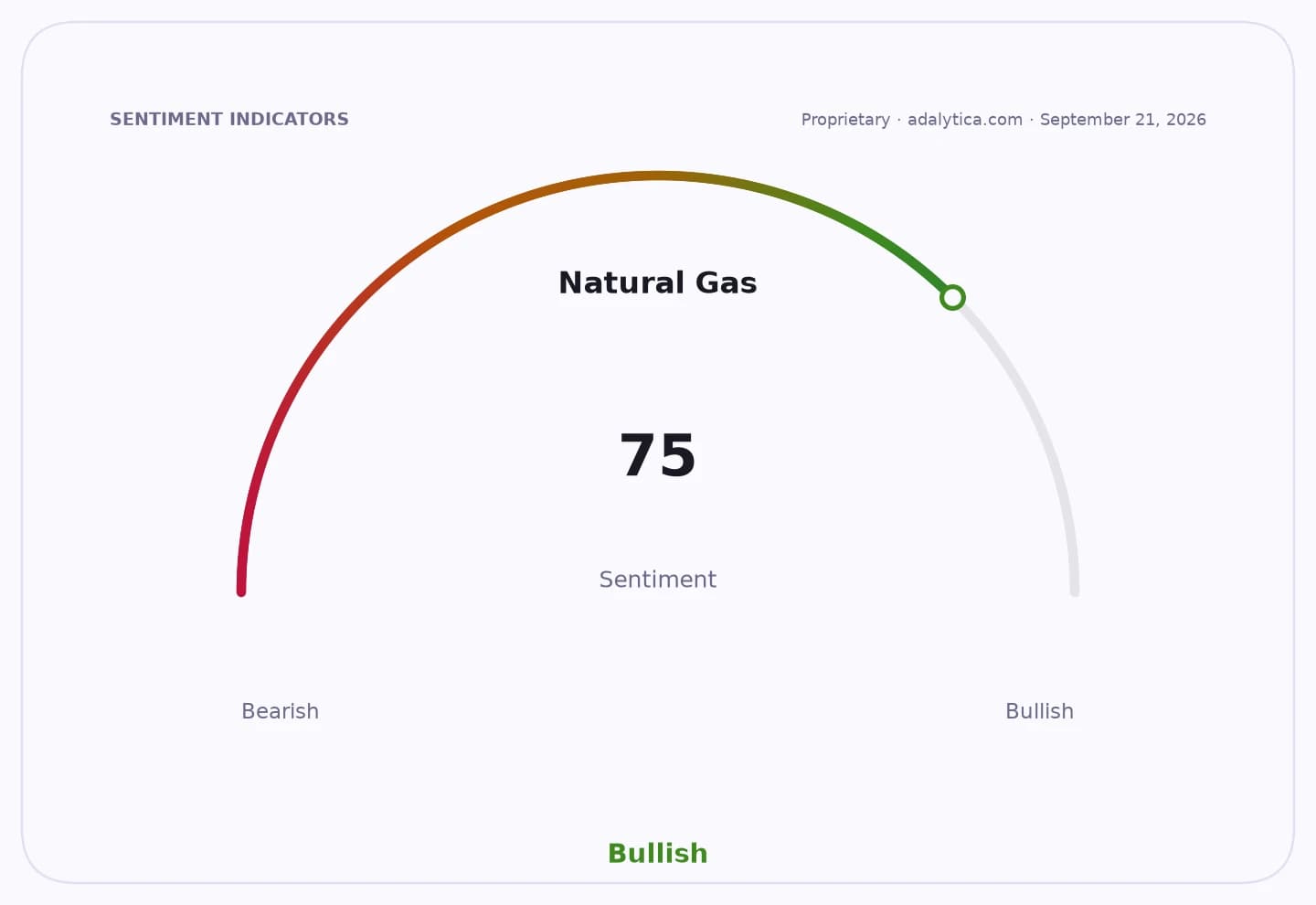
Sentiment IndicatorsⓘProprietary · adalytica.com · October 12, 2026
This is a snapshot — live sentiment, awareness and momentum for 130+ markets update continuously in the dashboard.Open AlphaPulse
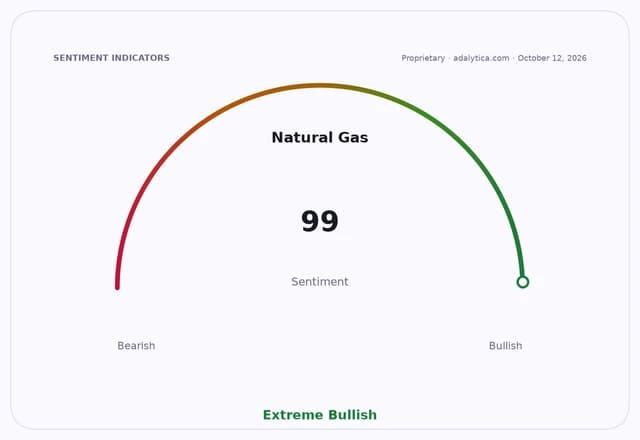
The move also reinforces a broader point for the energy complex: gas is no longer trading purely on weather and storage fundamentals. Geopolitics is increasingly overriding the normal seasonal framework, pushing volatility higher and making hedging more expensive for utilities, industrial buyers and gas-dependent generators. For Europe, which remains structurally exposed to imported LNG after the loss of most Russian pipeline supply, that leaves power and heating costs vulnerable to another leg higher if the situation worsens.
Investors are already seeing the spillover in energy-linked assets. U.S. natural gas exposure through the UNG fund has been volatile, while the energy sector ETF XLE has stayed firm as higher commodity prices support upstream producers and integrated majors. The rally is less helpful for consumers and energy-intensive sectors, where sustained gas prices above 80 euros would feed through into margins, inflation expectations and policy pressure.
Technical indicators also suggest the market is stretched, not settled. U.S. natural gas benchmarks remain elevated relative to their 50-day moving average, with RSI readings in overbought territory on some recent moves, while Adalytica’s natural gas trade signals show Extreme Greed even as broader global-stability awareness remains marked by fear. That combination implies traders are paying up for protection against supply shocks rather than expressing confidence in a durable equilibrium.
The immediate question is whether the Middle East premium fades or becomes self-reinforcing. If shipping routes remain clear and diplomacy steadies nerves, prices could give back some of the geopolitical bid. But any escalation that threatens Hormuz would likely keep European gas elevated, deepen pressure on household and industrial energy bills, and extend the advantage to producers over consumers in the months ahead.
| Entity | Gains | Losses |
|---|---|---|
| European gas producers | ▲Higher realized prices | ▼N/A |
| Utilities and industrial buyers | ▲N/A | ▼Higher input costs |
| LNG exporters | ▲Stronger pricing power | ▼Demand destruction risk |
| Energy investors | ▲Support for commodity-linked assets | ▼Volatility in consumer-facing sectors |