The most economically important development is not that Russian gas could one day return to Europe, but that Washington and Moscow are now discussing who could own and profit from that return. If those talks ever produced a durable arrangement, they would reshape European energy pricing, reopen a revenue stream for Russia, and create a new set of winners and losers across utilities, traders and industrial consumers.
Nord Stream Talks Could Involve US Investor

Reuters says US and Russian officials, including White House envoy Jared Kushner and Kremlin adviser Kirill Dmitriev, have discussed bringing a US investor into the Nord Stream pipelines that once carried Russian gas to Germany. That is a striking sign that energy is being treated as part of a broader diplomatic settlement, not just a commodity market issue. It also suggests any peace framework tied to Ukraine could end up involving business interests far beyond the battlefield.
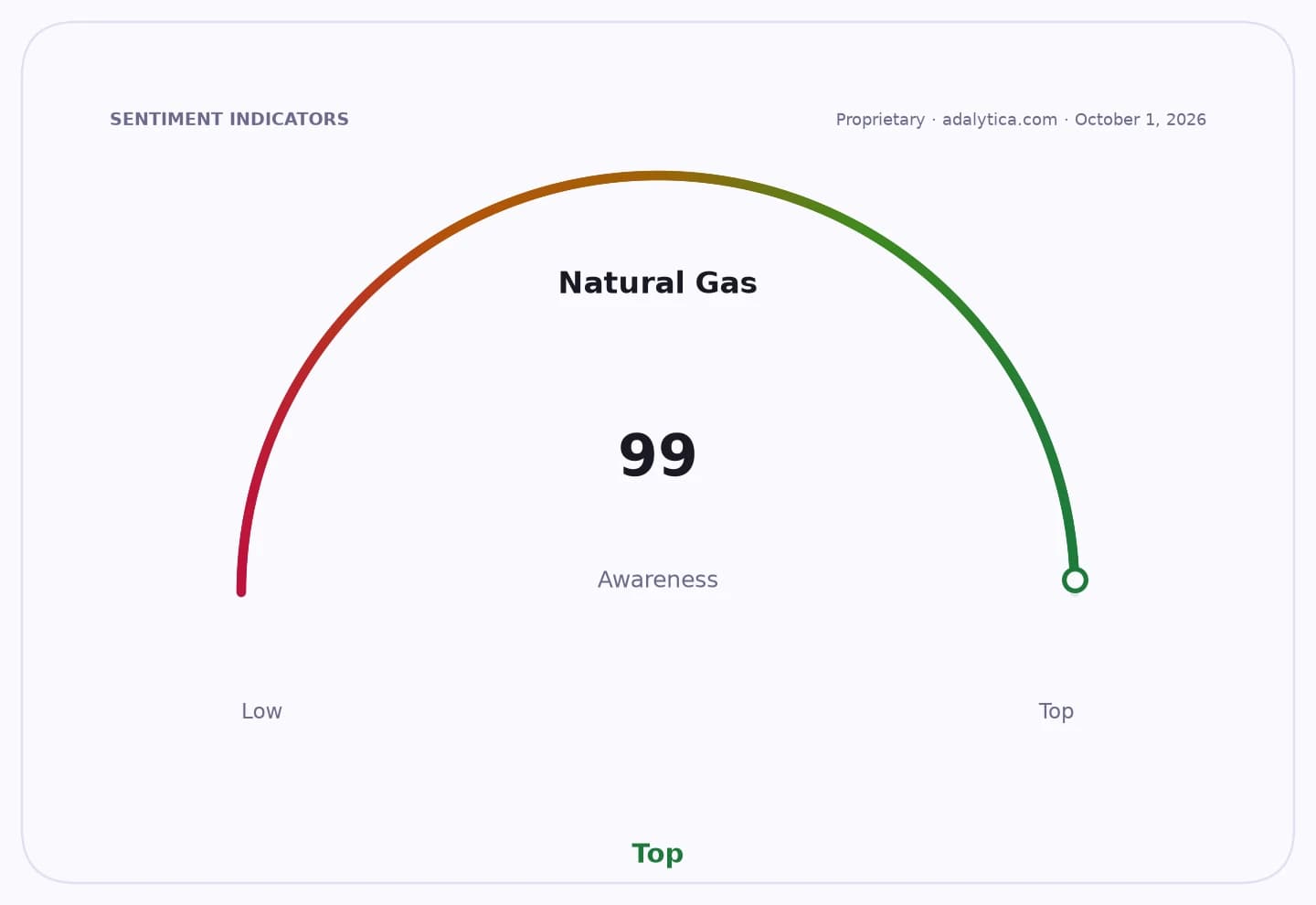
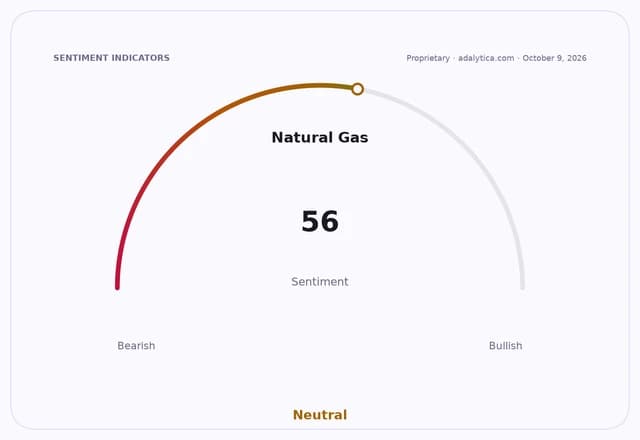
Sentiment IndicatorsⓘProprietary · adalytica.com · October 9, 2026
This is a snapshot — live sentiment, awareness and momentum for 130+ markets update continuously in the dashboard.Open AlphaPulse
For investors, the first takeaway is that this remains a political option, not a near-term trade. A US official told Reuters no deal is expected in the medium term, and the pipelines are still under US and European sanctions. Germany, which has already spent heavily on alternative supply lines and security, would be expected to resist any restart. Even if the White House wanted to move, Berlin would need to sign off, making this a high-friction process with a very uncertain endpoint.
Still, the talks matter because Europe’s gas market has never fully escaped the shadow of Russian supply. Before the war, Nord Stream was one of the main arteries feeding Germany, the continent’s biggest energy consumer. A credible path back to Russian volumes, even if remote, would pressure European gas prices and alter the economics of liquefied natural gas imports from the US and Qatar. It would also reopen a policy debate in Europe over energy security versus cheaper fuel, a trade-off many governments thought had been settled after 2022.
That is why the market reaction should be watched through a longer lens. US natural gas benchmark futures have spent recent sessions around $3.20 per million British thermal units, while the UNG ETF sits near $11, with technical indicators showing a market that is stable rather than euphoric. That suggests traders are not pricing in a dramatic supply shock or a guaranteed reopening of Russian flows. In other words, the market is treating this as an option value story, not a certainty.
The larger economic narrative is about leverage. Russia wants access to European demand and hard currency. The US appears to be exploring whether private capital can be used as a bridge between sanctions, diplomacy and energy commerce. Europe wants security, but it also wants lower bills. And investors in gas-linked assets must weigh whether any eventual détente would weaken the long-term case for expensive non-Russian supply infrastructure while improving the prospects for transport, trading and infrastructure firms that could sit in the middle of any deal.
The parallel discussion over a possible sale of Lukoil assets in Europe to a consortium involving US, Qatari and UAE investors reinforces the same theme: energy assets are becoming bargaining chips in a wider geopolitical restructuring. For long-term investors, that means the real story is not a one-day move in gas prices. It is whether a postwar energy order could emerge in which capital, sanctions and diplomacy are all negotiated together.
For now, the sensible stance is patience. Energy markets can react sharply to headlines, but structural outcomes take years, not weeks. If talks on Nord Stream or Russian fuel exports advance, they will matter most for European utilities, LNG exporters, pipeline owners and commodity traders. Until then, this is a story worth watching, not chasing.
| Entity | Gains | Losses |
|---|---|---|
| Russia | ▲potential gas revenue | ▼sanctions leverage |
| Europe/Germany | ▲possible cheaper fuel | ▼energy security stance |
| US investors | ▲access to deal upside | ▼political and sanctions risk |
| LNG exporters | ▲current market share | ▼lower Europe demand |