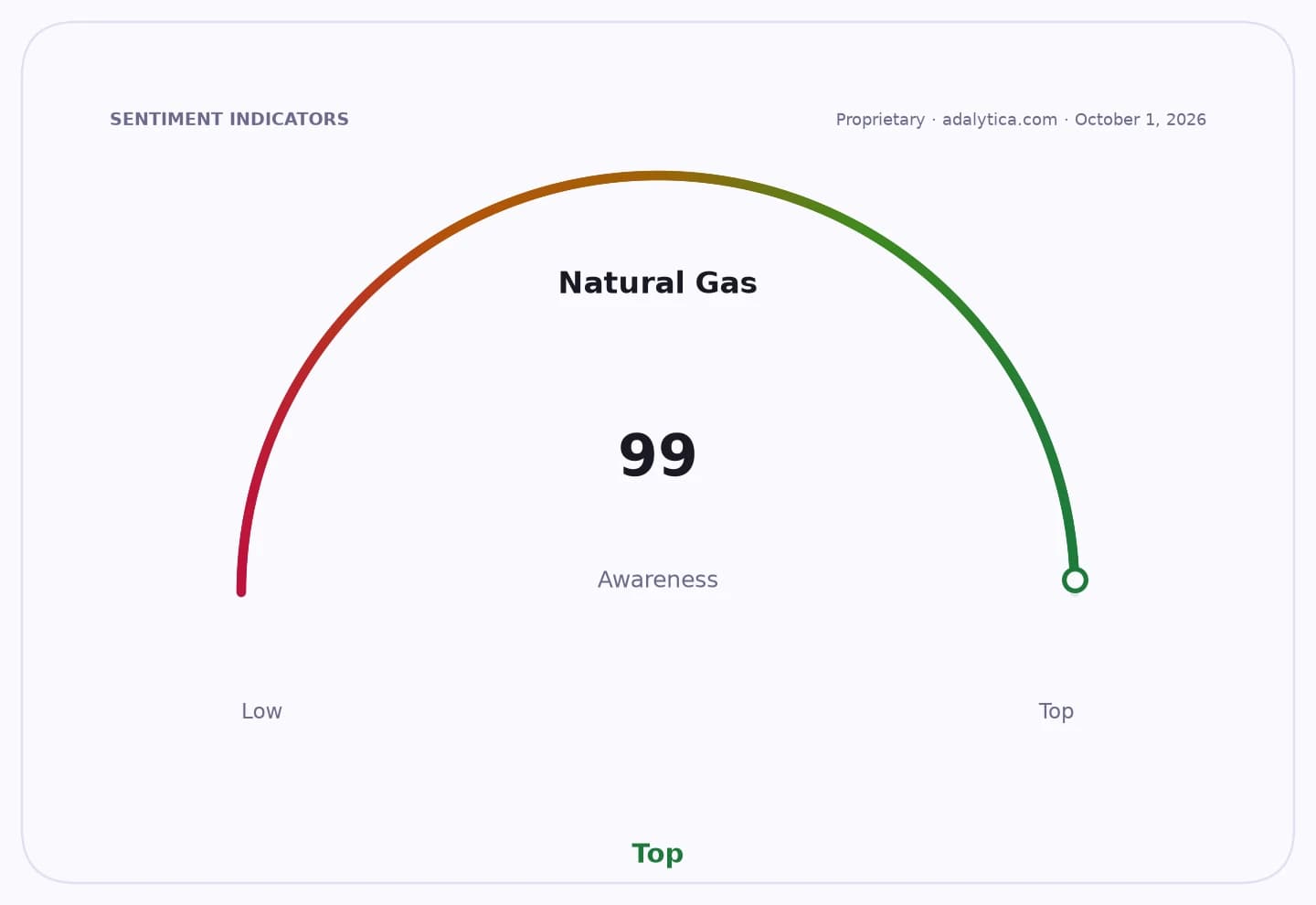
The European Union is pressing member states to curb natural gas demand after a surge in global energy prices, driven by the conflict with Iran and disruption fears around the Strait of Hormuz, widened the region’s winter supply risk.
EU Urges Gas Demand Cuts Before Winter
EU Energy Commissioner Dan Jorgensen warned ministers that Europe faces a “price crisis tied to a supply crisis,” and urged governments to reduce heating in public buildings, ban outdoor heating and switch off unnecessary street lighting. The message underscores how quickly geopolitical shocks can translate into higher energy costs for households, industry and public budgets across the bloc.
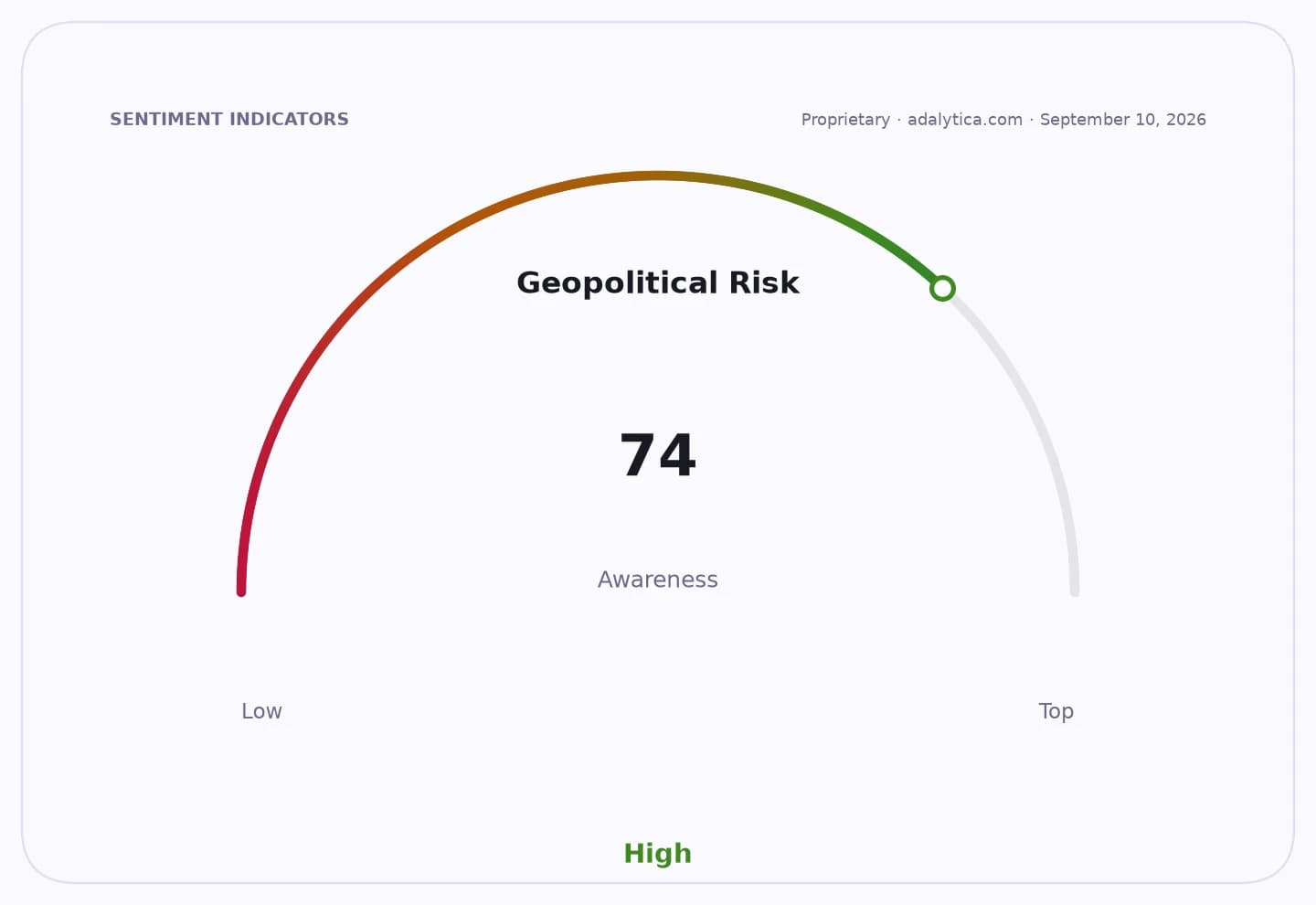
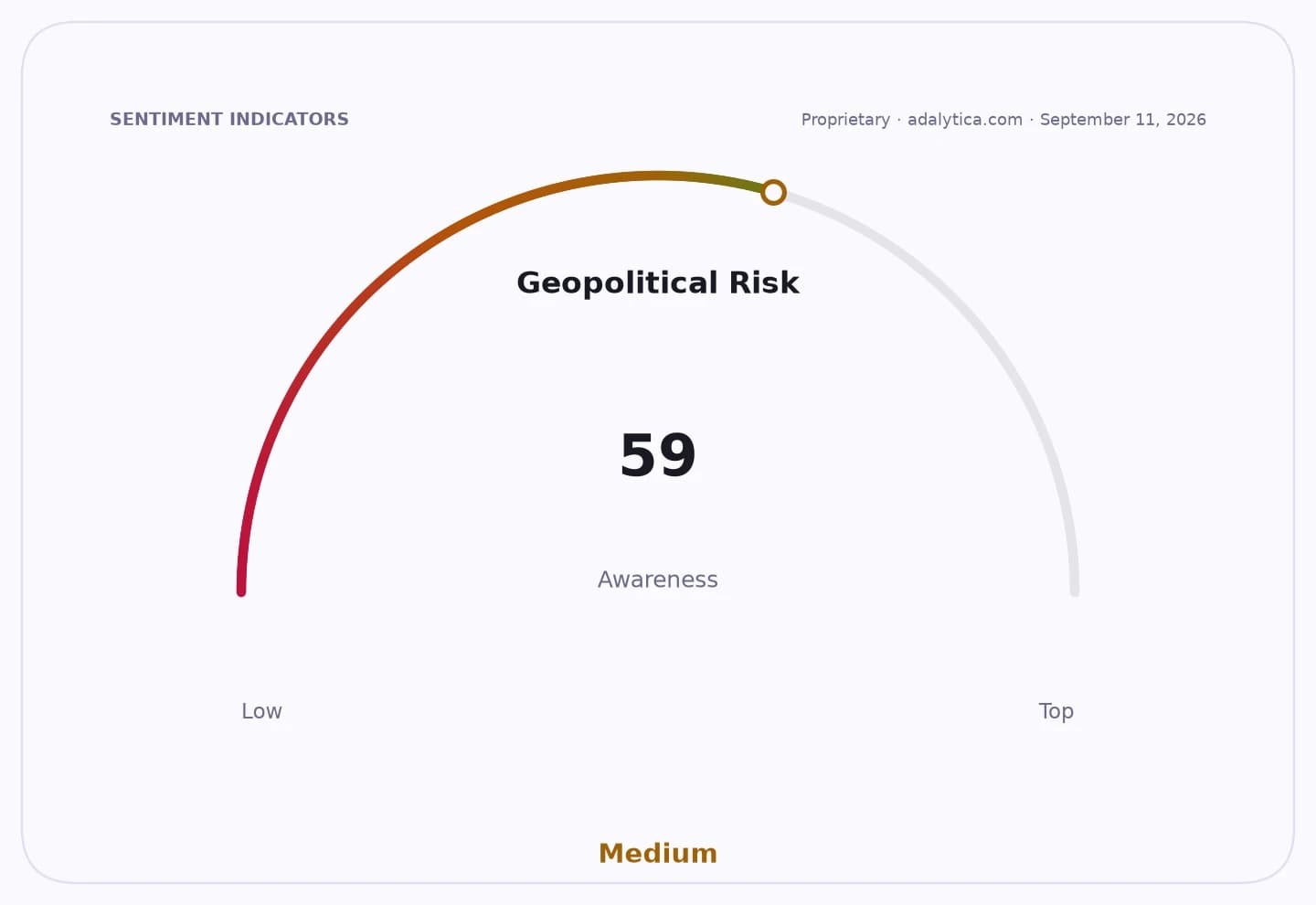
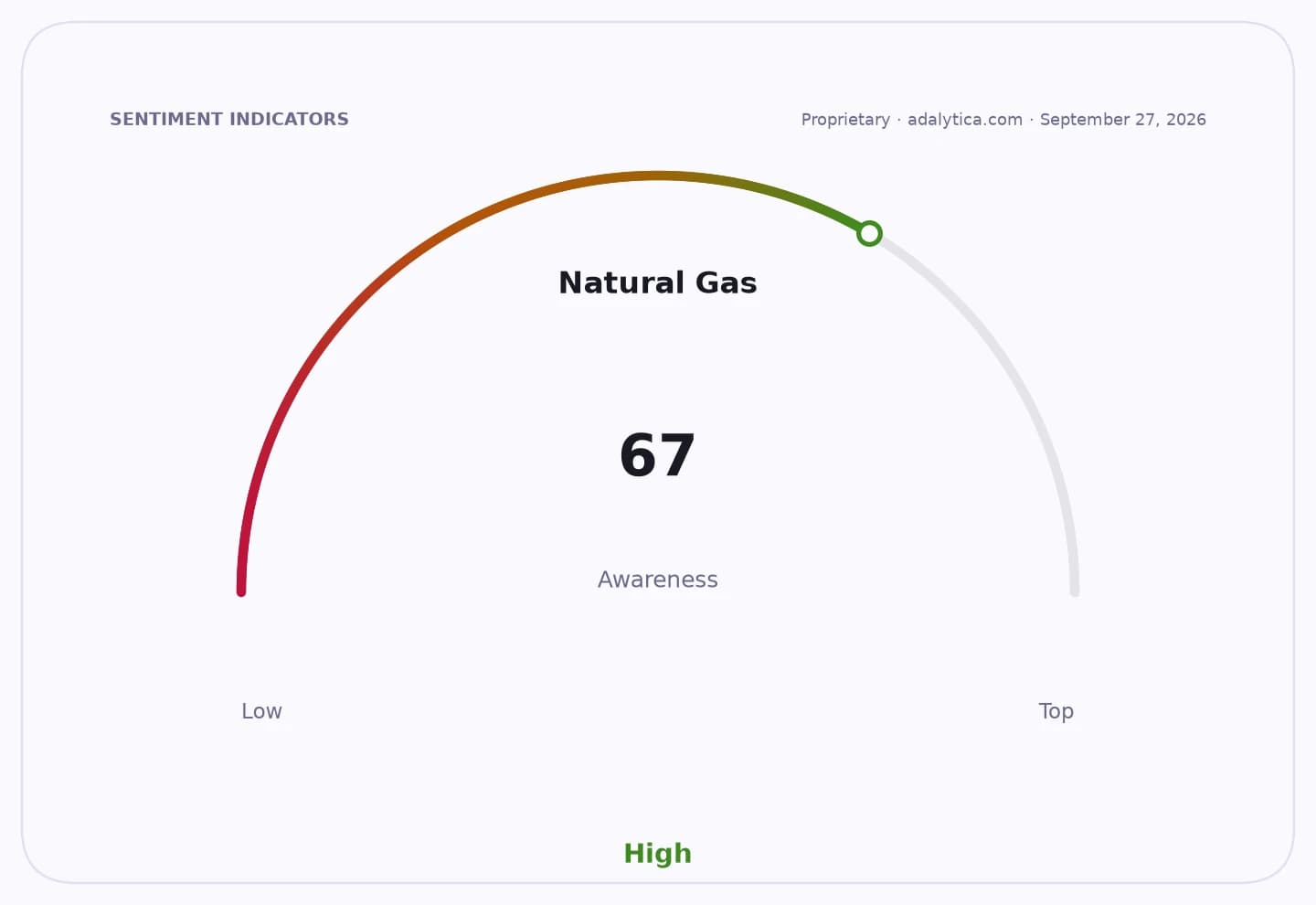
Sentiment IndicatorsⓘProprietary · adalytica.com · October 1, 2026
This is a snapshot — live sentiment, awareness and momentum for 130+ markets update continuously in the dashboard.Open AlphaPulse
Europe still relies on foreign suppliers for about 80% of its gas needs, leaving the region exposed when global LNG prices jump. While there is no immediate shortage, the rally is making it harder for countries to refill storage ahead of winter, a key buffer after the energy shocks of 2021 and 2022.
Gas Infrastructure Europe says underground storage is about 70% full, 12 percentage points below last year’s level. That gap matters because lower inventories raise the risk of tighter supply later in the heating season and can keep spot prices elevated, especially if cold weather arrives before replenishment improves.
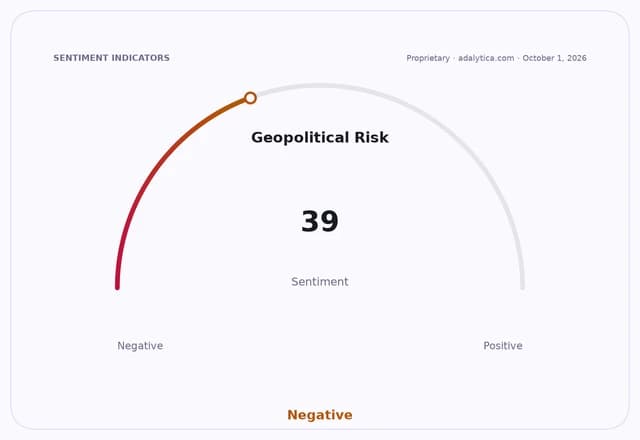
The Strait of Hormuz, through which about 20% of global oil and LNG flows, has become the market’s focal point after the escalation with Iran. The threat of a wider disruption has already rippled through energy markets, lifting crude and gas benchmarks and feeding into expectations for higher European import costs.
U.S.-listed natural gas fund UNG was little changed near $10.15 in recent trading after a volatile run, while Henry Hub futures were around $2.95 per MMBtu on Oct. 1, showing that the immediate pressure is more acute in global LNG-linked prices than in the U.S. benchmark. Cheniere Energy, one of the biggest U.S. LNG exporters, has also remained firm near $271, reflecting investor interest in exporters that can benefit from stronger international gas demand and pricing.
For investors, the EU’s call points to a familiar trade-off: weaker demand is bearish for utilities, industrial gas users and some European consumers, but bullish for LNG exporters, shipping and upstream producers with exposure to international pricing. The next catalyst is whether governments follow Brussels’ advice with concrete conservation rules before winter storage targets are set.
| Entity | Gains | Losses |
|---|---|---|
| LNG exporters | ▲Higher global LNG pricing | ▼European buyers and utilities |
| EU governments | ▲Lower winter demand risk | ▼Public comfort and political goodwill |
| Energy producers | ▲Stronger pricing power | ▼Gas-intensive industries |
| Consumers | ▲Possible supply stability later | ▼Higher heating and power bills |