Australian households are cutting back their optimism at one of the fastest rates in the developed world, a sign that stubborn inflation and higher interest rates are still eroding spending power and complicating the government’s bid to sell a softer cost-of-living narrative.
Australia consumer confidence falls as rates bite
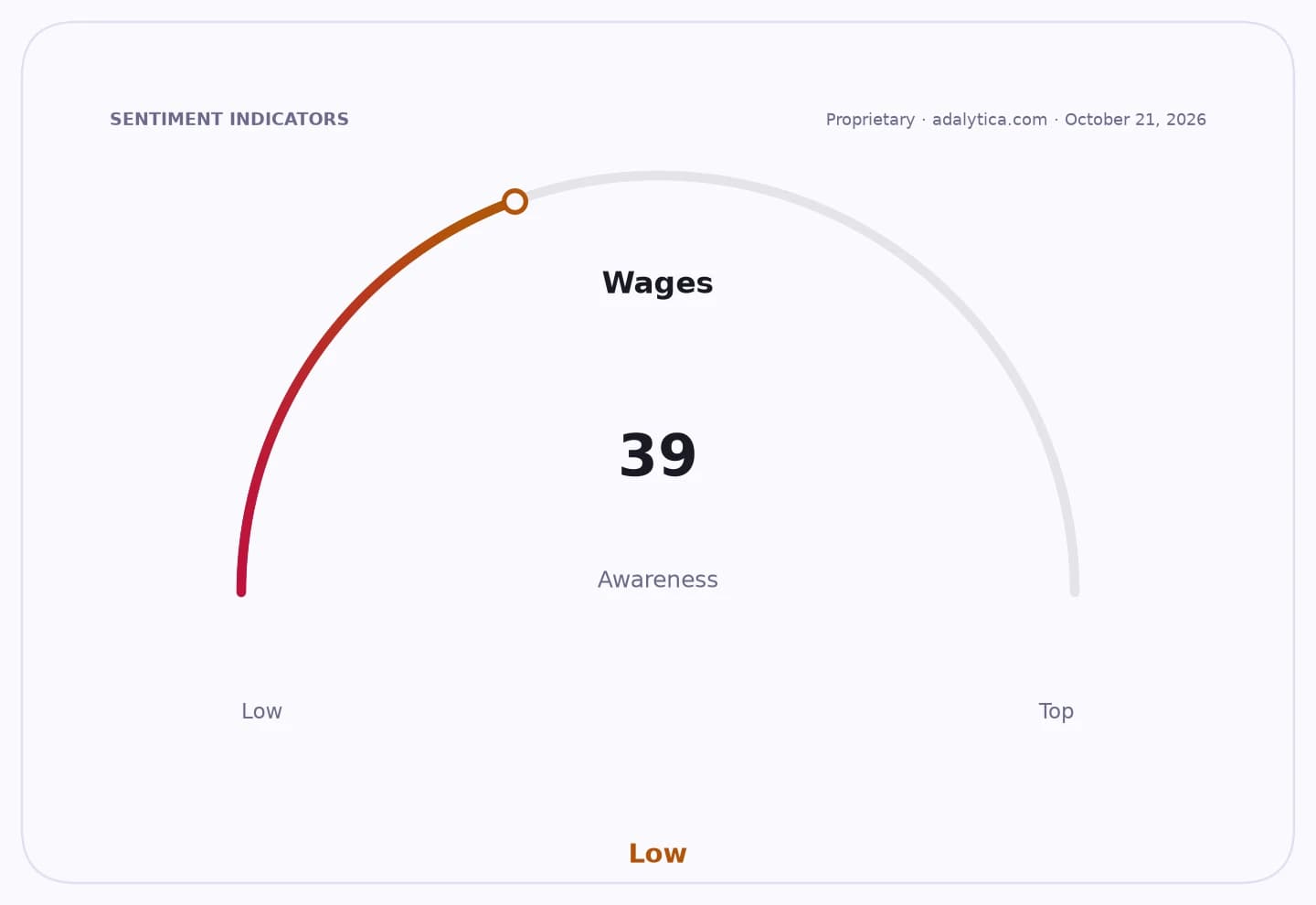
That matters because consumer confidence is a leading indicator for retail sales, discretionary spending and broader domestic demand. If households keep retreating, the pain spreads from mortgage holders to retailers, restaurants and service firms, while adding pressure on policymakers who are trying to convince voters that inflation is under control.
Sentiment IndicatorsⓘProprietary · adalytica.com · October 21, 2026
This is a snapshot — live sentiment, awareness and momentum for 130+ markets update continuously in the dashboard.Open AlphaPulse
OECD figures showed Australian consumer confidence fell 1.1 index points in the 12 months to September, with only Chile and Belgium posting steeper declines. The deterioration is notable not just for its size but for its persistence: Australia is now among the weakest confidence performers across advanced economies, even as the labour market has remained relatively resilient.
For investors, the message is that household demand may stay softer for longer than headline employment data suggests. That is especially relevant for consumer-facing stocks, which depend on volume growth and pricing power to offset tighter budgets. Weak confidence also raises the odds of more cautious spending on big-ticket items, potentially weighing on housing-related retail, autos and discretionary categories.
The backdrop is familiar. Inflation has eased from its peaks, but prices remain high enough to keep real incomes under pressure, while the Reserve Bank’s tightening cycle has left mortgage borrowers exposed to higher repayments. For many households, the combination has been more damaging than inflation alone: the cost of essentials is still elevated, and debt servicing is absorbing a larger share of income.
The government’s challenge is political as well as economic. Consumer sentiment often turns quickly into voter dissatisfaction, especially when households feel official commentary is lagging their lived experience. A prolonged slump in confidence increases the risk that cost-of-living grievances dominate the policy debate even if the macro data begin to stabilize.
There is also a market angle beyond Australia. The Australian dollar’s recent technical backdrop suggests the currency has been holding near key moving averages rather than breaking decisively higher, implying investors are not yet pricing a strong domestic demand rebound. That is consistent with a market that sees inflation still unresolved and rate sensitivity still elevated.
Bullish investors will argue that confidence can recover quickly if inflation continues to cool and the central bank eventually pivots away from restrictive policy. The bear case is that households remain cautious long after price growth slows, because mortgage pain and past inflation leave a lasting scar on balance sheets and spending habits.
For now, the key implication is that Australia’s growth model is still being constrained by the household sector. Until inflation falls convincingly and borrowing costs ease, consumer confidence is likely to remain a weak spot for the economy and a headwind for domestic equities.
| Entity | Gains | Losses |
|---|---|---|
| Savers/cash holders | ▲Higher returns on deposits | ▼Weak consumer demand |
| Mortgage borrowers | ▲Future rate relief if inflation cools | ▼Higher debt-servicing costs |
| Retailers/discretionary stocks | ▲Defensive staples can gain share | ▼Sales volumes and margins |
| Government/RBA | ▲Disinflation would help credibility | ▼Political pressure and softer growth |