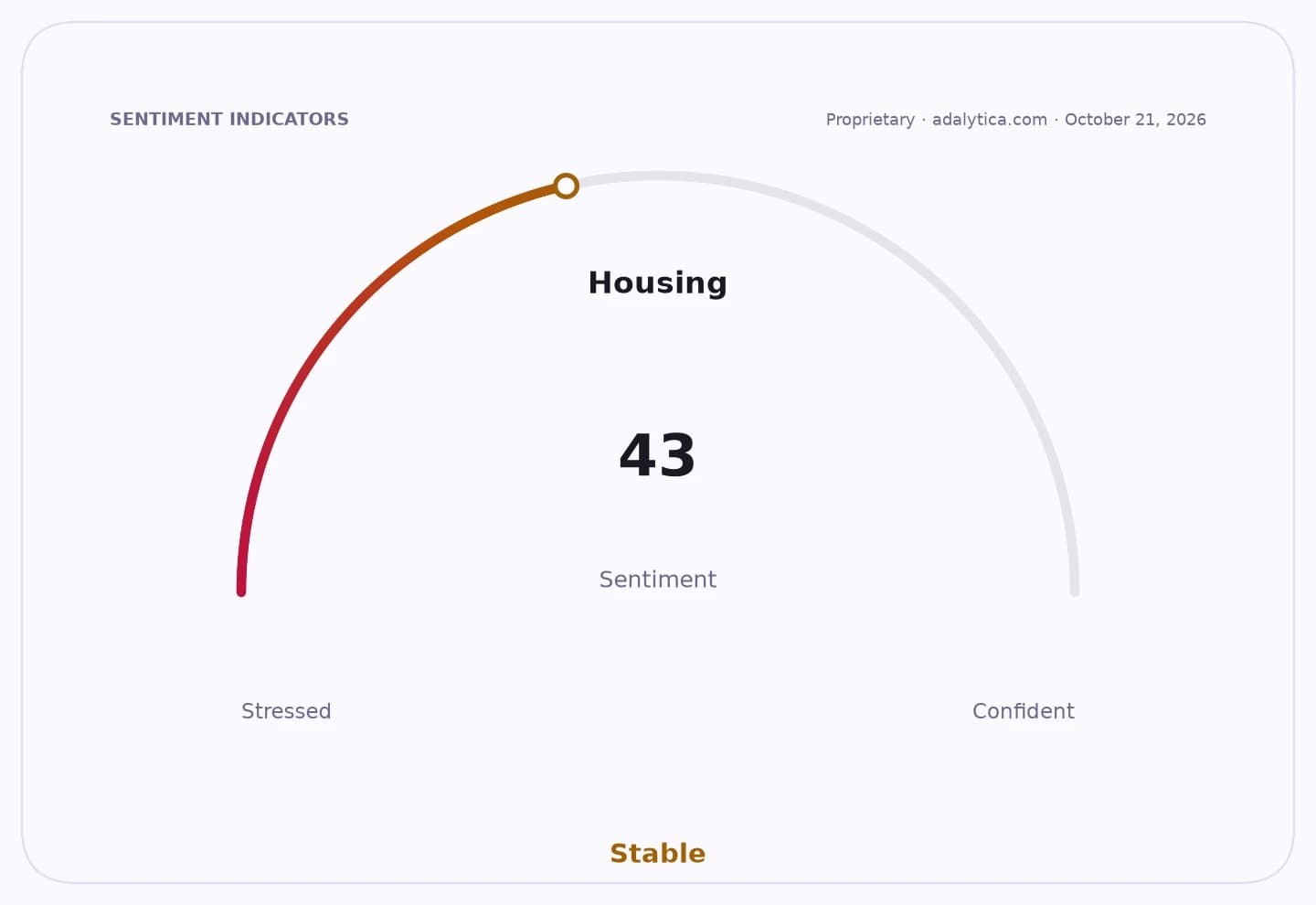
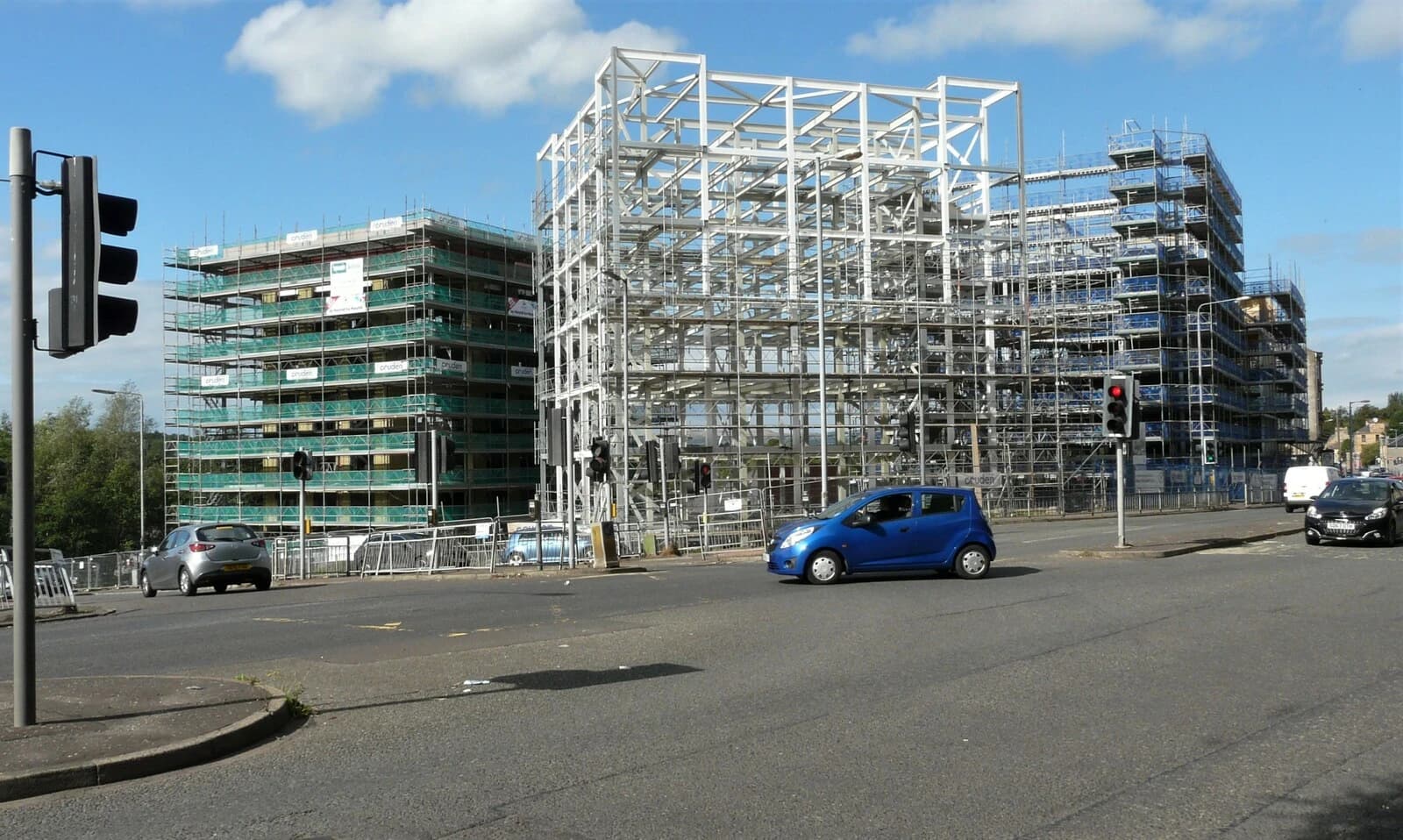
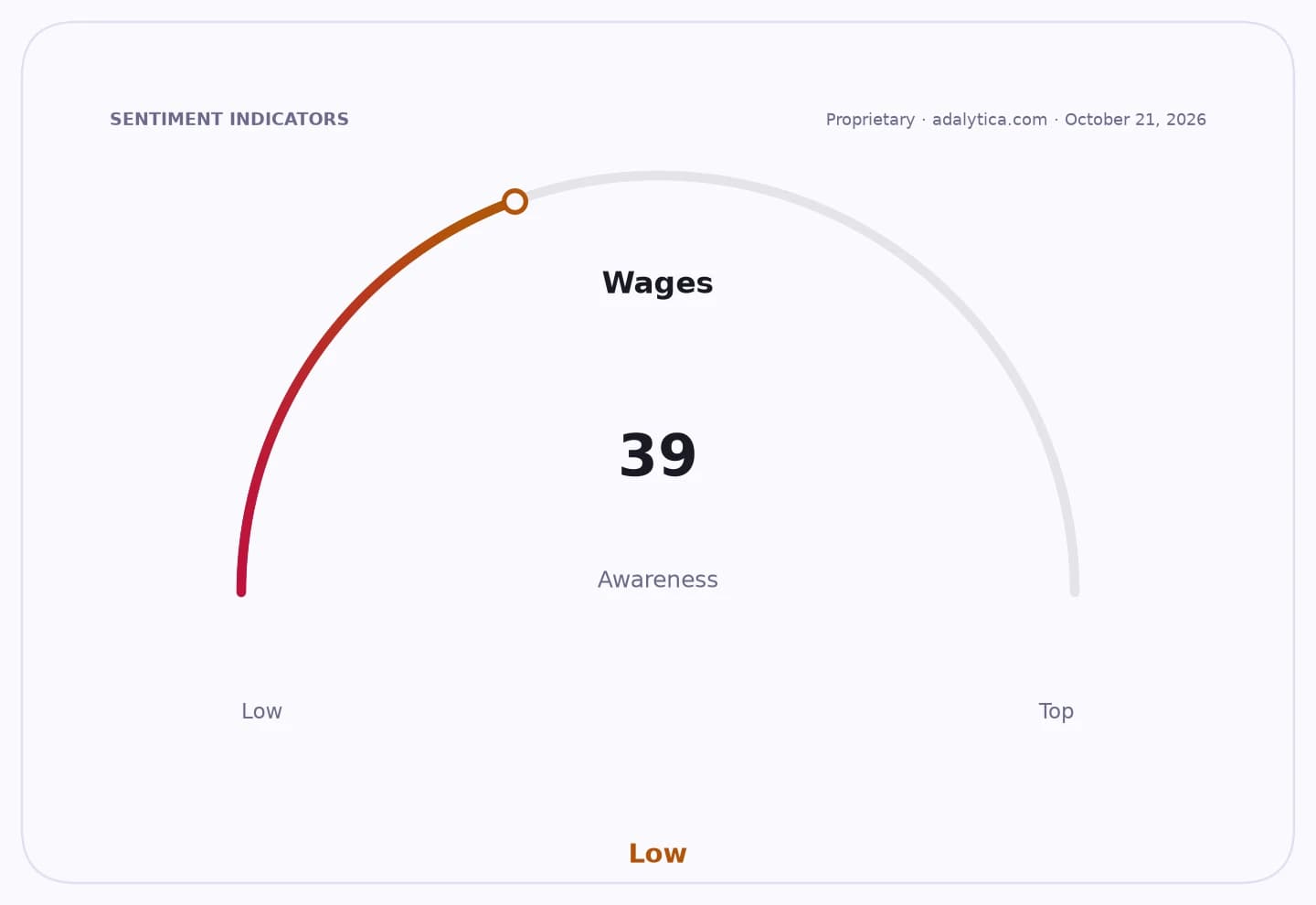
Australia’s housing downturn deepened in September, with national home prices falling for a sixth straight month as the Reserve Bank of Australia’s highest borrowing costs in 15 years and new tax rules cool demand from investors and owner-occupiers alike.
Australia home prices fall for sixth straight month
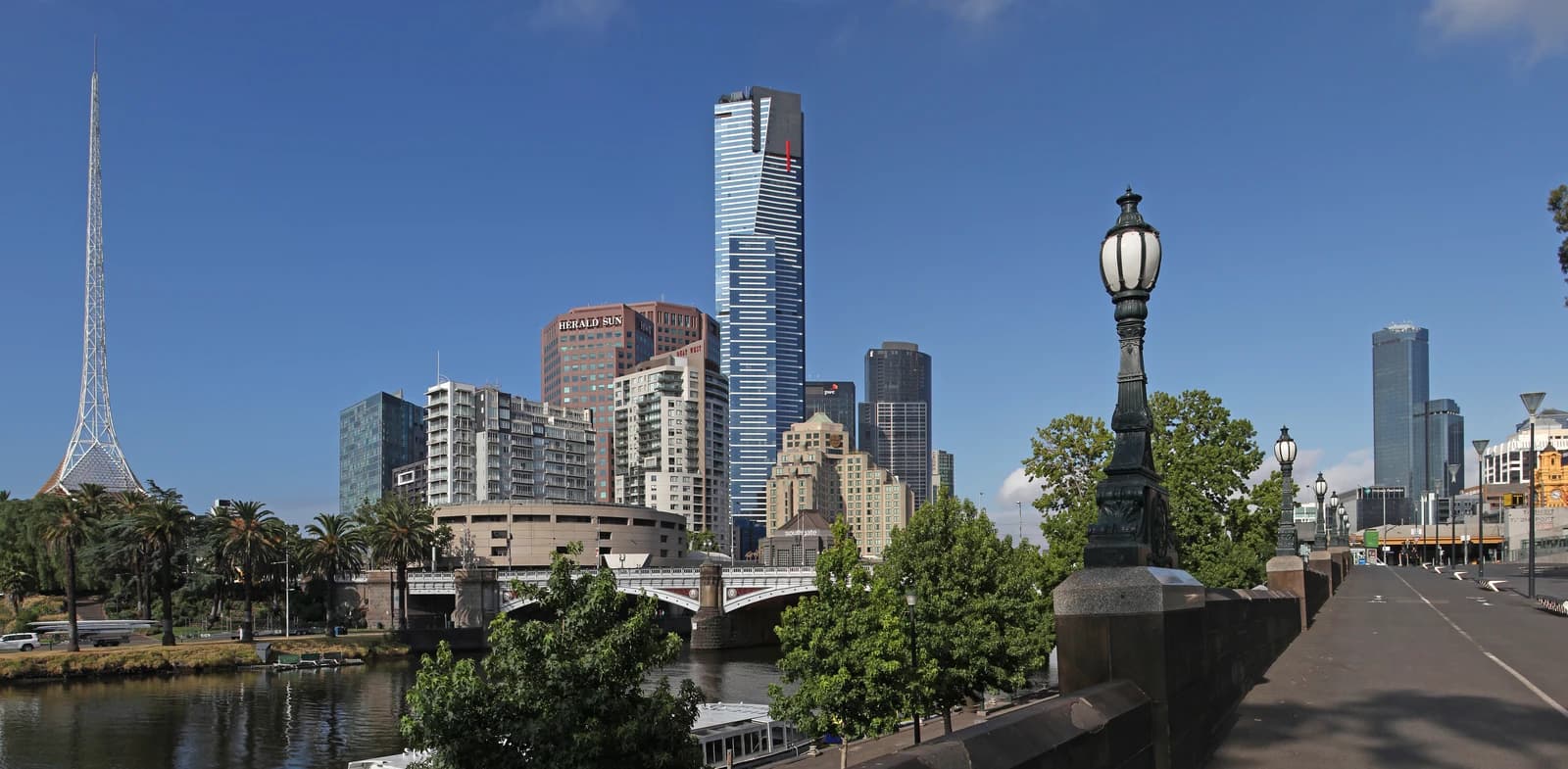
The latest Cotality data showed house prices dropped 1.1% in September from August and are now 5.2% below the March peak, roughly back to where they were a year ago. The decline has broadened beyond the priciest suburbs, suggesting a cyclical correction rather than a narrow pullback in luxury housing.
Sentiment IndicatorsⓘProprietary · adalytica.com · October 21, 2026
This is a snapshot — live sentiment, awareness and momentum for 130+ markets update continuously in the dashboard.Open AlphaPulse
Sydney, the country’s biggest and most expensive market, has now fallen 8.6% from its most recent high, while Melbourne is down 7.2%, according to National Australia Bank. Brisbane fell 1.5% in September and Sydney 1.4%, with only Darwin posting a gain. NAB said 97% of suburbs in capital cities recorded price declines over the three months to end-September, underscoring how widespread the weakness has become.
The economic significance is clear: higher rates are biting into household balance sheets and reducing the leverage that had helped fuel Australia’s long-running property boom. The RBA raised its cash rate to 4.6% on Sept. 29, a 15-year high, in its fourth increase of the year as it tries to contain inflation. That has pushed up mortgage costs and cut borrowing capacity, while making highly geared property investments less attractive.
Policy is adding a second drag. Budget changes announced in May will restrict negative gearing and alter the capital gains tax discount from July 2027, with the aim of steering capital toward new construction rather than existing homes. Even before those rules take effect, they have already changed investor expectations. ABS data showed investor home-loan commitments fell 8.6% in the second quarter from the previous three months, while loans for owner-occupiers dropped 3.3%.
For investors, the housing slowdown cuts both ways. Banks and mortgage lenders face softer credit demand and potentially weaker collateral values, while homebuilders may see a near-term hit to volumes if buyers delay purchases in anticipation of further price declines. Australian real estate exposures also look more vulnerable to financing costs, with the market now pricing in a longer period of tight monetary settings.
Listed homebuilding and housing-related equities in the US, such as XHB and ITB, have also weakened in recent trading, reflecting the same sensitivity to rates that is now weighing on Australia’s market. The broader read-through is that housing remains one of the clearest transmission channels for monetary policy in Australia: when rates rise, prices adjust fast, transactions slow and household confidence slips.
NAB now expects prices across Australia’s eight capitals to fall 8% in 2026, deeper than its earlier 6% forecast, and sees a peak-to-trough decline of about 11% in the current cycle. That leaves room for first-time buyers to re-enter if prices soften further, but it also raises the risk that tighter credit and weaker sentiment keep the market under pressure well into next year.
| Entity | Gains | Losses |
|---|---|---|
| First-time buyers | ▲Better affordability | ▼Higher borrowing costs |
| Existing homeowners | ▲Potentially lower entry prices for buyers | ▼Falling home values |
| Banks and lenders | ▲Potential refinancing demand later | ▼Softer mortgage growth |
| Property investors | ▲Possible future tax rotation to new builds | ▼Weaker returns, lower leverage appetite |