Australia’s mortgage market is weakening even as house prices ease, a sign that borrowing costs and tougher serviceability tests are overpowering any relief from softer property values.
Australia mortgage demand falls as house prices ease
Overall mortgage demand fell 19.2% in September from a year earlier, Equifax said, marking the sharpest annual decline in first-home-buyer demand since December 2022. New home loan applications dropped 22.1% over the same period, even though nationwide house prices slipped 1.1%, underscoring how affordability remains strained despite the market’s recent cooling.
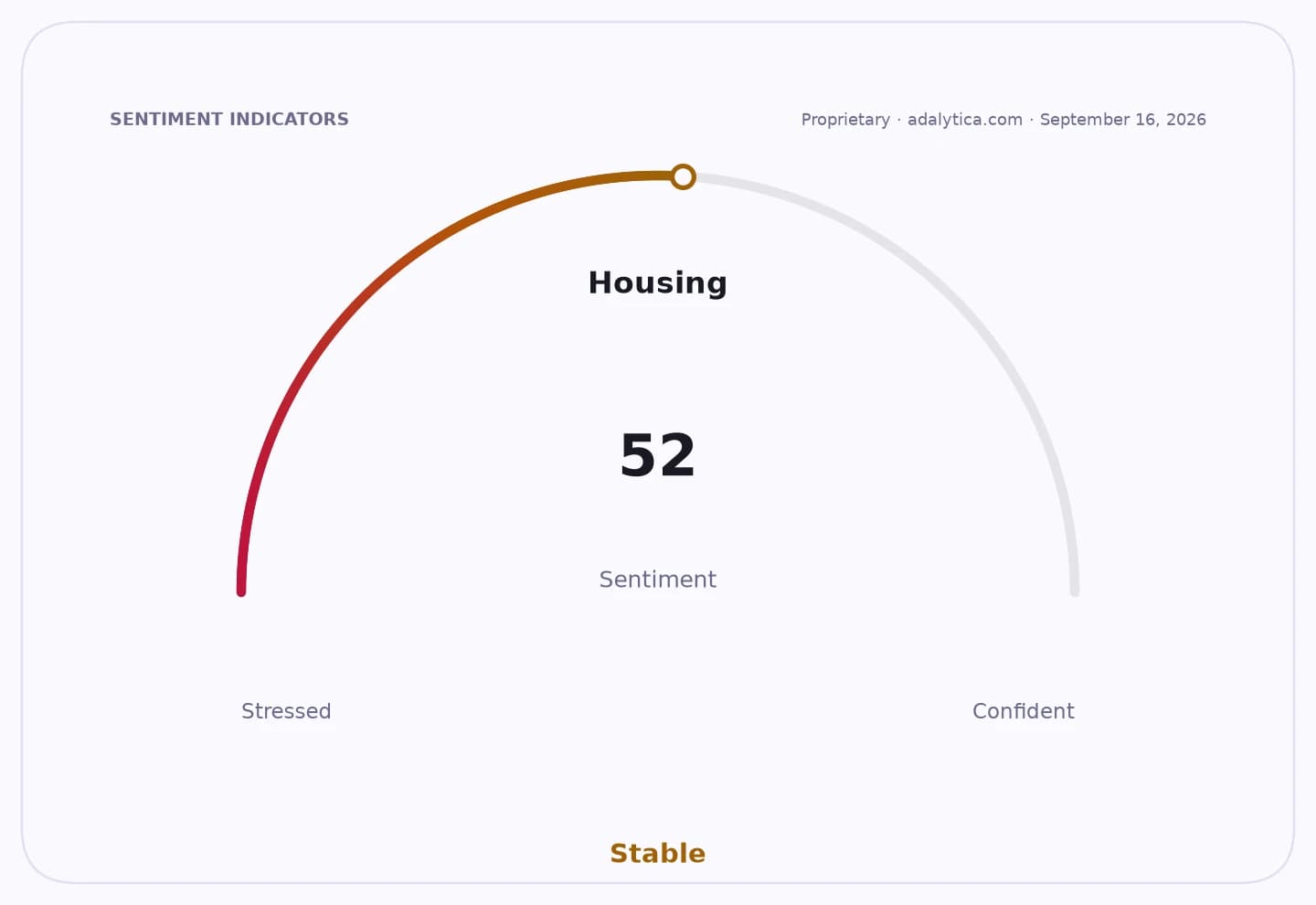
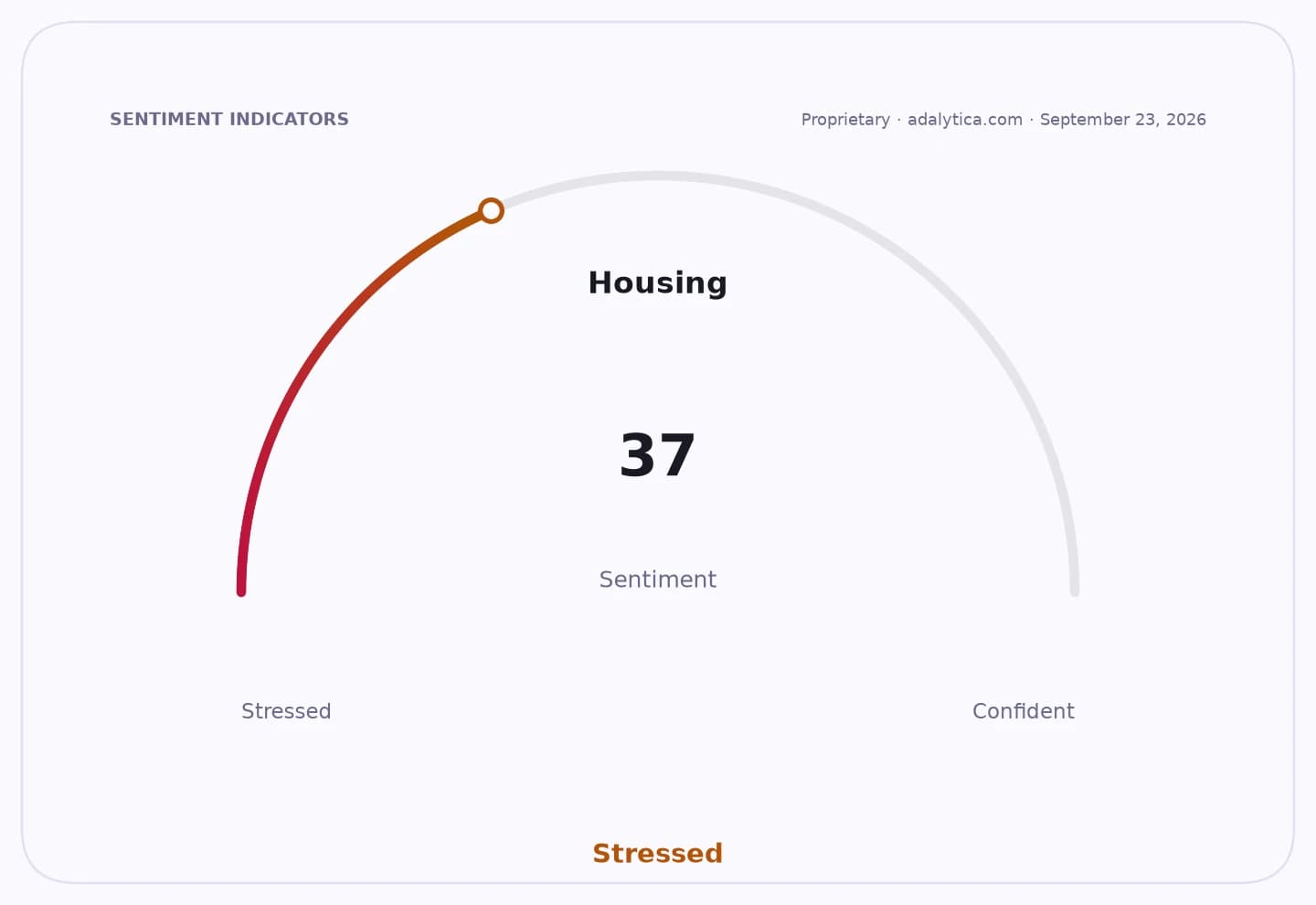
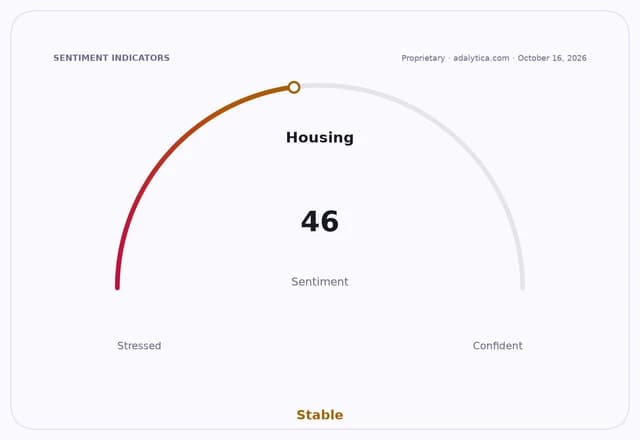
Sentiment IndicatorsⓘProprietary · adalytica.com · October 16, 2026
This is a snapshot — live sentiment, awareness and momentum for 130+ markets update continuously in the dashboard.Open AlphaPulse
That matters economically because housing is one of the main transmission channels for monetary policy in Australia. When households cannot qualify for loans, demand for homes, renovations and related spending slows, reducing turnover in the property market and weighing on sectors tied to housing activity. For the Reserve Bank of Australia, the figures also suggest that higher rates are still biting into credit demand even if inflation has been moderating.
The decline is hitting younger Australians hardest. Mortgage demand for borrowers aged 18 to 25 fell 25%, while applications from the 26-to-35 cohort dropped 22.5%. Equifax said average first-home-buyer mortgage sizes are hovering at a record A$743,000, leaving many prospective buyers unable to bridge the deposit and repayment gap without family or institutional help.
Housing — 30-day sentimentadalytica.com
Explore this data interactively — full history, time series and cross-market comparisons.Open AlphaPulse
The data point to a market where lower prices alone are not enough to revive demand. Strict regulatory serviceability assessments are keeping borrowers out, and in some cases keeping existing mortgage holders from refinancing to better rates. Lender-switching fell 8.8% from a year earlier, suggesting households are increasingly locked into current loans because they cannot clear affordability hurdles under lenders’ rules.
For investors, the message is that Australia’s housing slowdown is shifting from a price question to a credit question. Banks may see fewer new originations and less refinancing churn, while housing-linked businesses face softer transaction volumes. The reading also reinforces the idea that any rebound in mortgage activity will depend less on small moves in property prices and more on a meaningful easing in rates, incomes or lending standards.
Equifax’s data fit a broader pattern seen in other housing markets where elevated borrowing costs are suppressing loan growth despite signs of stabilizing asset prices. In Australia, that leaves first-home buyers especially exposed and reduces the likelihood of a quick recovery in demand.
| Entity | Gains | Losses |
|---|---|---|
| Existing mortgage holders | ▲Stay put on current loans | ▼Miss out on cheaper refinancing |
| Banks with sticky loan books | ▲Lower churn, stable balances | ▼Fewer new originations |
| First-home buyers | ▲Some price relief from softer homes | ▼Higher rates and deposit hurdles |
| Housing-linked equities | ▲Possible support from lower rates later | ▼Weak transaction and loan volumes |