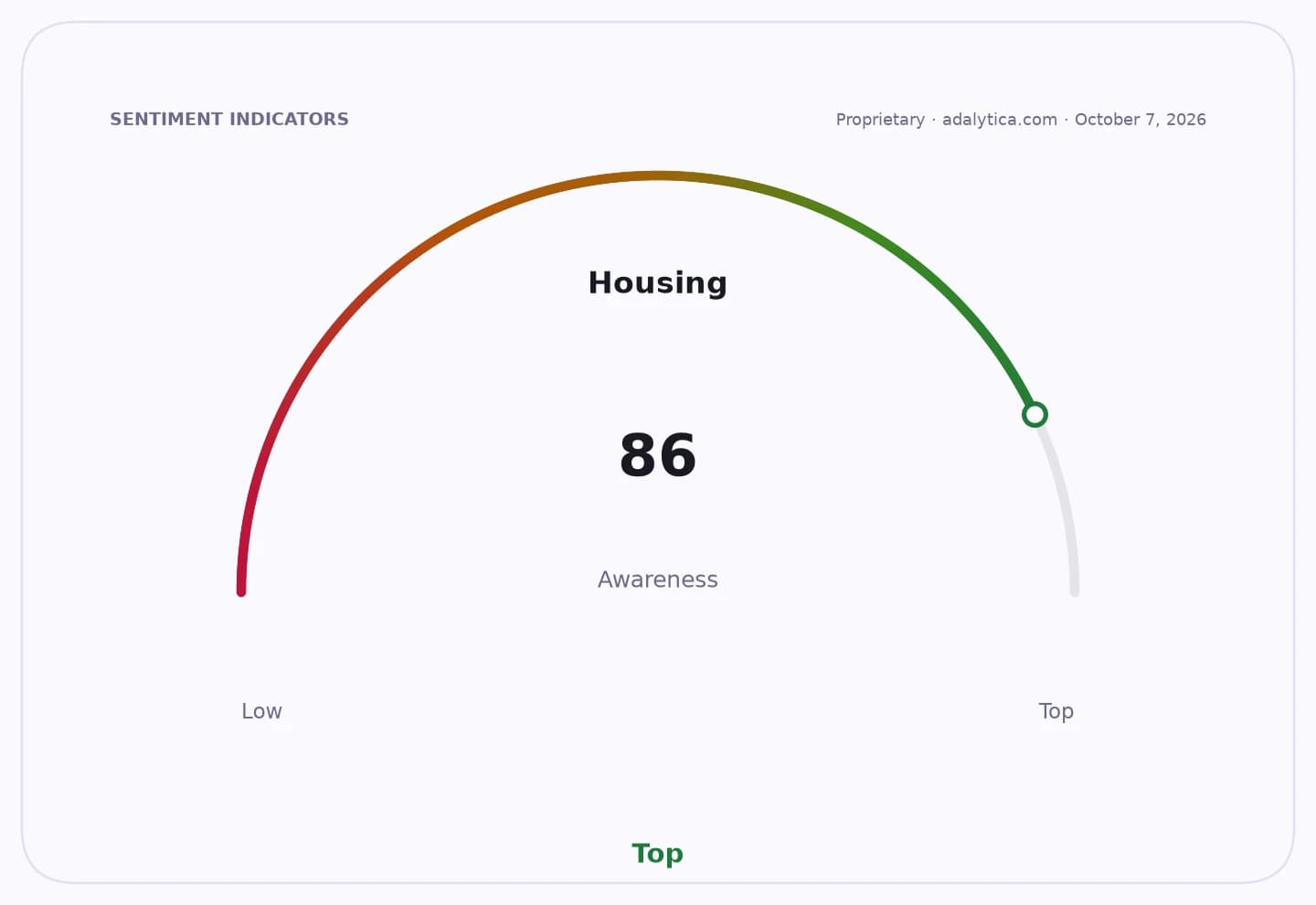
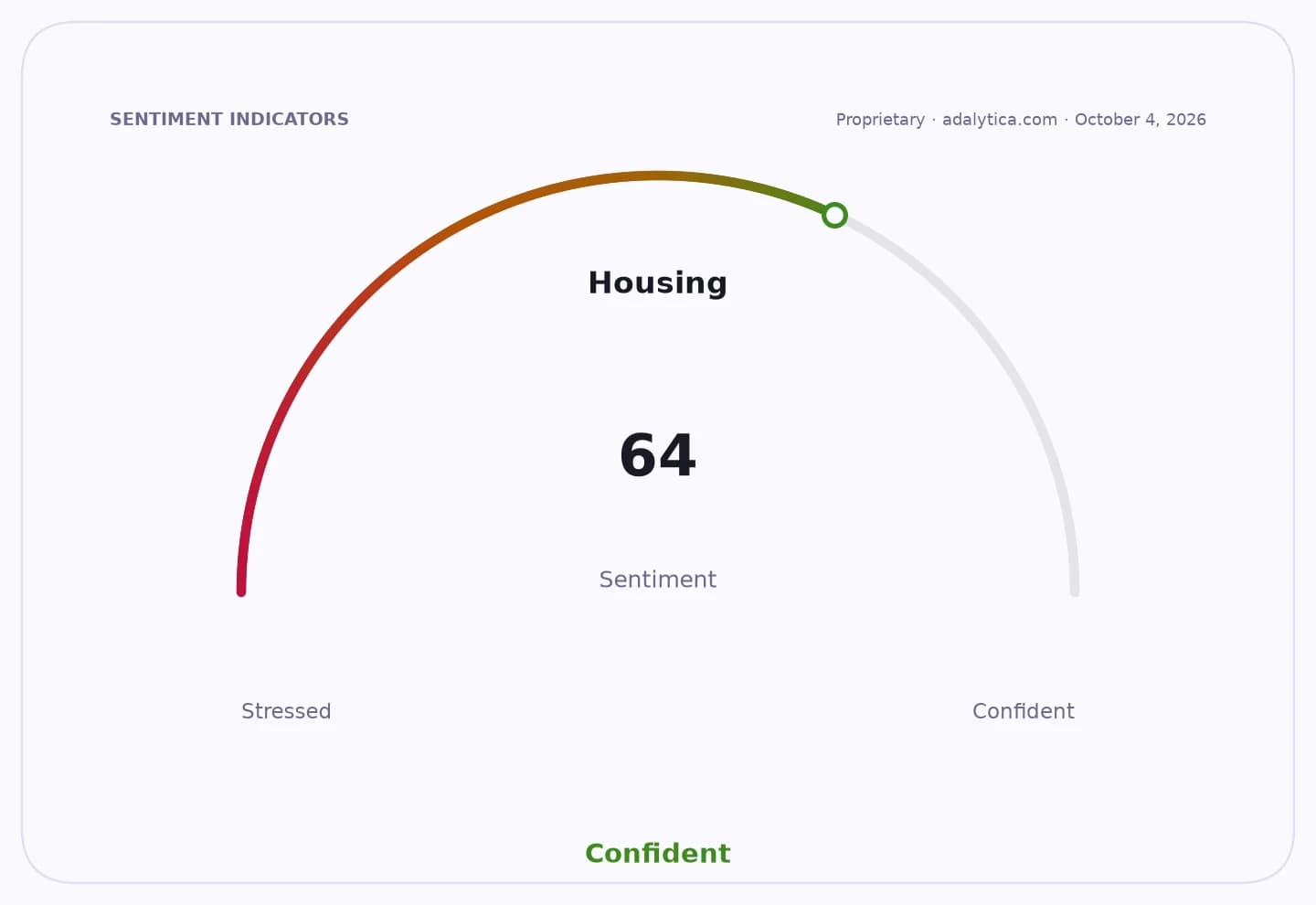
Black Americans’ struggle to access affordable credit remains a direct obstacle to homeownership and wealth building at a time when mortgage rates are near 7.28% and household debt stress is elevated, keeping the wealth gap wide even as the broader labor market holds up.
Black homebuyers face tight credit and high mortgage rates
The economic stakes are straightforward: for most families, a home is the biggest asset they will ever own, and the ability to borrow on fair terms determines whether that asset can be acquired at all. When credit is scarce or expensive, renters stay renters longer, first-time buyers are priced out and the compounding effect of home equity never starts.
Sentiment IndicatorsⓘProprietary · adalytica.com · October 6, 2026
This is a snapshot — live sentiment, awareness and momentum for 130+ markets update continuously in the dashboard.Open AlphaPulse
That pressure is amplified by the current housing-finance backdrop. Thirty-year mortgage rates have climbed from 6.95% in mid-September to 7.28% in the latest reading, a level that raises monthly payments and makes underwriting harder for borrowers who already face tighter approval standards. Consumer prices are also still running above pre-pandemic norms, with the CPI near 334, adding to affordability strain.
For Black households, the issue is not just income, but access. Historical redlining, lower intergenerational wealth and thinner credit histories have left many borrowers more dependent on mainstream lenders’ risk models, which can penalize them for small credit blemishes or limited collateral. The result is a structural gap in mortgage approvals, down payments and home equity accumulation.
Investors should care because credit access shapes the size and quality of the U.S. housing market, mortgage originations and consumer balance sheets. Banks and card lenders that broaden responsibly underwrite new borrowers can grow balances and fee income, while firms exposed to stretched consumers face higher delinquencies if credit is extended too aggressively. Capital One Financial and American Express both trade against that backdrop, with their shares under pressure in recent sessions as markets reassess consumer-credit durability.
The broader market message is that uneven credit access is not just a social issue; it is a constraint on growth. If more Black borrowers can tap fair mortgage and consumer credit, housing demand broadens, refinance activity improves and household wealth creation becomes less dependent on inherited assets. If rates stay high and lending standards stay tight, the gap in ownership and net worth is likely to persist.
The key catalyst is whether lenders, regulators and housing-finance programs can lower the friction in the path to first-time homeownership without loosening underwriting so much that credit losses rise later.
| Entity | Gains | Losses |
|---|---|---|
| Black homebuyers | ▲Better access to mortgages | ▼Delayed or denied homeownership |
| Lenders expanding fair credit | ▲New borrowers and fee growth | ▼Higher underwriting and compliance costs |
| Existing homeowners | ▲More diverse buyer demand supports values | ▼Less if affordability stays strained |
| Renters and cash buyers | ▲Lower competition if credit stays tight | ▼Slower wealth-building through equity |