Federal organizations are set to spend more than $18 million to bring workers back to the office, a sign that Washington’s post-pandemic workplace shift is no longer a temporary policy experiment but a budget line item with real winners and losers.
Federal RTO Spending Backs Office Landlords

That matters because return-to-office is not just a human-resources decision. It is a redistribution of federal spending toward office space, commuting, security, furnishings, technology upgrades and building services — and away from the flexible-work model that had weakened demand for traditional office real estate. For investors, the key point is that this is another incremental tailwind for landlords, service contractors and transit-linked businesses in a market that is still trying to find a floor.
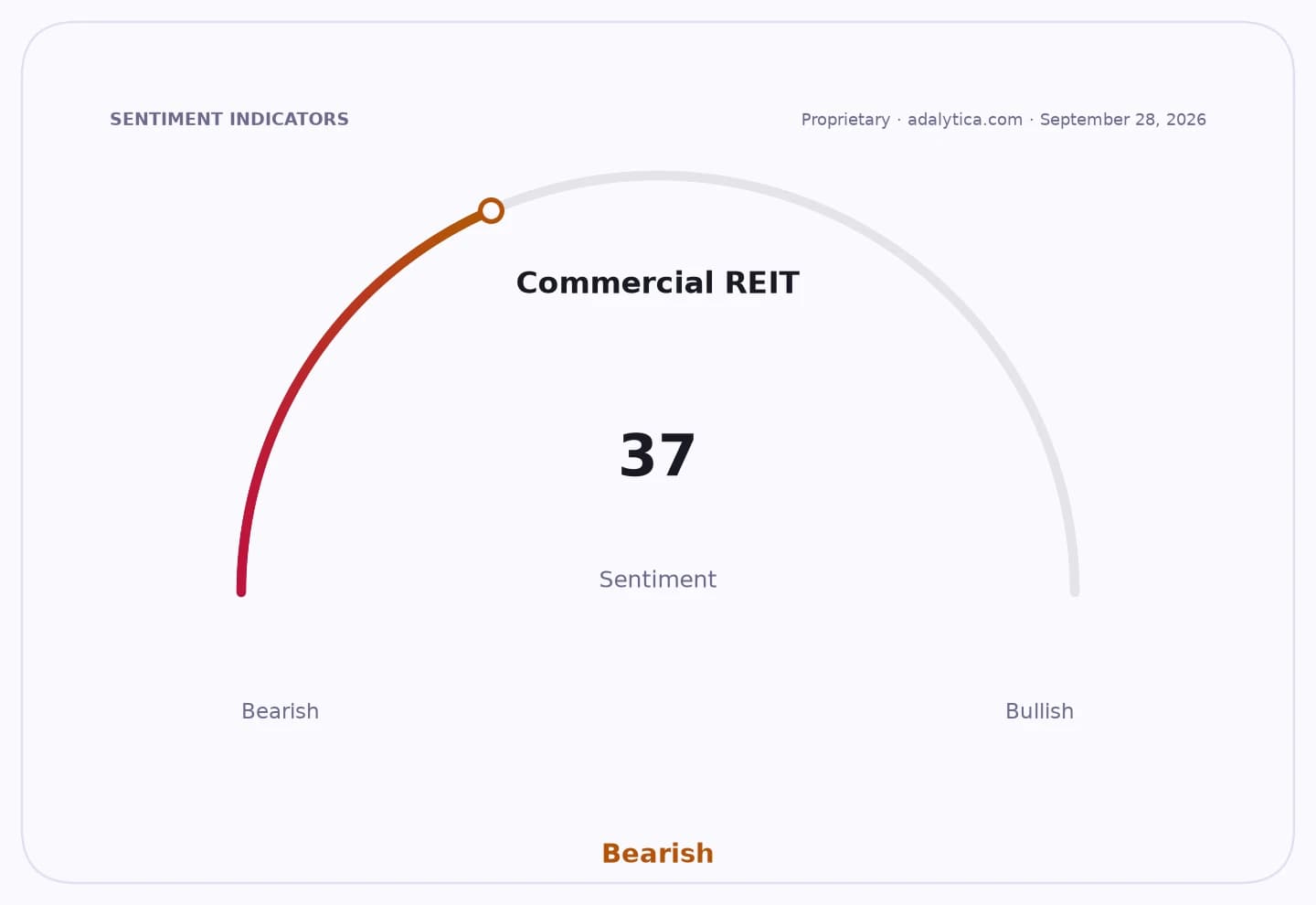
Sentiment IndicatorsⓘProprietary · adalytica.com · October 1, 2026
This is a snapshot — live sentiment, awareness and momentum for 130+ markets update continuously in the dashboard.Open AlphaPulse
The move comes as broader labor data continue to show a cooling but still resilient U.S. economy. Nonfarm payroll sentiment from Adalytica.com is in fear territory, while the S&P 500 signal is neutral, underscoring a market that is still waiting for a cleaner growth impulse. In that environment, even modest federal spending shifts matter more than they would in a booming cycle, because they can redirect cash flow into sectors that have been under pressure.
Commercial property owners are among the clearest beneficiaries. Office landlords have spent years digesting hybrid-work fallout, with occupancy and leasing activity still uneven across major U.S. cities. A federal return-to-office push does not solve the structural oversupply problem, but it does strengthen demand at the margin for downtown space, fit-outs and building operations. That is especially relevant for owners with exposure to government-heavy districts and high-quality office stock.
The market is already signaling how sensitive these names remain. Boston Properties, or BXP, has fallen to around $61, below its 50-day moving average and not far above its 200-day average, with RSI readings in the low 30s indicating the stock is still technically weak. Kimco Realty, or KIM, has also retreated sharply from earlier highs, even though it remains above its 200-day average. Investors are still pricing in a cautious property cycle, which is exactly why a policy-driven office demand rebound can be mispriced early.
I believe the bigger opportunity is not in chasing headline office names blindly, but in owning the picks-and-shovels beneficiaries of a federal workplace reset. Security providers, building services, HVAC, maintenance, furniture and commuter-linked operators can all capture spending without needing a full office-market recovery. If agencies are forced to spend to make offices functional again, the recurring beneficiaries may prove more durable than the office landlords themselves.
There is also a broader macro angle. Return-to-office mandates increase daytime activity in central business districts, which supports retailers, restaurants and transit systems that depend on foot traffic. That secondary effect matters because the office comeback is not a single trade — it is a network effect. More bodies in buildings means more demand for everything around them.
The trade, in other words, is not simply “office is back.” It is that Washington is putting public money behind a structural normalization of workplace demand, and the market may still be underestimating how many small but persistent revenue streams that creates. For investors, the actionable takeaway is to look past the obvious office names and focus on the infrastructure and service companies that profit every time workers are told to show up.
| Entity | Gains | Losses |
|---|---|---|
| Office landlords | ▲Higher occupancy demand | ▼Remote-work era vacancy |
| Building services contractors | ▲More recurring work | ▼Flat office utilization |
| Transit and downtown retailers | ▲More daily foot traffic | ▼Empty CBD corridors |
| Hybrid-work model | ▲— | ▼Federal RTO spending push |