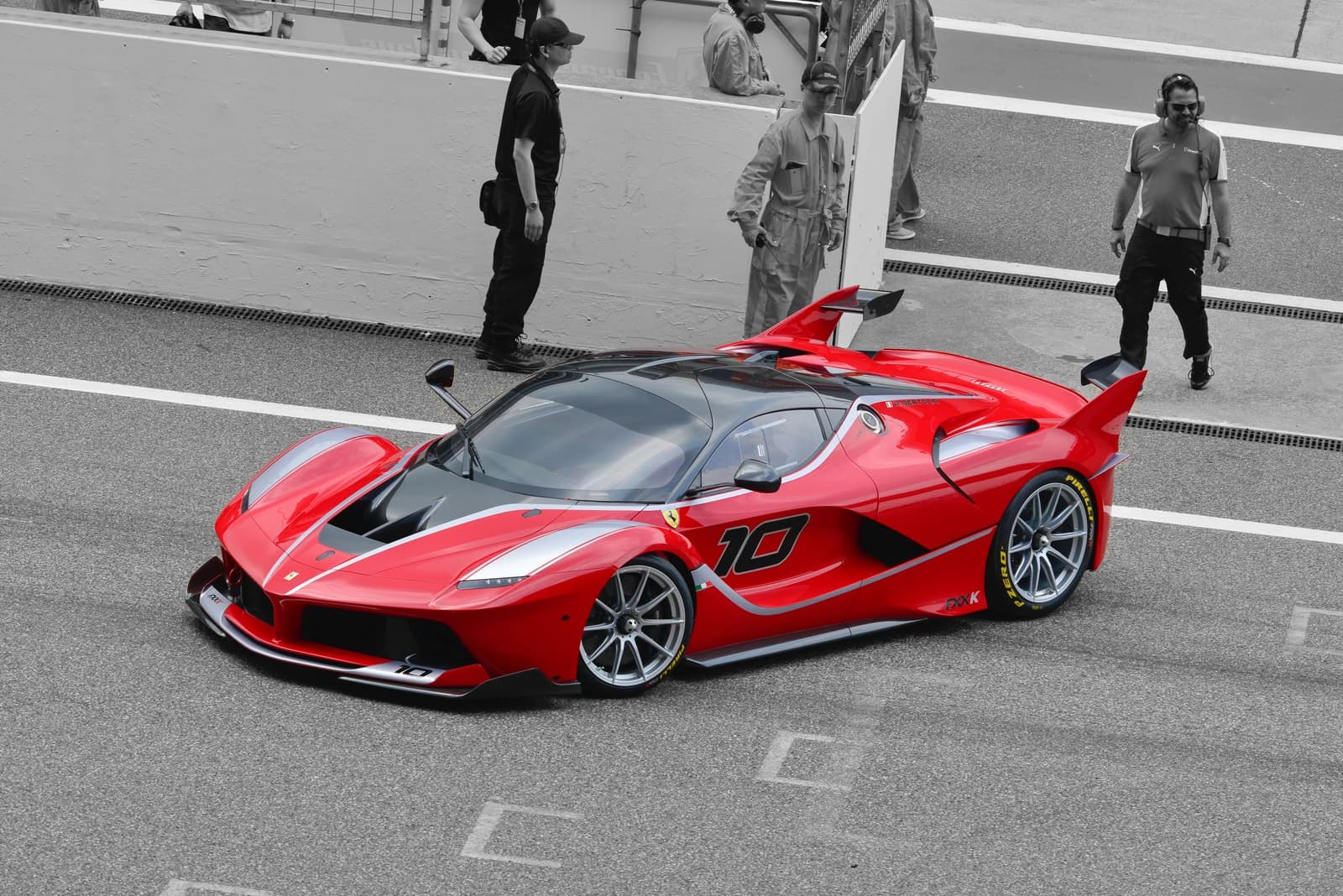
Ferrari’s first mocked-up electric car is pulling in more interest than the company expected, reinforcing the market’s view that the Prancing Horse can turn its EV entry into a pricing and margin event rather than a volume gamble.
Ferrari EV Interest Rises as Shares Rebound to 385 Euros
That matters because Ferrari is not chasing mass-market electric-car sales. It is trying to extend a luxury model built on scarcity, brand power and customization into a new drivetrain category without diluting exclusivity. If demand stays firm, the EV could become a high-margin addition to a business that investors already prize for its ability to generate cash faster than most automakers.
Sentiment IndicatorsⓘProprietary · adalytica.com · July 30, 2026
This is a snapshot — live sentiment, awareness and momentum for 130+ markets update continuously in the dashboard.Open AlphaPulse
The stock’s recent action shows how sensitive investors are to that thesis. Ferrari shares have climbed back to about 385 euros after a slide toward 311 euros in March, with the 50-day moving average now above the 200-day line and the relative strength index at a neutral 56.5. The rebound suggests the market is willing to look through broader auto weakness if Ferrari proves its electric model can command the same emotional and financial premium as its combustion cars.
The company’s challenge is bigger than product acceptance. Ferrari has to show that electrification can coexist with one of the industry’s strongest luxury brands at a time when Tesla’s latest slump has reminded investors how unforgiving the EV market can be. Tesla shares have dropped to around $298, with technical readings showing deeply oversold conditions, underscoring the market’s brutal discrimination between commodity EVs and premium nameplates with real scarcity value.
That distinction is why Ferrari’s mocked-up EV matters beyond Maranello. A successful launch would validate the idea that the next leg of EV demand is not necessarily about cheaper cars or larger volumes, but about who can sell electric performance as an aspirational luxury. That opens the door to richer margins, stronger order books and a cleaner valuation story for Ferrari than for the broader auto sector.
It also puts pressure on rivals. Porsche, already under strain in its own transition, is trading near 43 euros and remains below its 50-day moving average, while the broader luxury-auto trade still looks less compelling than Ferrari’s. If Ferrari can convert early curiosity into deposits, deliveries and pricing power, investors are likely to reward it as the rare automaker that can use electrification as a moat instead of a margin drag.
For investors, the takeaway is straightforward: Ferrari’s EV is not just another launch. It is a test of whether the world’s most iconic luxury auto brand can turn electrification into an even more powerful scarcity engine. If the answer is yes, the upside could be asymmetric.
| Entity | Gains | Losses |
|---|---|---|
| Ferrari | ▲EV pricing power | ▼Legacy-only skeptics |
| Ferrari investors | ▲Premium valuation case | ▼Short sellers |
| Tesla | ▲None from Ferrari hype | ▼Commodity-EV comparison |
| Porsche | ▲Limited spillover interest | ▼Luxury-EV benchmark pressure |