A low-mile Ferrari F50 is heading into auction with the potential to set a record for the model, underscoring how scarcity, provenance and condition can outweigh even a faltering luxury-consumer backdrop in the market for blue-chip collector cars.
Ferrari F50 heads to auction for record bid
The sale matters because top-tier Ferraris are no longer being priced like used vehicles or even ordinary collectibles. They are increasingly trading as alternative assets, with the best examples insulated by limited supply and a global bidder base that includes long-term collectors, investors and wealthy enthusiasts chasing trophy ownership. If this F50 clears its estimate, it would reinforce the view that the rarest modern supercars remain one of the few discretionary assets where buyers are still willing to pay a premium for authenticity and mileage.
Sentiment Indicators
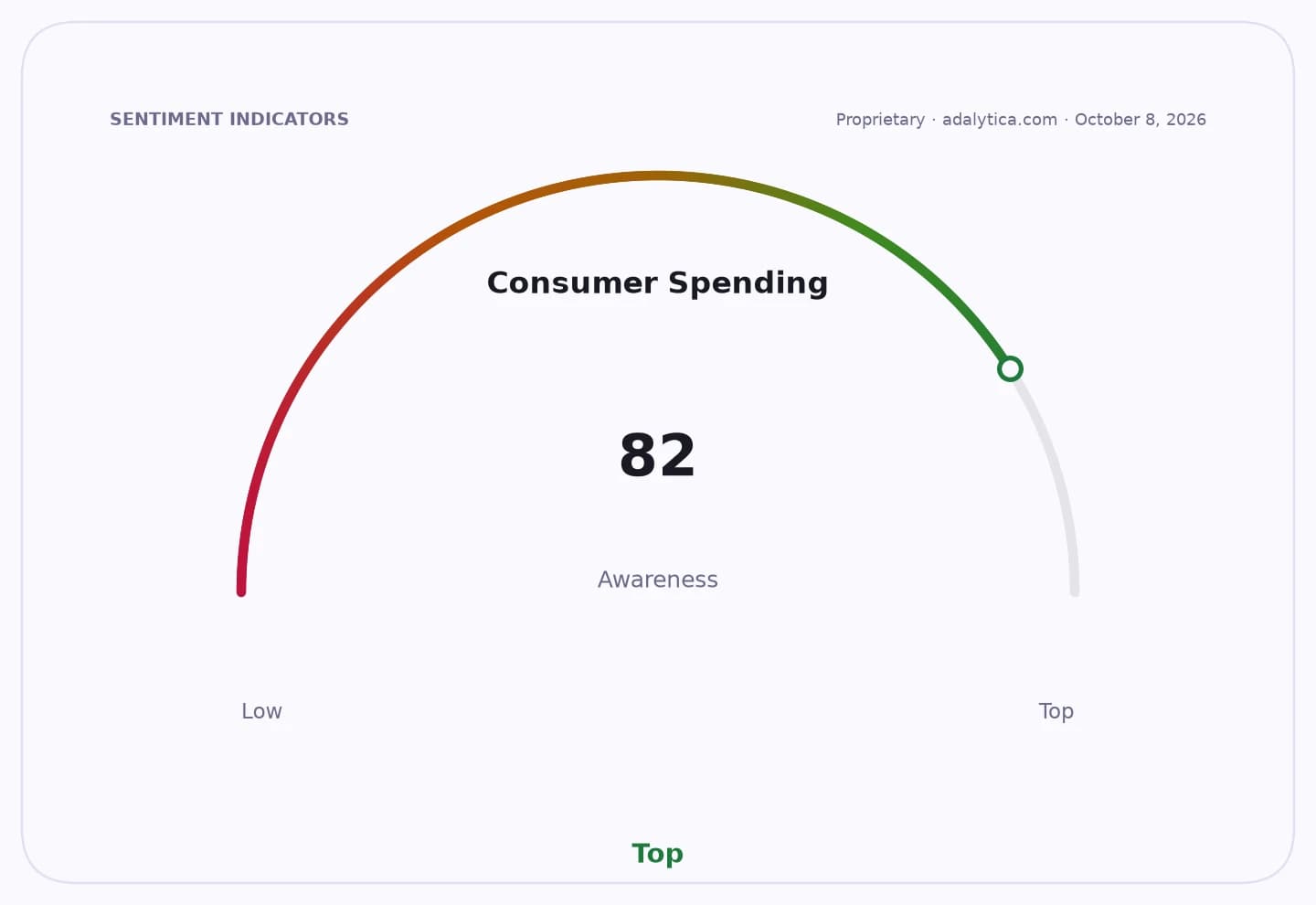
That dynamic is showing up across the luxury auction market. In Stuttgart, judicial sales of seized high-end cars have drawn intense bidding, while a charity auction for a Maybach S680 linked to LeBron James is also expected to attract attention. The common thread is that scarcity and story matter more than macro conditions, even as broader consumer signals remain uneven. Adalytica’s Consumer Spending Sentiment gauge is neutral at 43, but awareness of spending stress remains elevated at 21, pointing to caution in mass-market discretionary demand. High-end collector cars are less exposed than luxury retail to that pressure because supply is fixed and demand is driven by wealth concentration rather than household confidence.
Ferrari itself has also been one of the market’s stronger luxury names. The stock has held above both its 50-day and 200-day moving averages in recent sessions, a sign that investors continue to reward the brand’s pricing power and margin resilience. That strength matters because the auction market often mirrors the wider prestige ecosystem: when Ferrari’s brand equity is intact, collectors are more willing to pay up for museum-grade cars such as the F50, especially low-mileage examples that are increasingly rare as years pass.
The bullish case is straightforward: there are only so many pristine F50s left, and every low-mile car taken off the market tightens supply further. The bearish case is that auction prices can become detached from fundamentals if bidders overpay for nostalgia or headline value, particularly when the broader economy is still wrestling with interest-rate pressure and uneven consumer confidence. U.S. 10-year Treasury yields around 5% also matter at the margin, because higher financing costs can temper speculative buying even among wealthy collectors.
For investors, the auction is another reminder that the premium end of the classic-car market is behaving less like a cyclical discretionary category and more like a scarce-asset class. If the Ferrari lands a record, it will likely strengthen the bid for other numbered, low-mileage supercars and keep attention on Ferrari’s brand halo. If it falls short, it may suggest that even trophy assets are becoming more selective as buyers demand stronger provenance, originality and condition.
| Entity | Gains | Losses |
|---|---|---|
| Low-mile Ferrari F50 seller | ▲Record-price upside | ▼Risk of missing peak bid |
| Collectors and trophy buyers | ▲Asset prestige, scarcity access | ▼Higher entry cost |
| Ferrari | ▲Brand halo, model valuation | ▼None directly if sale underdelivers |
| Auction market rivals | ▲More attention to rare supercars | ▼Pressure to match provenance premiums |