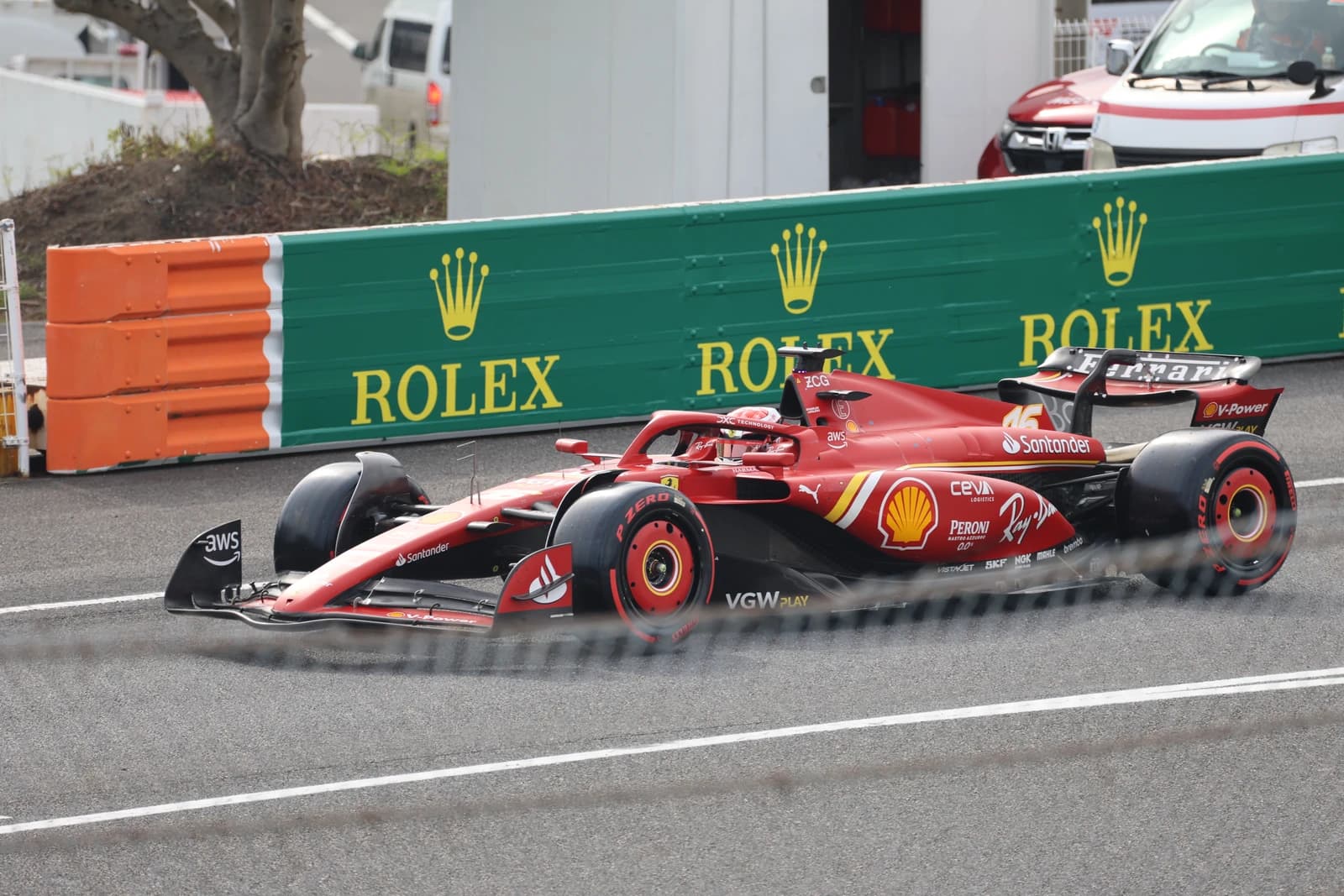
Ferrari suffered one of its worst qualifying sessions of the season in Las Vegas as Charles Leclerc and Lewis Hamilton were both knocked out in Q2, leaving the team without a car in the top 10 and badly exposed for Sunday’s race.
Ferrari struggles in Las Vegas qualifying
The result matters because qualifying pace is the cleanest read on race competitiveness in modern Formula One, especially on a street circuit where overtaking is possible but still costly. For Ferrari, the double failure is not just a bad Saturday; it is another sign that its car is struggling to get tyres working in the cold, low-grip conditions that define Las Vegas and a reminder that even its drivers’ raw pace cannot compensate for operational mistakes and execution errors.
Leclerc’s exit was the sharper blow because he looked capable of reaching the fight at the front before a mistake in his best lap and a red-flag interruption ended any chance of recovery. Hamilton, meanwhile, spent the weekend fighting the car and never looked close to the pace needed to progress. The seven-time champion ended Q2 only 11th, while Leclerc was classified 10th, a damaging outcome for a team that came into the weekend hoping to capitalize on a circuit that can reward disciplined strategy and tire management.
The timing is awkward for Ferrari as it continues to battle for position in the constructors’ standings and for credibility after a season of inconsistent execution. A poor qualifying on a track where tyre temperature is notoriously difficult to build leaves the team vulnerable to traffic, safety cars and strategy roulette, while also increasing the probability that Ferrari spends the race reacting rather than attacking.
The contrast with Mercedes rookie Kimi Antonelli sharpened the embarrassment. Antonelli briefly topped Q3 on raw speed, but a five-place grid penalty for exceeding the season limit on internal combustion engines pushed him back to sixth on the official grid. Even so, his pace underlined how far Ferrari fell short: the Italian youngster showed the kind of late-session urgency Ferrari lacked, while Max Verstappen and George Russell locked out the front row ahead of Lando Norris and Isack Hadjar.
For investors watching Ferrari as a listed brand and carmaker, the racing setback has limited direct financial impact but still matters to the investment case. Ferrari’s Formula One program is central to the company’s global marketing engine, brand equity and pricing power, all of which support the premium valuation investors assign to the stock. A weekend like this does not alter fundamentals on its own, but repeated high-profile underperformance can dull the halo effect that underpins Ferrari’s commercial story.
The bigger market takeaway is that Ferrari still has not solved the execution gap that separates a title challenger from a front-running team. If the car remains difficult to switch on in cold conditions and the drivers cannot convert opportunities when the field tightens, the team’s upside in the final races of the season is limited. Sunday’s race will show whether Ferrari can salvage points from a compromised grid — but the qualifying damage has already changed the shape of the weekend.
| Entity | Gains | Losses |
|---|---|---|
| Red Bull / Verstappen | ▲Front-row pole position fight | ▼None from Ferrari’s setback |
| Mercedes / Russell | ▲Strong qualifying position | ▼Grid penalty issue for Antonelli |
| McLaren | ▲Cleaner path to podium points | ▼Ferrari’s pace should not threaten them |
| Ferrari | ▲Limited upside from a chaotic race | ▼Brand momentum and points haul |